The Rhythm and the Ache: On Living Against Our Body's Clock
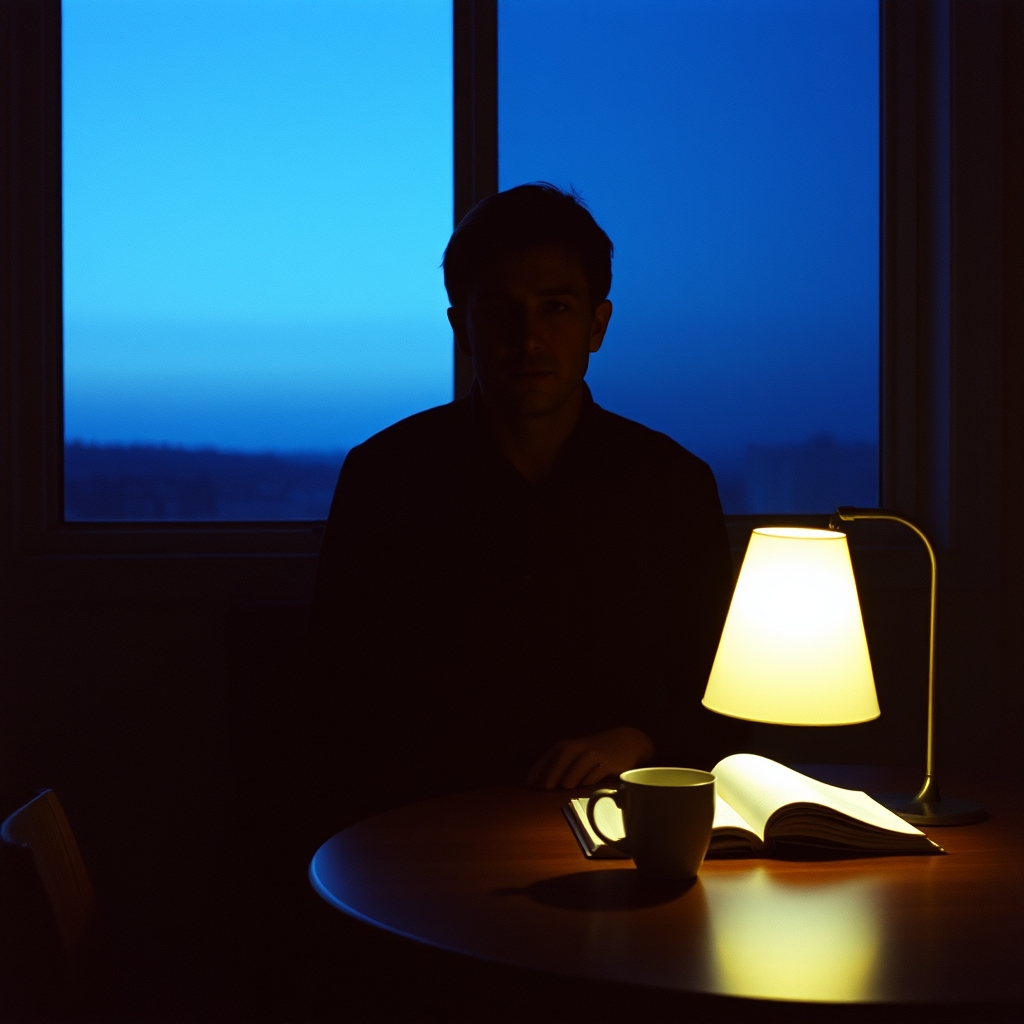
We talk a great deal about what we put into our bodies, and quite a lot about what we ask them to do. We track macronutrients, log workouts, count steps, and obsess over the provenance of our kale. And rightly so, to a degree. The intention behind it all, presumably, is to live better, to feel more vibrant, to perhaps even outwit the relentless march of time. Yet, for all our meticulous efforts and our endless quest for optimization, there persists a quiet, nagging ache for many of us. A chronic hum of fatigue that no amount of adaptogens seems to quell, a digestive grumble that resists the latest probiotic, a restlessness that lingers despite the expensive sleep gadgets. Could it be that we’re so busy engineering the perfect fuel and the ideal output, we’ve forgotten to consult the body’s own instruction manual—the one etched not in chemical compounds, but in the relentless, ancient swing of an unseen pendulum?
The Deep-Seated Hum
Long before our ancestors debated the merits of intermittent fasting or the optimal rep range for muscle growth, their bodies were already performing a sophisticated, internal ballet. Every living thing, from the simplest cyanobacteria to the most complex human, operates on an intrinsic clock. These aren't just quaint biological quirks; they are fundamental, deeply wired rhythms that dictate everything from hormone release and cell repair to cognitive function and metabolic rate. We’re talking, of course, about circadian rhythms—the roughly 24-hour cycles influenced primarily by light and dark—but also ultradian rhythms (shorter cycles, like our sleep stages or focus bursts) and infradian rhythms (longer ones, like menstrual cycles or seasonal shifts).
Think of your body not as a static machine, but as a finely tuned orchestra with countless instruments playing in perfect, temporal harmony. At dawn, cortisol rises to greet the day, preparing you for activity. In the evening, melatonin begins its gentle ascent, easing you toward sleep. Digestion is more robust during the day, cellular repair peaks overnight. These aren't suggestions; they are directives, refined over millennia of evolution, orchestrated by a tiny cluster of cells in your brain known as the suprachiasmatic nucleus (SCN). This SCN, your body’s master clock, keeps time not with gears and springs, but with light sensors in your eyes, relaying signals that cascade through every cell, every tissue, every organ. It’s the deep, steady hum beneath all our conscious effort, and for the longest time, we barely had to think about it.
When the Tides Don't Turn
Then came the modern age. With it, the incandescent bulb, then the fluorescent, then the LED. The internet, the always-on economy, the global commute, the notion that productivity should march on irrespective of sun or moon. We have, with remarkable efficiency, decoupled ourselves from the very environmental cues that calibrated our ancient clocks. We eat at 10 PM, bathed in the blue glow of a screen. We pull all-nighters, fueled by caffeine and sheer willpower. We travel across time zones as a matter of routine, then wonder why we feel perpetually unmoored.
The ache, then, begins to make sense. It’s the protest of an internal system designed for predictable cycles, suddenly asked to operate in a perpetual twilight of synthetic stimuli. When the SCN loses its clear signal—when morning light is replaced by phone scrolling, and evening darkness by a brightly lit office—the orchestra falls out of sync. Hormones misfire, digestion falters, sleep architecture crumbles, and the delicate dance of cellular repair becomes a clumsy shuffle. This isn’t just about feeling tired; it’s about chronic inflammation, impaired immunity, metabolic dysfunction, and accelerated aging at a fundamental level. We are, quite literally, living against the grain of our own biology, and our bodies, ever-patient, eventually send increasingly urgent signals of distress. The frantic search for the next "hack" often arises from this underlying dissonance, a desperate attempt to compensate for a foundational misalignment.
Reclaiming the Pace
The good news, if you can call it that, is that reclaiming alignment isn’t about buying more expensive gadgets or subscribing to another complex protocol. It’s often about subtraction, about remembering, about listening. It’s about cultivating a quiet reverence for the sun and the moon, not as abstract celestial bodies, but as your most profound timekeepers.
Start simple. Greet the morning light, even if it’s just for ten minutes with your first cup of coffee. Let it signal to your SCN that the day has truly begun. Eat your meals at roughly consistent times, allowing your digestive system to anticipate and prepare. And as evening descends, dim the lights. Reduce screen time. Allow the natural progression toward darkness to cue the melatonin production that ushers in restorative sleep. This isn't about rigid adherence that breeds anxiety, but about a gentle, consistent leaning into your inherent rhythms. It's about recognizing that sometimes, the most profound "biohack" isn't an exotic supplement or a grueling regimen, but the humble act of opening the curtains, turning off the bright lights, and eating when the body genuinely expects nourishment.
The human body is an astonishingly adaptable thing, capable of remarkable resilience. But it’s not infinitely so, nor is it designed to perpetually fight its own deeply embedded operating system. The wisdom of our inner clock is not an ancient relic to be dismissed, but a living intelligence begging to be honored. Perhaps the most effective anti-aging strategy, the most potent health booster, isn't found on the cutting edge of science, but in the enduring, quiet rhythm of our own biological tides. The ache may well diminish when we finally decide to swim with them, rather than against them.