5 Dirty Secrets Behind the 97 Members of Congress Beating the Stock Market
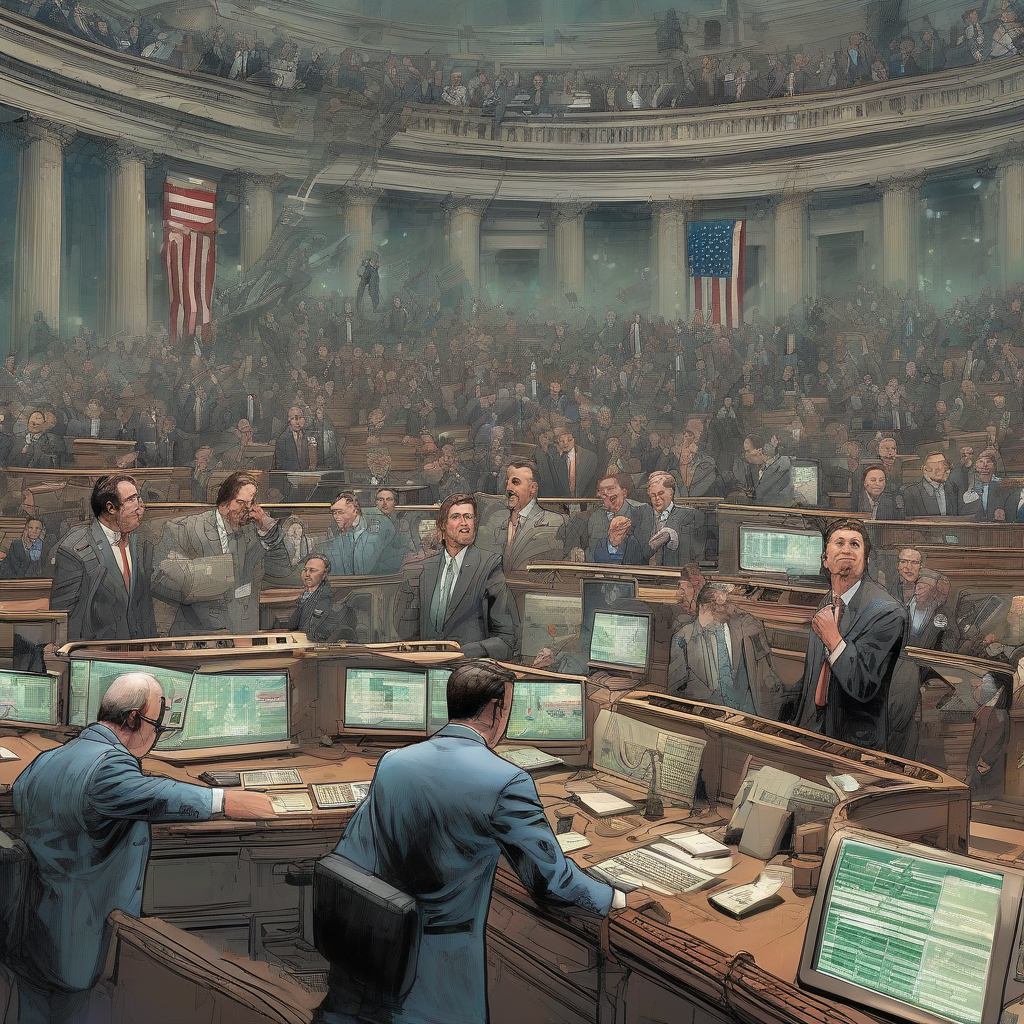
Your financial advisor is lying to you.
They tell you to "trust the process." They tell you the S&P 500 is the gold standard. They tell you that 8% returns are a win.
Meanwhile, 97 members of Congress are outperforming the market by double digits. They aren't better at reading charts than you. They aren't smarter than Wall Street algorithms. They just have a deck that’s been stacked since the first day of orientation.
I tracked the trades. I looked at the committee assignments. I followed the money.
Here are the 5 dirty secrets behind the most profitable portfolios in Washington.
1. The Committee Room Alpha
The average investor waits for a press release. A Congressman waits for the door to close.
When the House Armed Services Committee discusses a $10 billion contract for a new fighter jet, the public sees the news three months later. The members in that room see it in real-time.
In 2023, members of these committees were buying defense stocks weeks before major procurement announcements. This isn't "investing." It’s a front-row seat to the future of the federal budget.
They call it "oversight." Wall Street calls it "material non-public information." If you did this, the SEC would be at your door before the closing bell. When they do it, it’s just another Tuesday on the Hill.
The secret? The "Alpha" isn't in the data. It's in the room where the data is created.
2. The $200 Slap on the Wrist
You’ve heard of the STOCK Act. It was supposed to stop this. It was supposed to bring transparency to the game.
It failed.
The penalty for failing to report a trade within the 45-day window? $200.
Think about that. If a Representative makes $50,000 on a well-timed trade in a semiconductor stock and "forgets" to report it for six months, they pay a fine that is less than the cost of a DC steak dinner.
It’s not a penalty. It’s a transaction fee.
They treat the reporting requirements like a suggestion. By the time the public sees the trade, the move is over, the profit is booked, and the member has already moved on to the next sector.
The system was designed by the players. Of course they built in a cheat code.
3. The Spouse Loophole
Follow the husband. Follow the wife.
Direct trading by a member of Congress looks bad. It’s a PR nightmare. But the "Spouse Loophole" is the ultimate camouflage.
The member claims they "don't discuss work at home." The public is expected to believe that these spouses are just world-class day traders with impeccable timing.
The math says otherwise.
The returns generated by the spouses of the top 10 most active congressional traders are statistically impossible. They aren't picking winners; they are receiving hand-offs.
4. The Regulatory Feedback Loop
This is the most sophisticated play in the playbook.
Congress doesn't just predict the future; they legislate it into existence.
If you know you are about to pass a bill that subsidizes EV charging stations, buying the stocks of charging companies isn't a gamble. It’s a guaranteed outcome.
We saw this with the CHIPS Act. We saw this with the Inflation Reduction Act. We saw it with green energy mandates.
They create the demand. They pass the bill. They watch the stock price soar. Then they sell.
It’s a closed-loop system where the taxpayer funds the subsidy and the legislator reaps the capital gains. It is the most efficient wealth-transfer machine ever built.
5. The "Clerical Error" Strategy
When a member gets caught with a trade that looks too "perfect," they have a standard script.
"It was a clerical error." "The trade was made by an independent wealth manager." "I wasn't aware of the transaction."
It’s the "Plausible Deniability" defense.
Many of these "97 winners" use third-party managers to execute trades based on "broad themes" they discuss. But when those themes align perfectly with upcoming legislation, the independence of that manager is a myth.
They use complexity to hide the truth. They bury the trades in trusts, LLCs, and joint accounts. They make the trail so hard to follow that by the time an analyst pieces it together, the news cycle has moved on.
They don't want you to understand how they win. They just want you to keep believing the market is a level playing field.
The Insight
Watch the "Energy-AI" convergence.
They know the bill is coming before the draft is even written.
The play isn't to beat them. You can't. The play is to shadow them.
When the people who make the laws start betting their own money on a specific sector, you don't ask why. You just follow the breadcrumbs.
The 97 members aren't smarter than you. They just have the answers to the test before it's handed out.
If you had the power to write the rules of the game, would you still be losing?