Stop trying to be "Clean Girl" right now: How Brat Summer just hijacked global marketing forever.
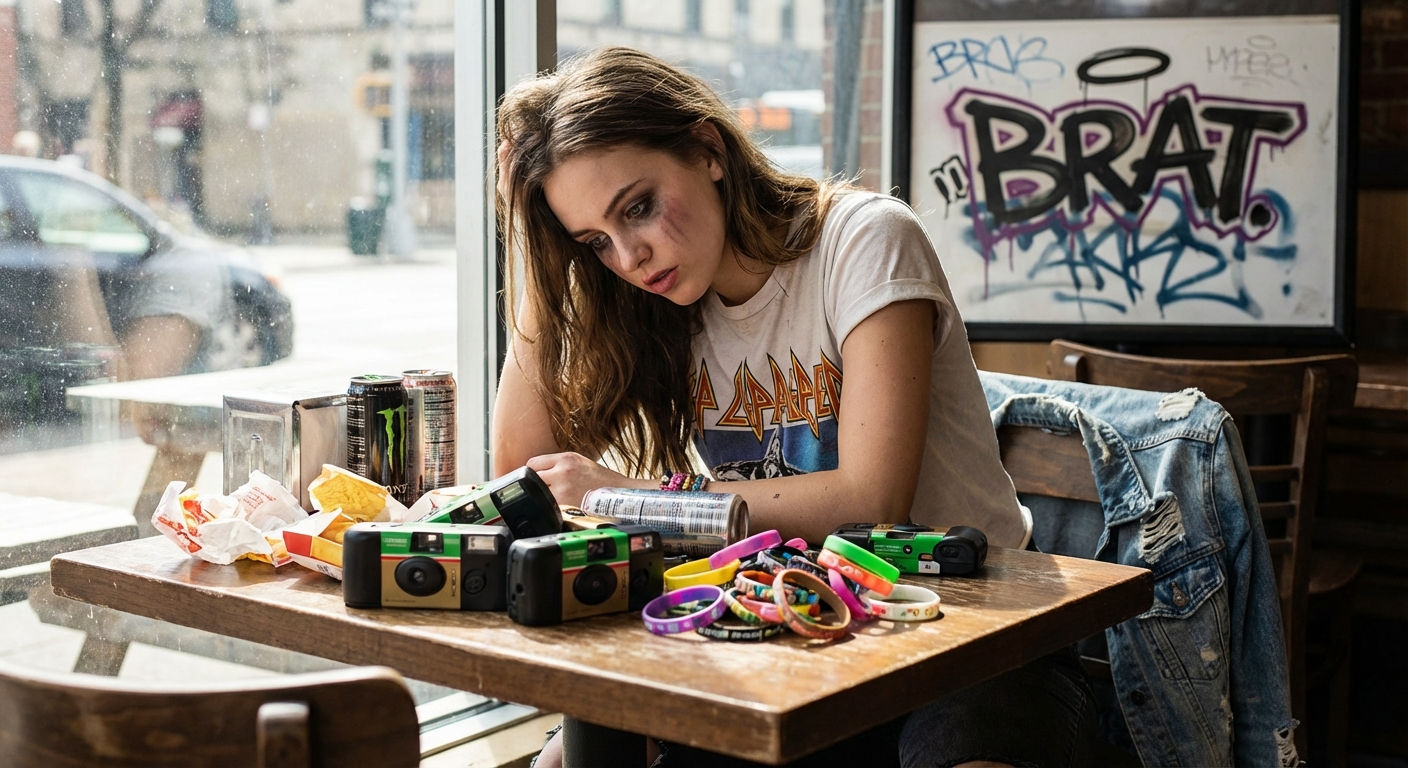
The $100 billion beige era is officially dead.
If you are still trying to be a "Clean Girl," you aren't just behind the curve. You are losing the cultural war.
For three years, marketing was a hostage to the "Aesthetic." Everything was neutral. Everything was organized. Everything was filtered through a lens of unattainable, clinical perfection. Then a lime-green JPEG hit the internet and burnt the rulebook to the ground.
Charli XCX didn’t just release an album. She provided the antidote to a decade of performative wellness.
Here is why Brat Summer didn't just trend—it hijacked global marketing forever.
The Death of Performative Perfection
The Clean Girl aesthetic was a lie we all agreed to tell.
It required a 12-step skincare routine, a $2,000 espresso machine, and a soul-crushing amount of discipline. It was about "optimal living." It was about being a product, not a person.
Marketing followed suit. Brands became obsessed with being "aspirational." They used soft lighting, sans-serif fonts, and "quiet luxury" messaging. They wanted to look like a high-end spa.
But perfection is exhausting.
Consumers are currently facing record-high inflation, global instability, and a loneliness epidemic. They don’t want to see a creator in a matching yoga set drinking a $15 green juice in a minimalist kitchen. They want to see the mess.
Brat Summer succeeded because it gave everyone permission to be "unoptimized."
It traded the slicked-back bun for messy hair. It traded the 5:00 AM Pilates class for a 3:00 AM cigarette. It replaced "Self-Care" with "Self-Expression."
If your brand is still trying to look "perfect," you look like a fossil. Authenticity used to be a buzzword. Now, it’s a survival requirement. People are no longer buying the "Better Version" of themselves. They are buying the "Real Version" of themselves.
The Low-Fidelity Revolution
Brat Summer proved that "High Production" is a liability.
The Brat album cover is a low-resolution, blurry font on a jarring, "ugly" green background. It looks like it was made in Microsoft Paint in thirty seconds.
In the old world of marketing, a Creative Director would have been fired for suggesting it. In the new world, it became the most recognizable brand asset of the decade.
Why? Because it’s "Lo-Fi."
We are living in an era of visual overstimulation. Every ad is high-definition. Every video is color-graded to death. When everything is beautiful, nothing stands out.
The "Brat" aesthetic cuts through the noise because it refuses to play by the rules of "Good Design." It is intentionally jarring. It is "ugly" in a way that feels human.
Marketing is shifting from "Designed" to "Captured."
The most successful brands on TikTok right now aren't using professional lighting. They are using an iPhone and a shaky hand. They aren't using scripts. They are using vibes.
If your marketing department is spending six months on a brand guidelines book, you’ve already lost. The window of relevance is now measured in hours, not fiscal quarters. Brat Summer proved that a "vibe" is more powerful than a "strategy."
The Meme-ification of Corporate Identity
When the Kamala Harris campaign leaned into the "Brat" meme, the game changed.
This wasn't just a political pivot. It was a signal that the most serious institutions in the world have realized they can no longer talk "at" people. They have to talk "with" them.
The era of the "Corporate Voice" is over.
For years, brands spoke in a neutral, authoritative tone. They were terrified of being "unprofessional." But "professional" is now synonymous with "boring." And in the attention economy, boring is a death sentence.
The Brat era has forced brands to adopt a "Feral" identity.
Look at Duolingo. Look at Nutter Butter. Look at Ryanair. These brands don’t post product features. They post chaos. They engage in the comments like a chaotic friend. They lean into the "Brain Rot" of internet culture.
They realized that the "Clean Girl" approach to branding—being polite, polished, and predictable—makes you invisible.
To be "Brat" is to be polarizing. It’s to have an opinion. It’s to be willing to be "too much." Brands that are trying to appeal to everyone are ending up appealing to no one. The new marketing mandate is simple: Stop being a corporation. Start being a character.
The Economics of Relatable Chaos
We are entering the era of "Hedonistic Marketing."
The Clean Girl era was about restriction. "Don't eat this." "Do this workout." "Buy this organizer." It was a market built on the anxiety of not being good enough.
The Brat era is about indulgence.
It’s the "Cigarette Cherry" aesthetic. It’s the return of the "Indie Sleaze." It’s the "Girls Night Out" economy.
During recessions or periods of high stress, consumers don’t want "Self-Improvement." They want "Escapism."
The "Brat" hijack means marketing is no longer about solving a problem for the consumer. It’s about joining the party.
If your product doesn't feel like it belongs in a crowded club, a messy bedroom, or a chaotic group chat, it’s going to struggle to find a foothold in the 2025 landscape.
The "Clean" era was a fever dream of the 2010s. The 2020s belong to the "Brat."
The Insight
In the next 18 months, the "Brand Bible" will become obsolete.
We will see a total collapse of the traditional "Aspiration" model. Luxury brands will stop trying to look "Exclusive" and start trying to look "Subversive."
We will see the rise of "Anti-Curation." The Instagram grid is already dead; the "photo dump" won. But soon, even the photo dump will feel too staged. The next wave of marketing will be "Live and Unedited."
The winners won't be the brands with the biggest budgets. They will be the brands with the highest "Culture IQ."
You cannot buy "Brat." You can only be "Brat."
The beige walls are being painted lime green. You can either pick up a brush or get left behind in the mud.
Are you still trying to be perfect, or are you ready to be real?