Forget Smartphones: How Humanoid Robots and Embodied AI Will Dominate 2026
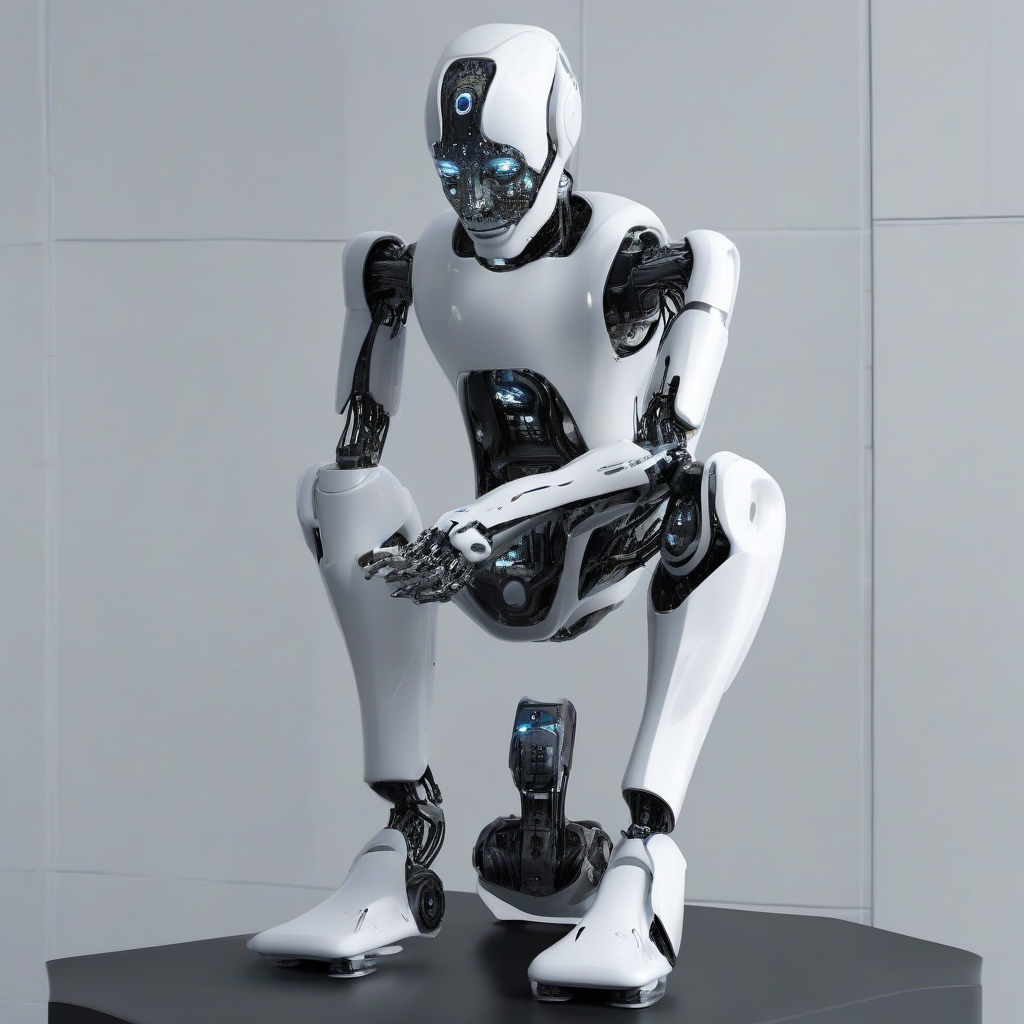
Your iPhone is a legacy device.
By 2026, the glass rectangle in your pocket will feel as prehistoric as a rotary phone. We have reached Peak Screen. We are scrolling more and achieving less. The era of digital consumption is dying, and the era of physical delegation is being born.
The world doesn't need another productivity app. It needs a pair of hands.
The Great Hardware Pivot
The "Smart" in Smartphone has become a misnomer. Your phone is a distraction engine. In 2026, the focus shifts from Information to Actuation.
Embodied AI—artificial intelligence with a physical form—is the pivot point. While the world was arguing about whether ChatGPT could write a poem, companies like Figure, Tesla, and 1X were solving the "Moravec’s Paradox." They realized that high-level reasoning is easy, but low-level sensorimotor skills are hard.
In 2026, those skills go mainstream.
We are moving from LLMs (Large Language Models) to VLAs (Vision-Language-Action models). This isn't just software that talks. This is software that walks, reaches, and organizes. The friction of the physical world is about to be automated.
The $20,000 Tipping Point
The most common critique of humanoid robots is cost. "Who can afford a $100,000 machine?"
The answer: Nobody. That’s why the price is collapsing.
By 2026, we hit the "Model T" moment for robotics. Through vertical integration and massive scaling of actuators and battery density, the cost of a general-purpose humanoid will drop to roughly $20,000—the price of a used Toyota Corolla.
At that price point, the math changes forever.
If a robot can work 20 hours a day, requires no health insurance, and never gets bored of folding laundry or unloading a dishwasher, the ROI is measured in months, not years. We are moving from a "Service Economy" to a "CapEx Economy." Instead of paying for a cleaning service every week, you buy the hardware once.
The smartphone made the world digital. The humanoid robot makes the digital world physical.
The Death of the "App" Economy
The App Store is a graveyard of things we thought we needed.
The "Invisible Labor" of the household is the first target.
We currently spend an average of 2.5 hours a day on unpaid domestic tasks. That is a massive drain on human cognitive bandwidth. When you reclaim those 17.5 hours a week, what do you do with them?
The smartphone hijacked our time. The robot gives it back.
The Infrastructure of the Physical Web
Humanoid robots don't need a special environment. That is their "Killer Feature."
We spent billions trying to build "Smart Homes" with connected blenders and lightbulbs that didn't talk to each other. It was a failure. Why? Because the world is built for humans.
We have stairs, door handles, and cabinets designed for five-fingered hands and bipedal movement.
The robots of 2026 aren't demanding we rebuild our houses. They are walking into them as they are. This is "Zero-Friction Integration."
Tesla’s Optimus and Figure’s 02 are already proving that neural networks can learn physical tasks through observation. By 2026, a robot won't need to be programmed to use your specific coffee machine. It will watch a YouTube video of a human doing it, simulate the physics in a "World Model," and execute the task perfectly on the first try.
Data is no longer just text and images. Data is now "Human Movement." Every second a human moves is training data for the 2026 labor revolution.
The Insight: The "Robot-as-a-Service" (RaaS) Flip
The most significant prediction for 2026: You won't actually "own" your robot’s brain.
You will buy the hardware, but you will subscribe to the "Skills Store."
Think of it like the App Store, but for physical capabilities. Need your robot to be a world-class sous-chef? Download the Michelin-star module. Need it to perform basic home maintenance or plumbing? Subscribe to the "Trade School" package for $49/month.
This creates a recursive loop of wealth. The more "skills" your robot learns, the more time you save, and the more value you create. For the first time in history, the average household will own its own "Means of Production."
The smartphone turned us into products. The humanoid robot turns us back into owners.
The screen was a transition phase. It was the bridge between the analog world and the automated one. In 2026, the bridge is crossed. We are putting the phones down and letting the machines pick up the slack.
The future isn't in your hand. It’s standing right next to you.
Would you trust a robot with your house keys if it meant you never had to do chores again?