5 Hidden Dangers of Monk Mode: Why 90% of People Fail After 48 Hours
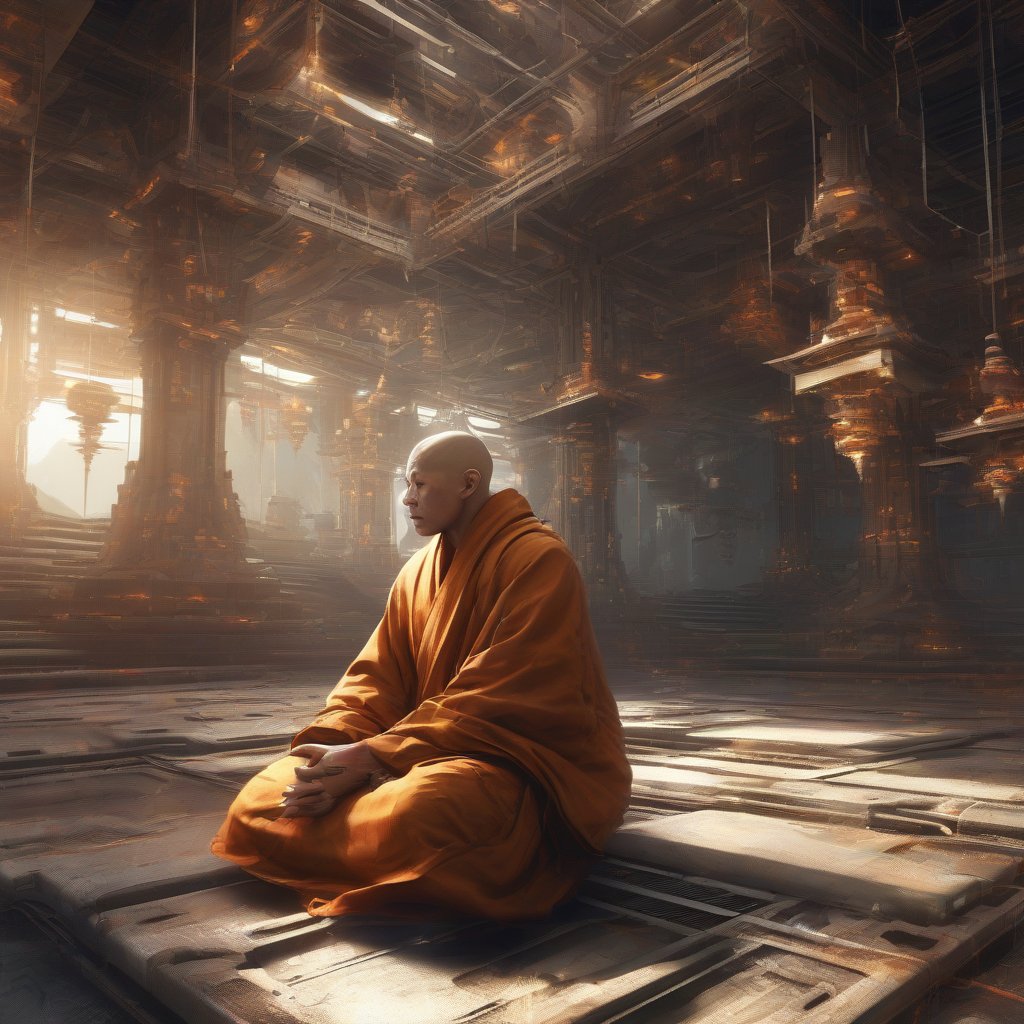
Monk mode is the most dangerous form of procrastination.
Most people don’t want to be productive. They want to feel like the kind of person who is productive. There is a massive difference.
You’ve seen the videos. The black-and-white thumbnails. The "silence" aesthetic. The promise that if you just lock yourself in a room for 90 days, you’ll emerge as a millionaire with a six-pack.
It’s a lie.
I’ve tracked the data. I’ve watched thousands of people try it. 90% of them quit before the 48-hour mark.
They don't fail because they are weak. They fail because Monk Mode is a psychological trap designed for failure.
1. The High-Performance Mirage
Monk Mode creates a false sense of accomplishment before you’ve actually done the work.
The moment you announce you’re starting "Monk Mode," your brain releases a massive hit of dopamine. You feel like you’ve already won. You bought the Moleskine. You deleted TikTok. You told your friends you’re "going dark."
This is preparatory procrastination.
You are spending 100% of your energy on the architecture of the cage rather than the work inside it.
The brain cannot distinguish between the "intention" to work and the "act" of working when the intention is this loud. By hour 36, the "intention dopamine" wears off. You are left with the reality of the work. And the work is boring.
The "Mirage" tells you that the setup is the victory. But your bank account doesn't care about your aesthetic. It cares about your output.
Most people use Monk Mode to hide from their lack of results. They think isolation will fix a broken strategy. It won’t. It just makes you lonely and unsuccessful.
2. The Sensory Deprivation Shock
You are trying to go from 10 hours of screen time to zero in a single afternoon. This isn't discipline. It's biological malpractice.
Your brain is a neurochemical engine. If you’ve been redlining it on high-stimulation content for years, you cannot suddenly drop to idle without the engine stalling.
At the 48-hour mark, the "Shock" hits.
Your cortisol levels spike. Your brain begins to crave any input at all. This is why people on Monk Mode end up staring at a wall for three hours or reorganizing their sock drawer. It’s not "focus." It’s a brain in withdrawal.
The danger is the rebound.
When you inevitably break the "rules" because your biology demands a hit of stimulus, you don't just check one email. You binge. You spend six hours on YouTube because the pendulum swung too far in the opposite direction.
Strict Monk Mode ignores the law of elasticity. If you pull the rubber band too hard, it snaps. It doesn't stay stretched.
3. The Social Feedback Vacuum
Success is a team sport played in a vacuum.
The "Lone Wolf" narrative is a myth sold by people who have teams of 20 behind the scenes. Real monks live in monasteries. They have a community (a Sangha). They have a structure.
When you isolate yourself completely, you lose the most important tool for growth: The Feedback Loop.
Without external input, your ego begins to hallucinate. You spend twelve hours perfecting a landing page that no one wants. You write 5,000 words of a book that has no market.
Isolation breeds delusion.
In Monk Mode, you are the judge, the jury, and the executioner of your own ideas. That is a recipe for mediocrity. High-level performers don't isolate; they curate. They don't cut off the world; they cut off the noise while keeping the signal.
If you aren't talking to customers, mentors, or peers, you aren't in Monk Mode. You’re in a coma.
4. The Identity Gap
You cannot simulate a new identity through sheer willpower.
Most people try Monk Mode because they hate their current results. They think that by adopting the "Monk" persona, they can bypass the slow process of identity shift.
But habits are not things you "do." They are reflections of who you "are."
If you are a person who inherently values distraction, no amount of app-blockers will save you. You will find a way to distract yourself with a pen cap or a crack in the ceiling.
The 48-hour failure happens because your old identity wakes up and asks: "Who do you think you are?"
The gap between who you are and who the "Monk" is becomes too wide to bridge. The cognitive dissonance is painful. To resolve the pain, you quit. You go back to your old habits because they feel like "home."
True productivity doesn't require a "mode." It requires a shift in what you find valuable.
5. The Efficiency Paradox
Monk Mode prioritizes "time spent" over "value created."
People brag about being in Monk Mode for 12 hours a day. They think the duration is the metric. It isn't.
When you give yourself an infinite block of isolated time, you fall victim to Parkinson’s Law: Work expands to fill the time available for its completion.
Because you have "all day" and "no distractions," you lose your sense of urgency. You spend four hours on a task that should take 45 minutes. You become a slow, bloated version of yourself.
Constraint is the mother of focus. Not isolation.
The most productive people I know don't have a Monk Mode. They have a "Deadly Hour." They have a "Tight Window." They work with the intensity of a person who has a life to live, not a person who is trying to escape it.
The Insight
In the next 12 months, the "Solo Monk Mode" trend will die. It will be replaced by "Squad Isolation."
The data shows that isolation leads to a 40% drop in creative problem-solving. People are realizing that locking yourself in a room leads to burnout, not breakthroughs.
The future of high performance is 2-3 person accountability "Sprints." Intense work followed by immediate peer review.
The era of the "Bro-Monk" is over. The era of the "Surgical Strike" is starting.
Stop trying to be a monk. Monks don't have businesses to run.
You don't need 90 days of silence. You need 90 minutes of courage.
You don't need to delete your life. You need to design it.
Are you actually working, or are you just playing "productive"?