How Deepfake Candidates Will Dominate 2026
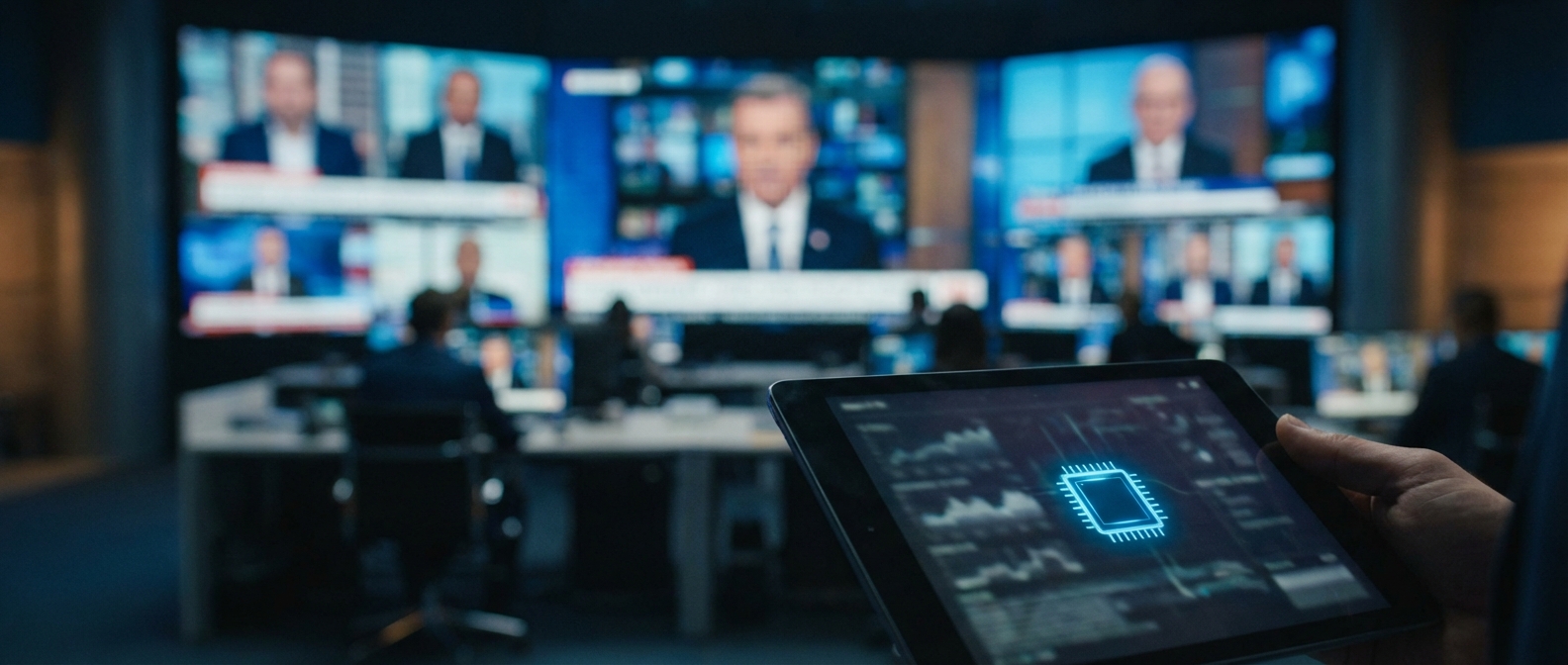
Stop voting for humans. They’re too expensive, too prone to scandals, and they need to sleep.
The 2026 midterms won’t be won by the best platform. They will be won by the best algorithm. In 24 months, the "Deepfake Candidate" will be the industry standard.
Here is why your next Representative might not actually exist.
The Rise of the Vessel Candidate
Political consulting is a $10 billion industry built on one flaw: the candidate.
Humans are liabilities. They say the wrong thing at 2 AM. They have "hot mic" moments. They have pasts that researchers can dig up.
In 2026, the "Vessel Candidate" becomes the meta. This is a real person—usually a charismatic, telematic blank slate—who serves as the physical avatar for an AI-driven "brain."
Think of it as a biological deepfake. Every speech they give is written by an LLM trained on real-time sentiment data. Every answer in a debate is fed through an earpiece by a model that has analyzed the opponent's facial micro-expressions.
But it goes deeper. By 2026, we will see "Always-On" candidates. Using real-time voice cloning and video synthesis, a candidate can be in 1,000 "Town Halls" simultaneously.
They will call your phone. They will look you in the eye through a FaceTime ad. They will use your name, mention your specific neighborhood’s crime stats, and reference the local high school football score.
It’s not "mass communication." It’s "mass personalization." And humans can't compete with that scale.
Scandal-as-a-Service & Synthetic Whistleblowers
The "October Surprise" is dead. In 2026, the surprises will happen every Tuesday.
We are moving from "fake news" to "fake reality." In previous cycles, you needed a leaked tape to sink a campaign. In 2026, you just need a GPU and a prompt.
Expect the rise of the "Synthetic Whistleblower."
Imagine a 4K video of a disgruntled former staffer describing a candidate’s "secret offshore accounts." The lighting is perfect. The emotion is raw. The person doesn't exist. They are a "digital composite" of a whistleblower.
By the time the fact-checkers realize the person in the video has no Social Security number, the election is over.
Campaigns will use "Micro-Targeted Attacks." A deepfake of a candidate saying something offensive about farmers will be shown only to farmers in three specific counties via encrypted Telegram groups.
The Liar’s Dividend: The Ultimate Get-Out-Of-Jail-Free Card
The most dangerous part of the deepfake era isn't the fakes. It's the "Liar's Dividend."
This is a term from legal scholars Danielle Citron and Bobby Chesney. It describes a world where, because anything could be a deepfake, nothing is definitely real.
In 2026, when a real, career-ending video of a politician surfaces, they won't apologize. They will just say: "That’s an AI-generated hit piece."
And 50% of the country will believe them.
The existence of deepfakes provides a "shroud of deniability" for every actual crime. We’ve already seen the trailer for this. Candidates in 2024 started claiming real audio was "manipulated."
By 2026, this will be the standard defensive playbook. The truth won't be suppressed; it will just be drowned out by a sea of plausible alternatives.
The Automated Super PAC
The biggest spenders in 2026 won't be humans. They will be "Autonomous PACs."
- Buy its own ad space based on real-time price fluctuations.
- A/B test 10,000 variations of a meme in an hour.
- Manage "bot swarms" that look like organic grassroots movements.
- Identify "persuadable" voters using psychographic data more accurately than any human consultant.
This isn't sci-fi. This is just a more efficient version of what high-frequency trading did to Wall Street.
Politics is becoming a "black box" operation. The humans at the top set the objective, and the machine figures out the most effective (and often most ruthless) way to get there.
THE INSIGHT
By November 2026, we will see the first "Total Synthetic Win."
A candidate in a high-profile House race will run a campaign that is 90% automated. They will skip every traditional media interview. They will exist almost entirely as a series of AI-generated videos, personalized voice memos, and bot-driven social narratives.
They will win because they were "present" for every single voter individually, while their human opponent was still trying to book a single TV spot on the local news.
The 2026 midterms will prove that in the attention economy, a perfect lie is more valuable than an imperfect truth.
The "Deepfake Candidate" isn't a glitch in the system. It's the new operating system.
If you can't tell the difference between a candidate's platform and a prompt, who is really in charge?