Hollywood Is Over: How OpenAI Sora Will Dominate the Global Film Industry by 2026
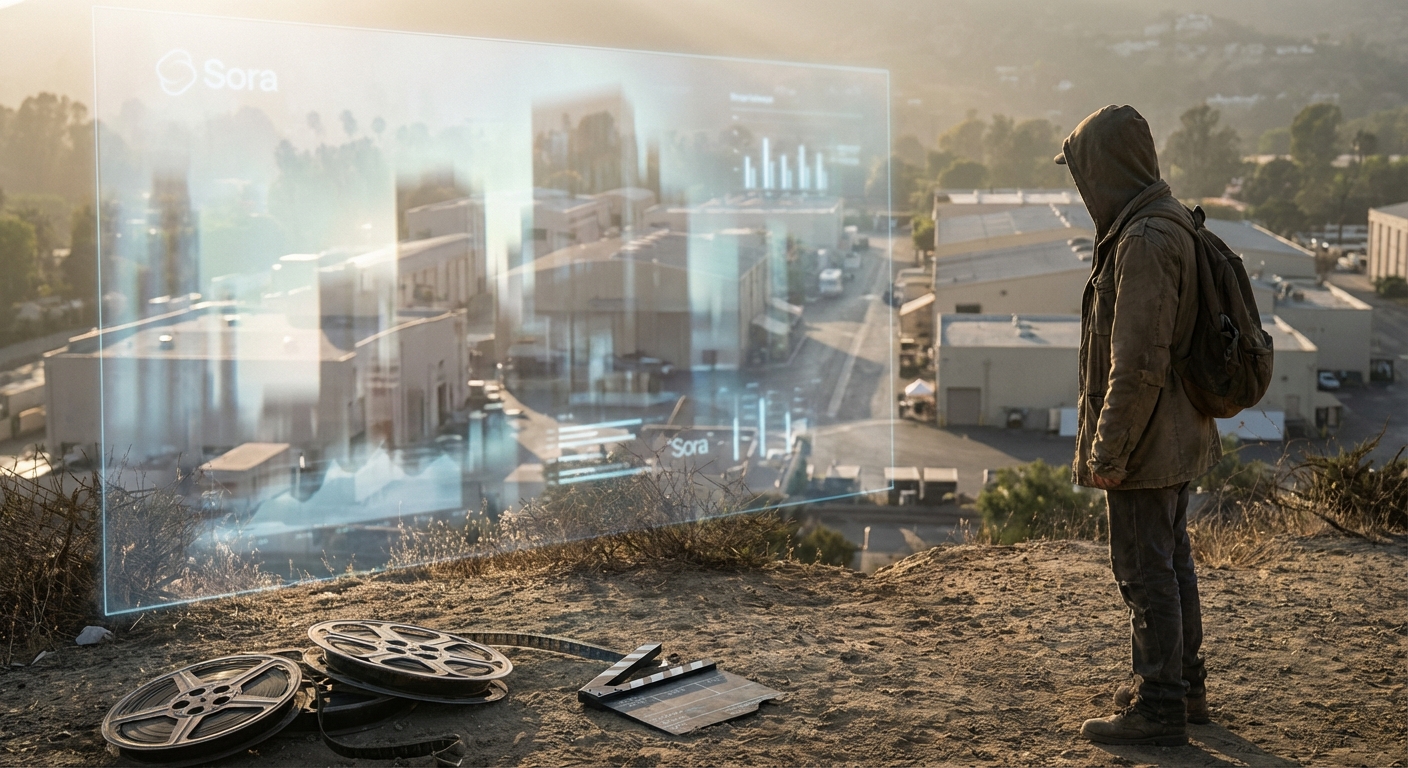
Hollywood is a dead man walking.
The credits are rolling on the legacy studio model. They just don't know it yet.
In 2024, OpenAI showed us Sora. In 2025, the industry scoffed and cited "temporal consistency" and "hallucinations." By 2026, the traditional blockbuster will be an overpriced relic of the past.
I spent ten years analyzing media shifts. I’ve seen the rise of Netflix and the death of Blockbuster. This isn't a pivot. This is an extinction event.
Here is why your favorite movie studio is about to become a historical footnote.
The $200 Million Prompt
The math of Hollywood is broken.
Currently, a mid-budget Marvel movie costs $200 million. 40% of that goes to logistics. Trailers. Catering. Insurance. Flying a B-list actor to a remote island so they can stand in front of a green screen.
It’s inefficient. It’s bloated. It’s slow.
Sora 2026 turns a $200 million budget into a $200 subscription.
Think about the "The Creator" (2023). It looked like a $150 million film. It cost $80 million. It used prosumer cameras and a skeleton crew. That was the last gasp of the old world.
In the Sora era, "scale" is a software update.
You want a 10,000-person battle scene in 4K with perfect lighting? You don't need 10,000 extras. You don't need a permit for a field in New Zealand. You need a descriptive paragraph and a high-end GPU.
The barrier to entry has dropped from "generational wealth" to "internet connection."
When the cost of production hits near-zero, the value of the "Studio" hits zero. Studios were banks. They provided the capital for the impossible. But when the impossible is free, the bank is useless.
The Death of the "A-List" Insurance Policy
Hollywood relies on "Stars" to de-risk investments.
They pay Tom Cruise $25 million because his face guarantees a global opening weekend. It’s not about talent. It’s about a predictable ROI.
But Sora doesn't need Tom Cruise.
By 2026, AI-generated characters will be indistinguishable from humans. They will be more reliable. They won't have scandals. They won't age. They won't demand a percentage of the gross.
We are moving from the era of "Stars" to the era of "IP-Avatars."
Disney is already preparing for this. Why pay a human actor to play a superhero when you can own the digital soul of that character forever?
But here’s the twist: The audience won't care.
We’ve already been conditioned by VTubers and CGI influencers. The "uncanny valley" is closing. When a Sora-generated lead gives a performance that makes you cry, you won't care that it's made of pixels.
The leverage has shifted. The talent is no longer in front of the camera. The talent is the person who knows how to direct the latent space.
The Rise of the "Solo Studio"
The most successful film of 2026 won't be made by Universal.
It will be made by a 19-year-old in Jakarta. Or a grandmother in Ohio. Or a failed screenwriter who was told their "vision was too expensive" for the suits in Burbank.
We are entering the era of the Solo Studio.
One person. One vision. Total control.
In the old model, a director’s vision is diluted by 500 people. Executives. Producers. Script doctors. Lighting techs. Every hand that touches the film rubs a little bit of the soul off.
Sora is the ultimate "Pure Vision" machine.
If the director wants the sky to be a specific shade of bruised purple, they don't have to argue with a colorist. They just type it. If they want the dialogue to be whispered in a dead language, it happens in real-time.
The "Megalopolis" era of filmmaking—where one man burns a fortune to realize a dream—is over. Now, you can dream for the price of a coffee.
Why go to an AMC to see a movie that was designed by a committee to be "safe," when you can watch a masterpiece designed specifically for your niche interests by a creator you trust?
Infinite Personalization: The Final Frontier
This is the part that keeps Netflix executives awake at night.
By late 2026, Sora won't just be a tool for creators. It will be a tool for consumers.
"Sora, show me a version of 'The Dark Knight' but set in feudal Japan, starring Toshiro Mifune."
"Sora, make a romantic comedy where I am the lead, and the love interest is my celebrity crush."
This isn't sci-fi. This is the logical conclusion of generative video.
The concept of a "Fixed Movie" is dying. We are moving toward "Liquid Media." Content that adapts to the viewer.
If the algorithm knows you like high-stakes thrillers but hate sad endings, it will adjust the final act of the movie in real-time.
Hollywood is built on the "One Size Fits All" model. They spend $300 million trying to please everyone and end up pleasing no one. Sora allows for the "One Size Fits You" model.
Global domination isn't about owning the most theaters. It's about owning the most pixels. OpenAI is building the new "Camera," the new "Film," and the new "Projector" all at once.
The Prediction
By December 2026, an AI-generated film (created by a team of fewer than five people) will win a major category at a top-tier film festival.
The industry will protest. There will be strikes. There will be lawsuits.
It won't matter.
The audience has already decided. They want more, they want it faster, and they want it cheaper.
The 100-year reign of the "Studio System" was a historical anomaly caused by the high cost of hardware. Sora just deleted that cost.
The "Global Film Industry" is no longer a physical place in California.
It is a prompt box.
Are you ready to stop watching and start creating?