Why Your Social Feed is Failing: The Terrifying Rise of AI-Generated 'Dead Content'
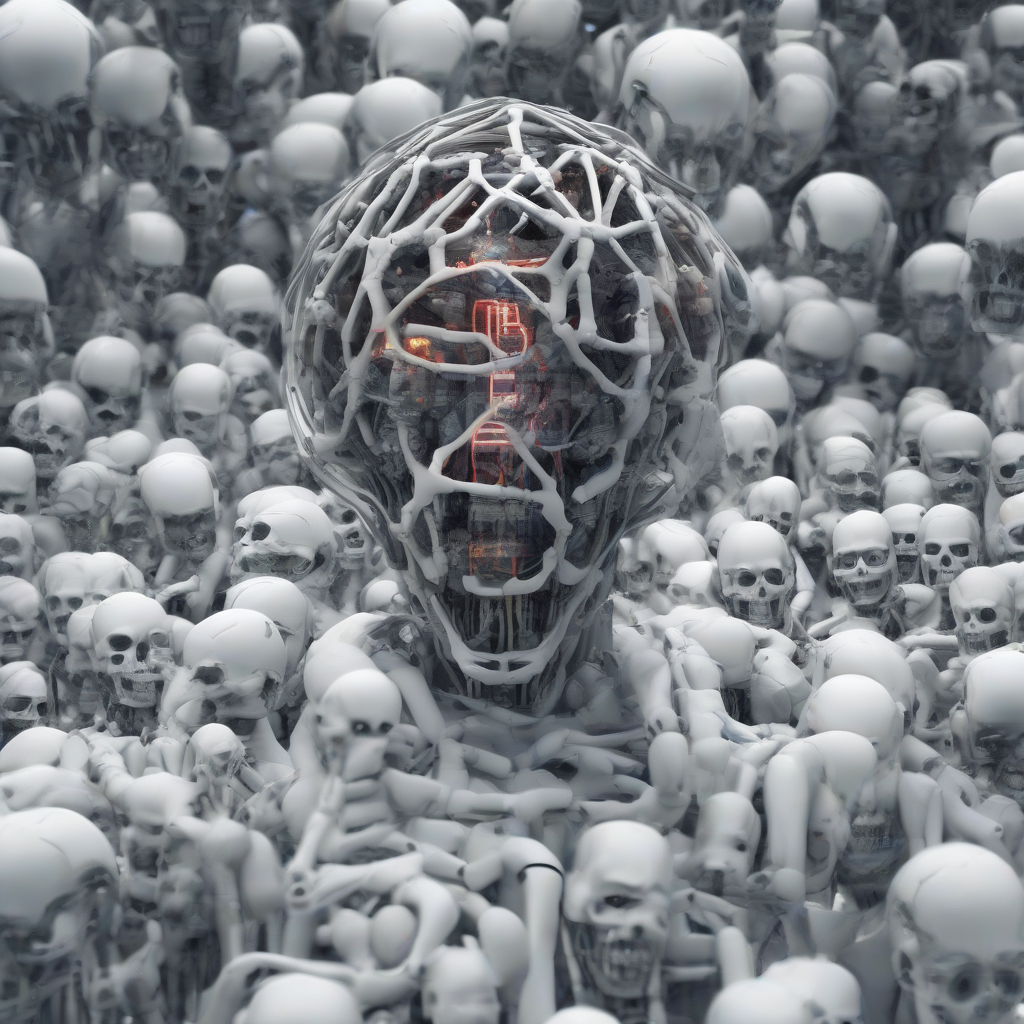
The internet as you knew it is officially dead.
You aren’t scrolling through a social feed anymore. You are navigating a digital graveyard. Your "Suggested for You" tab isn't a curated selection of human creativity. It is an algorithmic dumping ground for synthetic waste.
We have entered the era of "Dead Content."
If you feel like your engagement is tanking, it’s not because you’ve lost your touch. It’s because you are competing with a machine that doesn't sleep, doesn't get paid, and doesn't care if its content is actually true.
Here is why your feed is failing—and why the worst is yet to come.
The 90% Synthetic Tsunami
By 2026, experts predict that 90% of online content will be synthetically generated.
Think about that number. For every ten posts you see, nine will be the product of a prompt, not a person. We are already seeing the first wave. It’s called "AI Slop."
You know it when you see it. The overly polished LinkedIn "thought leadership" posts that say nothing in 500 words. The "Shrimp Jesus" images on Facebook. The generic TikTok scripts that sound like they were written by a corporate HR bot on Lexapro.
This isn't just a minor annoyance. It is a fundamental shift in the economics of attention.
The result? A hyper-inflation of "stuff." When the supply of content becomes infinite, the value of a single post drops to zero. Your human-made, high-effort video is being buried under 10,000 AI-generated clips that the algorithm treats with the same weight.
The Bot-to-Bot Feedback Loop
The terrifying reality of the "Dead Internet" isn't just that bots are making content. It’s that bots are consuming it, too.
Algorithms prioritize "engagement signals." But when those signals—likes, comments, and shares—are being generated by click-farms and automated scripts, the system breaks. The algorithm sees a piece of "slop" getting thousands of bot-likes and thinks: "This is a hit."
Then it shows it to you.
You find yourself in a feedback loop where humans are the secondary audience. You are the "ghost in the machine," watching a conversation between two LLMs that are trying to sell each other a product neither of them can use.
Our social feeds are the first victims of this digital inbreeding. We are consuming the recycled waste of an algorithm that has forgotten what it means to be human.
The Death of the "Polished" Era
For years, the goal was to look perfect. 4K cameras. Studio lighting. Flawless editing.
We are seeing a massive rejection of the "Influencer Aesthetic." Consumer preference for AI-generated content has plummeted from 60% to just 26% in two years.
People are starving for "Human Messiness."
Low-production, high-authenticity content is the only thing cutting through the noise. This is why "raw" vertical video, shaky camera work, and stuttering delivery are winning. They are "Proof of Life."
If your social strategy is still focused on looking "professional," you are making it easier for the audience to mistake you for a bot. In a world of infinite polish, the only way to stand out is to be visibly, undeniably flawed.
The Insight: The Rise of the Human Premium
Within 24 months, "Human" will be a luxury brand.
On the top tier, we will see the rise of "Gated Human Communities."
Think private Slacks, paid newsletters, and invite-only social networks that require biometric verification or "Proof of Personhood." People will pay a premium specifically to know that the person on the other end of the screen has a heartbeat.
The "Creator Economy" as we know it is dead. It is being replaced by the "Trust Economy."
Your reach doesn't matter if your audience doesn't believe you exist. The winners won't be the people who post the most; they will be the people who can prove they are real.
Does your current feed make you feel more connected to people, or more like a target for a machine?