The $500 Billion Takeover: How AI Creators Will Dominate Every Screen by 2026
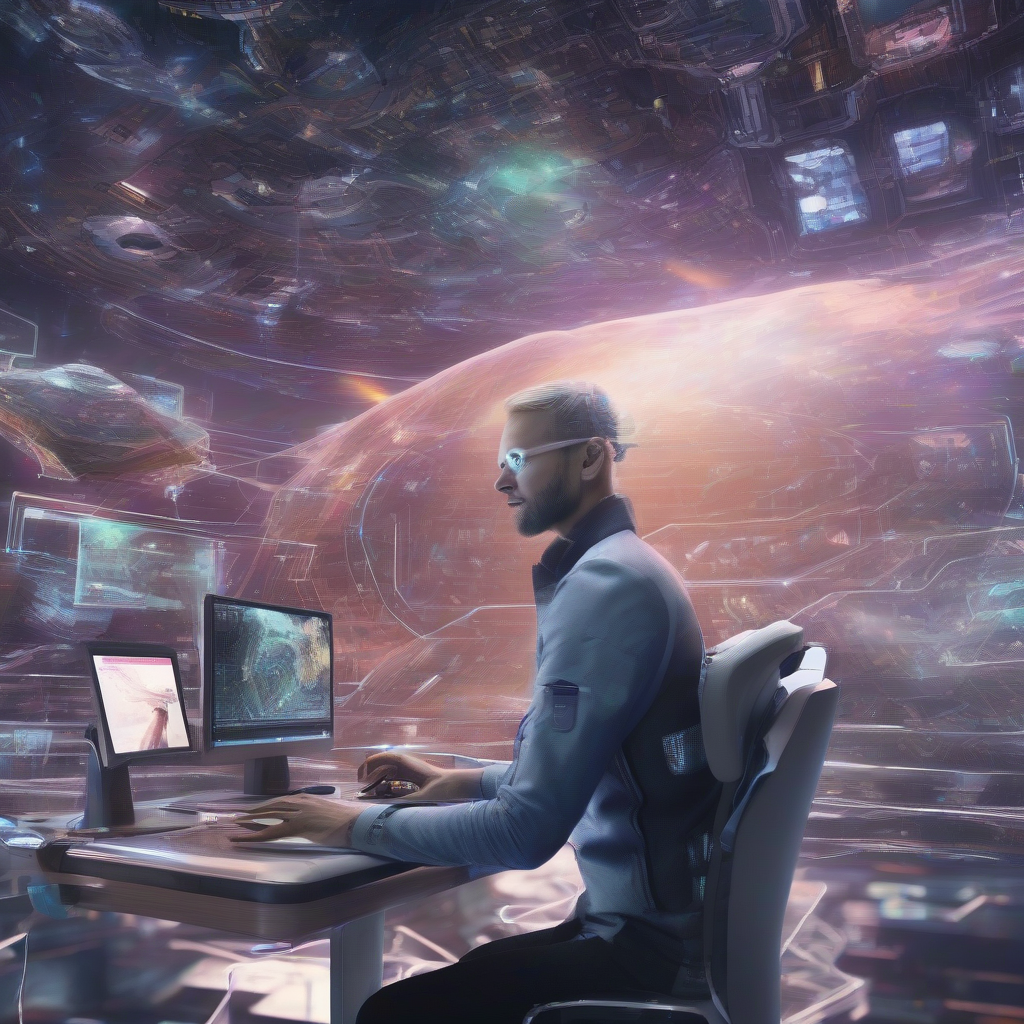
The most famous person in 2026 won’t have a heartbeat.
The traditional creator economy is a dinosaur. It is slow. It is expensive. It is limited by the physical constraints of human biology. Your favorite YouTuber needs to sleep. They need to eat. They get tired of the camera.
We are entering the era of the $500 Billion Takeover. By 2026, the "Individual Studio" will replace the media conglomerate. One person with a laptop and a suite of generative models will out-produce, out-earn, and out-influence entire television networks.
The barrier to entry didn't just lower. It evaporated.
The Death of the Production Unit
Legacy media is built on friction.
To make a 30-second commercial, a brand used to need a creative agency, a production crew, a lighting team, three actors, a location scout, and six weeks of post-production. The bill? $250,000 minimum.
In 2026, that same commercial is generated in 45 minutes by a 19-year-old in a coffee shop.
We aren't just talking about "better tools." We are talking about the collapse of marginal costs. When the cost of high-fidelity video production drops to near zero, volume becomes the new moat.
The "Production Unit" is no longer a group of people. It is a series of interconnected API calls.
If you are still hiring a cameraman, you are buying a horse in the age of the Model T.
The Hyper-Personalization Trap
Netflix has a problem. They spend billions on "Broad Appeal" content. They try to make one show that 10 million people will like.
By 2026, content won't be "broadcast." It will be "narrow-cast."
Imagine an AI-generated sitcom where the lead character has your sense of humor, the setting is your hometown, and the plot addresses your specific life stressors. This isn't sci-fi. This is the logical conclusion of Generative Adversarial Networks (GANs) and Large Language Models.
The algorithm already knows what makes you click. Soon, the algorithm won't just find a video for you—it will render one.
The "Mainstream" is dying. It is being replaced by billions of individual streams, each one perfectly calibrated to keep a specific set of eyeballs glued to the screen.
The Arbitrage of Attention
Attention is the only currency that matters.
Right now, there is a massive arbitrage opportunity. Major brands are still overpaying for "Legacy Influence." They pay $50,000 for a sponsored post from a human influencer who might forget the talking points or post at the wrong time.
The smart money is moving to AI-managed assets.
This is the $500 Billion shift. The money isn't just moving from TV to Social. It’s moving from "Human-Dependent Content" to "Scalable Digital Assets."
The creators who win in 2026 won't be the best "artists." They will be the best "Architects." They won't spend their time editing video; they will spend their time tuning the models that edit the video for them.
The middle class of content creation is about to be wiped out. You are either the Architect or you are the audience. There is no in-between.
The New Elite: Director-Architects
Stop calling them "Prompt Engineers." That’s a low-level view.
They understand that the "Magic" isn't in the tool. The tool is a commodity. Midjourney, Sora, Runway, ElevenLabs—everyone has access to the same buttons.
The value is in Taste and Curation.
In an world of infinite content, the human element moves upstream. You don't get paid to "do" the work. You get paid to "decide" what work is worth doing.
The $500 billion will be captured by those who can steer the machine.
We are seeing the rise of "Ghost Studios." These are lean teams—often just 1 or 2 people—generating the output of a 1990s-era Pixar. They don't have offices. They don't have payroll. They have "Compute Credits."
They are the ones who will dominate every screen. Your phone, your TV, your VR headset—it will all be filled with their synthetic reality.
And the scary part? You won't even care that it's "fake." You'll be too entertained to notice.
The Insight
The "Uncanny Valley" isn't a barrier; it's a bridge. Once we cross it, the distinction between "Real" and "Generated" becomes a pedantic argument for historians. To the consumer, value is value.
The takeover isn't coming. It’s already started.
The screens are staying. The humans behind them are changing.