I Tried Monk Mode for 30 Days: 5 Dangerous Reasons Your Mental Health Can’t Handle It
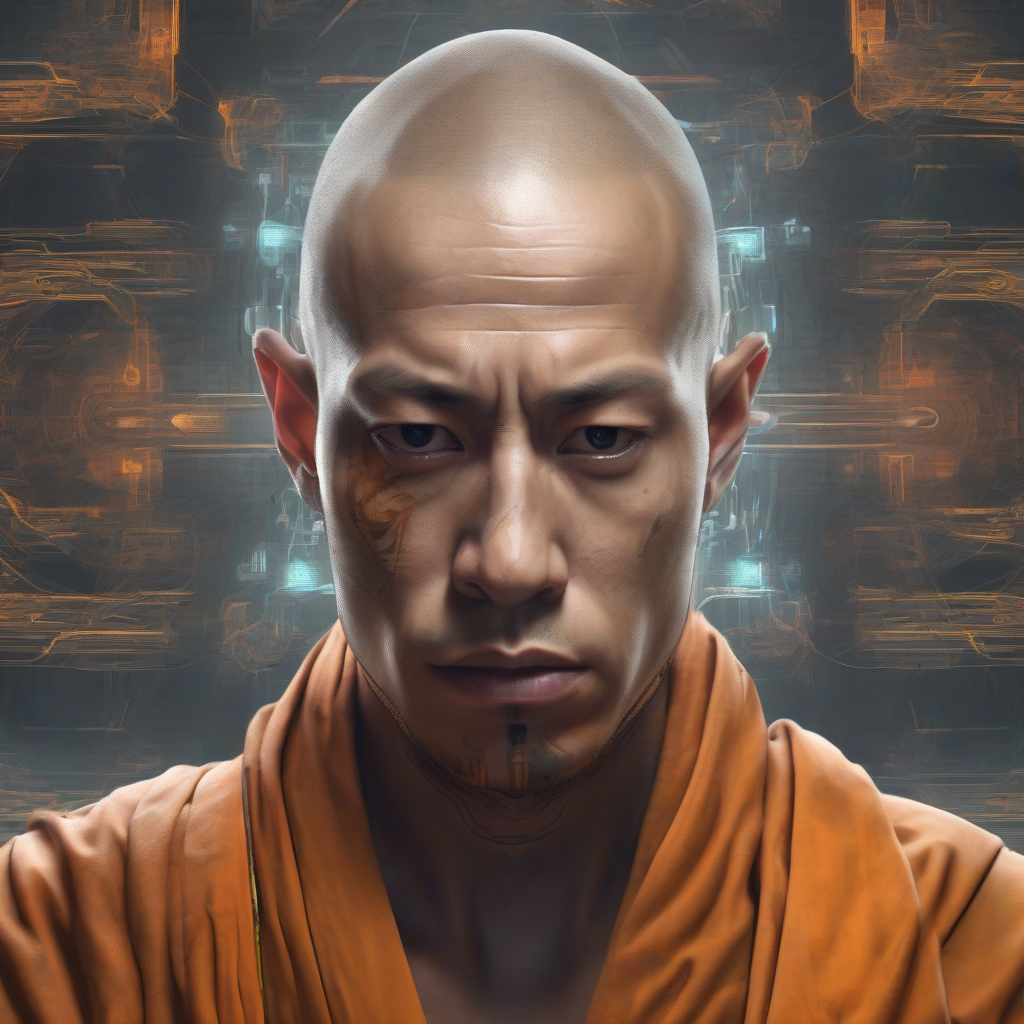
Self-improvement is the new cigarette.
We’re addicted to the idea of becoming "limitless." We treat our brains like operating systems that just need a cleaner code.
Last month, I deleted every social app. I cut out caffeine. I stopped talking to friends. I worked 12 hours a day in a silent room. I tried "Monk Mode."
It didn’t make me a genius. It made me a ghost.
Everyone is selling you the dream of extreme focus. Nobody is telling you about the psychological cost of turning yourself into a machine.
Here are the 5 dangerous reasons your mental health isn’t built for Monk Mode.
1. The Social Atrophy Trap
Humans are not designed for vacuum-sealed productivity.
When you enter Monk Mode, you cut the "noise." You think that noise is just distractions—Instagram notifications, useless small talk, happy hours. It’s not. That noise is human friction.
Friction keeps you grounded.
In isolation, your social intelligence begins to rot. By day 15, I found myself rehearsing how to order a coffee. By day 20, the sound of my own voice felt foreign.
The danger isn't that you'll be lonely. The danger is that you'll become "socially brittle." You lose the ability to navigate the nuances of human emotion. You become a high-output robot that can’t hold a conversation with a real person.
Monk Mode promises clarity. It often delivers a subtle, terrifying form of dissociation. You aren't "above" the world. You’re just no longer part of it.
2. The Dopamine Flatline
Your brain runs on contrast.
If you spend 30 days eliminating every "cheap" hit of dopamine—no sugar, no scrolling, no sex, no entertainment—you expect a neurochemical reset. You expect to find joy in a sunset or a spreadsheet.
The reality? You enter the Gray Zone.
When you remove the peaks of your day, the valleys don’t disappear. They just get wider. Without the "interruptions" of modern life, your brain has nothing to bounce off of.
By week three, my productivity didn't skyrocket. My motivation evaporated. I was staring at a blank wall for hours because my brain had lost its "why."
We need the spikes to appreciate the steady state. Without them, Monk Mode becomes a slow-motion depression. You aren't becoming more focused; you’re becoming emotionally numb.
A brain with no pleasure is a brain that stops trying.
3. The Optimization Dysmorphia
Monk Mode turns your life into a balance sheet.
Every minute must be accounted for. Every calorie must be clean. Every hour of sleep must be tracked. You start to view yourself not as a person, but as a project to be managed.
This is the birth of Optimization Dysmorphia.
If I slept seven hours instead of eight, the day was "ruined." If I spent ten minutes thinking about something other than work, I was "failing" the protocol.
The pressure to be perfect in isolation creates a unique kind of anxiety. In the real world, life happens to you. In Monk Mode, you are the only variable. If things go wrong, it’s 100% your fault.
This level of self-criticism is toxic. It turns self-improvement into self-flagellation. You spend 30 days building a system, only to realize you’ve built a prison where you are both the inmate and the guard.
4. The Emotional Compression Chamber
We use "distractions" for a reason.
Sometimes, we scroll because we’re tired. Sometimes, we go out because we’re sad. Distractions are the safety valves of the human psyche.
When you enter Monk Mode, you weld those valves shut.
In total silence, every trauma, every insecurity, and every repressed thought you’ve ignored for five years comes to the surface. You think you’re going to spend 30 days thinking about your business plan. You actually spend 30 days reliving every mistake you made in 2018.
Without an outlet, these emotions compress. They get louder. They get heavier.
Most people quit Monk Mode not because they’re "lazy," but because they aren't equipped to perform self-administered soul surgery without a guide. You aren't doing deep work. You’re trapped in a room with a version of yourself you’ve spent a lifetime trying to avoid.
5. The Post-Protocol Relapse
The most dangerous part of Monk Mode is Day 31.
The human mind cannot sustain extreme restriction indefinitely. It’s the "Rubber Band Effect." The harder you pull toward discipline, the more violent the snap-back when you let go.
I finished my 30 days feeling like a monk. Within 48 hours, I was binge-watching YouTube at 3:00 AM and eating junk food.
Because Monk Mode is an "all-or-nothing" game, it teaches you nothing about balance. It teaches you how to starve, but it doesn't teach you how to eat.
When the protocol ends, the "real world" hits you like a freight train. The noise is louder. The distractions are shinier. The lack of structure feels like vertigo.
Most people finish Monk Mode and end up in a worse mental state than when they started. They feel the guilt of the "relapse" and the shame of realizing that their 30-day "ascension" was just a temporary escape from reality.
The Insight
In 2025, the "Hyper-Productivity" trend will die.
The pendulum is already swinging away from "Monk Mode" and toward "Human-Centric Performance." People are realizing that 14-hour workdays in a dark room don't lead to wealth; they lead to burnout and therapy.
The next millionaires won't be the ones who can isolate themselves the best. They’ll be the ones who can integrate deep focus with deep connection.
We are moving away from "Hard Optimization" and toward "Sustainable Flow." The era of the monk is over. The era of the balanced athlete is beginning.
Stop trying to delete your humanity to save your schedule.
Are you building a life you want to live, or just a system you’re trying to survive?