Why the Monk Mode Protocol is Failing Your Focus (and Why You’re Still Unproductive)
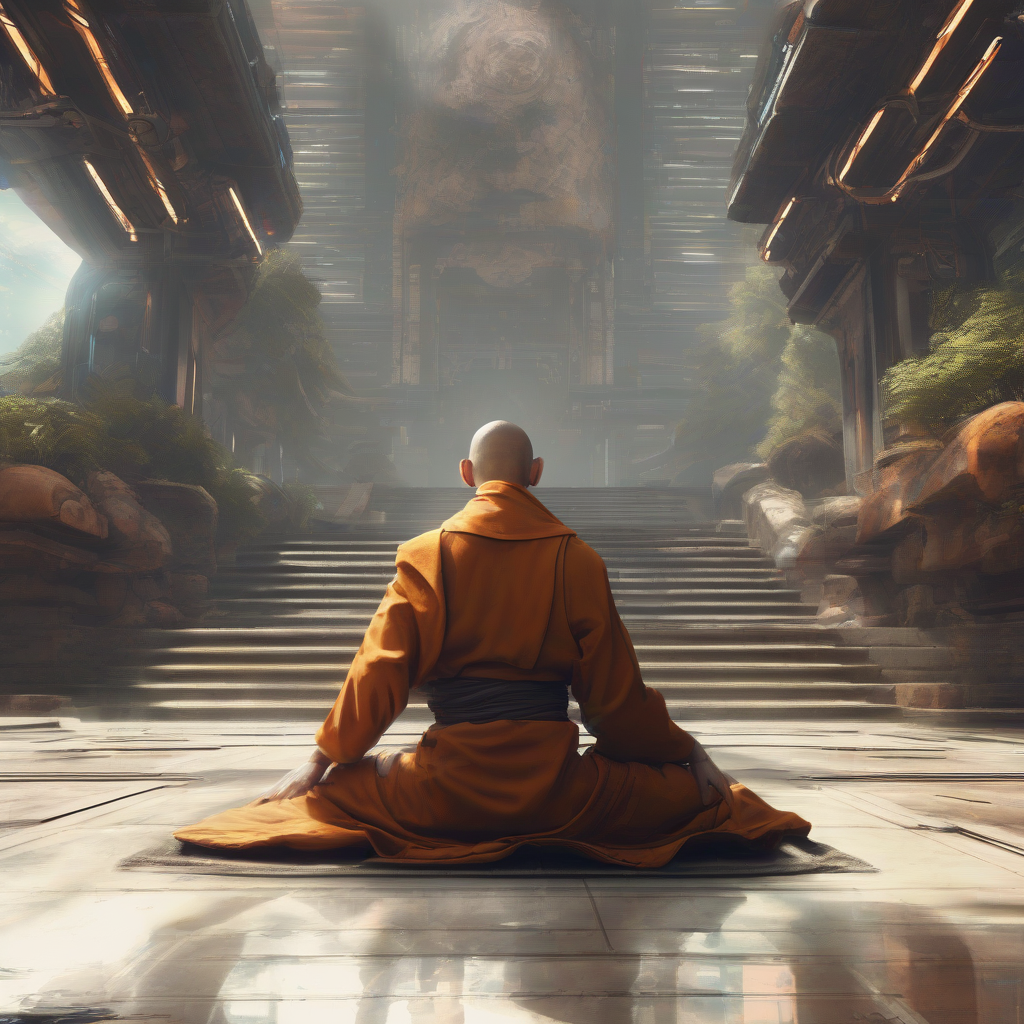
Monk Mode isn’t a productivity strategy; it’s a high-performance cope.
You’ve seen the reels. The black-and-white filters. The 4:00 AM timestamps. The "no-contact" declarations. You think if you just disappear from the world, you’ll suddenly reappear as a millionaire with a six-pack and a finished manuscript.
It’s a lie.
I’ve spent the last three years auditing the workflows of founders, creators, and executive athletes. I’ve seen people burn $50,000 on "deep work retreats" only to return with nothing but a tan and a full inbox.
The "Monk Mode" protocol is failing you because you’re treating it like a religion instead of a tool. You’re worshipping the isolation, not the output.
Here is why your "silent season" is making you louder but less effective.
The Aesthetic of Grit vs. The Reality of Output
Most people don’t want to be productive. They want to look like they are being productive.
Monk Mode has become a LARP—Live Action Role Play. You spend three days "preparing" for your isolation. You buy the Moleskine. You download the blocking apps. You post a "Going Ghost" story on Instagram.
This is dopamine-seeking behavior disguised as discipline.
By announcing your isolation, you get the social validation of the work without doing the actual work. Your brain receives the hit. The pressure is released. By the time you actually sit down to code or write, the urgency is gone.
True focus is invisible. It doesn't require a rebrand.
If you need a 30-day "protocol" to finish a 4-hour task, you don’t have a focus problem. You have an avoidance problem. You are using the complexity of the system to hide from the simplicity of the work.
The Isolation Paradox and Creative Decay
We’ve been sold the myth of the "Lone Genius." We think the best ideas happen in a vacuum.
They don’t.
Creativity is a collaborative sport. It requires the collision of disparate ideas. When you enter an extended Monk Mode, you cut off your "Input Stream." You stop talking to interesting people. You stop seeing new environments. You stop facing the friction of the real world.
Your work starts to smell like a basement. It becomes self-referential.
The most productive people I know don't isolate. They "Modularize." They go deep for four hours, then they hit a coffee shop. They engage with the chaos of the city. They let the world argue with their ideas.
Isolation breeds stagnation. If you stay in the cave too long, you don’t find the light—you just get used to the dark. You start optimizing things that don't matter. You spend six hours tweaking a font because there’s no one around to tell you the copy sucks.
The Binary Fallacy: Your Focus isn’t a Light Switch
The Monk Mode protocol teaches you that productivity is binary: You are either "On" (Isolation) or "Off" (Distraction).
This is a dangerous mental model. It builds a fragile ego.
If you’re in Monk Mode and a friend calls you for an emergency, your system breaks. You feel like a failure. You get angry at the world for "interrupting" your flow. You become a slave to your environment.
High-level performers build "Contextual Intensity."
They can focus in a terminal. They can write in the back of an Uber. They don't need a candle, a specific playlist, and a "Do Not Disturb" sign to execute.
By relying on the "Monk" environment, you are training yourself to be weak. You are building a focus that only works in a laboratory setting. The moment life gets messy—and it always does—your productivity collapses.
You don't need a cave. You need a better filter.
The Dopamine Hangover and the "Arrival Fallacy"
The biggest failure of the protocol is what happens when it ends.
Most people treat Monk Mode like a sprint. They white-knuckle their way through 21 days of deprivation. No sugar. No social media. No sex. No fun.
Then, Day 22 hits.
The result is a massive dopamine rebound. They binge. They crash. They lose all the gains they made in the previous three weeks because they didn't build a sustainable lifestyle—they built a temporary prison.
This is the "Arrival Fallacy." You think that after the protocol, you will be "fixed." You think you’ll have a permanent new baseline.
But focus is a muscle, not a destination.
When you stop the extreme protocol, the muscle atrophies because it was never integrated into your actual life. You become a "Yo-Yo Worker," alternating between periods of intense burnout and periods of total sloth.
You aren't being productive. You’re just oscillating between extremes.
The Prediction: The Rise of Social Deep Work
The era of the "Solo Monk" is dying. It’s too lonely, too fragile, and too prone to ego-traps.
Over the next 24 months, we will see the "Monk Mode" trend replaced by "High-Stakes Synchronicity."
The "Isolation Meta" is shifting toward "Micro-Hubs." People are realizing that 10 people working in a room in silence—knowing that the person to their left is also building something world-class—is 10x more effective than one person hiding in a bedroom.
We are moving away from "Disappearing" and toward "Radical Transparency."
Tools that show your real-time output to a small group of peers will replace the "Going Ghost" status update. Accountability will move from "Self-Reported" to "Live-Streamed."
The future of focus isn't sitting in a dark room alone. It’s working in a glass house where your lack of movement is visible to the people you respect.
Privacy is where procrastination lives. Exposure is where excellence happens.
The protocol isn't the problem. Your ego's need for a "transformation narrative" is the problem.
Stop trying to be a Monk. Start being a Professional.
A monk waits for the mountain to be quiet. A professional works while the mountain is crumbling.
What is the one task you are currently avoiding by pretending you need more "preparation" time?