Why Your Biological Age Test Is Failing To Stop You From Aging Faster Than You Think
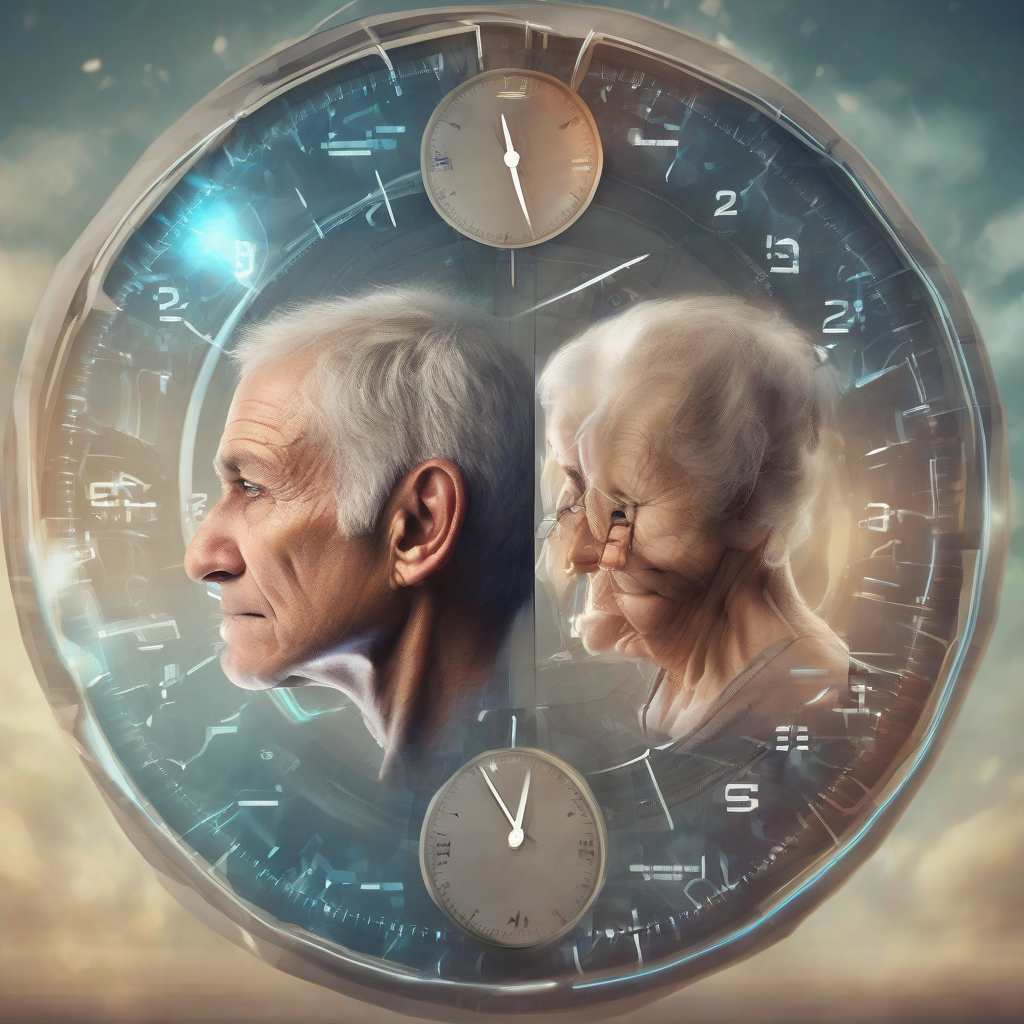
Your biological age test is a vanity metric.
You spent $500 on a kit. You spit in a tube. You waited six weeks for an email to tell you that you’re "three years younger" than your driver’s license says.
You feel great. You post the screenshot on LinkedIn. You go back to your $14 salad.
Here is the hard truth: That number is a lagging indicator. It is the scoreboard after the game is already over. While you’re celebrating a static score, your body is decaying in real-time in ways that your epigenetic clock isn't even tracking.
The longevity industry has become the new "Get Rich Quick" scheme, and you are the mark.
The Lagging Indicator Trap
Most biological age tests rely on DNA methylation. They look at certain "marks" on your genome to see how much wear and tear has occurred.
Think of your body like a high-performance vehicle. DNA methylation is the odometer. It tells you how many miles you’ve driven. It’s useful, but it’s historical.
An odometer doesn’t tell you if your brake pads are currently smoking. It doesn’t tell you if the transmission is about to drop out on the highway.
If you spent the last three months under chronic stress, sleeping four hours a night, and breathing in microplastics, your "biological age" might not move for another year. But your cellular integrity is cratering now.
We are obsessed with the "state" of our aging. We should be obsessed with the "rate" of our aging.
If you are 40 and your test says you are 35, you feel like a winner. But if your rate of aging is 1.2—meaning you are aging 1.2 years for every chronological year—you are losing. You are a fast-decaying system with a lucky starting point.
The test gave you a false sense of security. It gave you permission to stop optimizing.
The Longevity Industrial Complex is Selling Noise
We are currently in a Biohacking Bubble.
The market for longevity is projected to hit $25 billion by 2026. This creates a massive incentive for companies to give you "the number you want to see."
The "Biological Age" is the new bathroom scale. And just like the scale, it’s a terrible way to measure health. You can lose ten pounds of muscle and "weight" goes down, but your metabolic health just got worse.
Most tests ignore:
- Sarcopenia: You can have a "young" epigenetic score and the grip strength of an 80-year-old. If you fall, your "young DNA" won't save your hip.
- VO2 Max: The single greatest predictor of lifespan. Most saliva tests don't know if you get winded walking up a flight of stairs.
- Neural Processing Speed: Your brain can be "aging" faster than your blood.
We are buying "permission" to keep our bad habits by optimizing the margins. We take 40 supplements a day—half of which are probably contaminated or inert—because a dashboard told us our "InnerAge" is optimal.
It’s easy to buy a test. It’s hard to do 100 burpees. The industry knows this. They are selling you the easier path.
The Cellular Theft You Aren't Measuring
Aging isn't one thing. It’s a thousand small fires.
Your bio-age test is a snapshot. But your life is a movie.
The most dangerous factor in your longevity isn't your methylation profile. It’s Allostatic Load. This is the cumulative wear and tear on the body from chronic stress.
When you are in a high-cortisol state, your body deprioritizes cellular repair. It switches from "Maintenance Mode" to "Survival Mode." You are literally stealing from your future self to pay for your current afternoon.
A biological age test might show you are "30." But it doesn't show the damage being done to your mitochondria by the blue light you stare at until 1:00 AM. It doesn't show the systemic inflammation from the "healthy" processed protein bars you eat.
We have gamified mortality, but we’re playing the wrong game.
Stop looking for a single number. Start looking at functional outputs. Can you carry your groceries two miles? Can you sit on the floor and get up without using your hands? Can you focus for four hours without a stimulant?
If the answer is "no," I don't care what your DNA kit says. You are aging faster than you think.
The "Blue Zone" Delusion
We look at centenarians in Okinawa or Sardinia and try to reverse-engineer their "biological age."
We buy their olive oil. We try to mimic their diet. We miss the point entirely.
They don't have biological age tests. They don't have wearable rings. They have community. They have low-level movement all day. They have a lack of chronic, artificial stress.
Our obsession with testing for age is a symptom of the very environment that is accelerating our age. We are trying to use technology to solve a problem caused by technology.
You cannot "test" your way out of a sedentary, lonely, high-cortisol lifestyle.
The $2,000 you spent on blood work, epigenetic kits, and "longevity" coaching would have been better spent on a high-quality mattress, a personal trainer who focuses on heavy lifting, and a plane ticket to see your parents.
Biology is not a math problem. It’s a biological system. Systems don’t care about scores. They care about inputs and outputs.
The Insight
In the next 36 months, "Biological Age" tests will be exposed as the "Body Mass Index (BMI)" of the 2020s: A crude, often misleading metric that failed to account for individual complexity.
We will shift away from "snapshot" testing. The future is Real-Time Metabolic Monitoring (RTMM).
We are moving toward a world where we don't check our "age" once a year. We will have continuous sensors—beyond just glucose—monitoring oxidative stress, cytokine levels, and ATP production in real-time.
The "Yearly Lab" is dead. The "Continuous Bio-Feedback Loop" is coming.
Until then, stop trusting the tube of spit. If your lifestyle is 2024—sedentary, screen-addicted, and over-caffeinated—your biology is 2024. No "score" can change that.
You don't need a test to tell you that you're tired. You need a change in the inputs.
Optimization is a trap if you’re optimizing for a vanity metric instead of vital capacity.
The clock is ticking. The question is, are you actually watching the clock, or are you just staring at the reflection of your own anxiety in the glass?
What’s one thing you’re doing for your health that you can’t track on an app?