The Hidden Truth Behind The Internet’s Obsession With Moo Deng
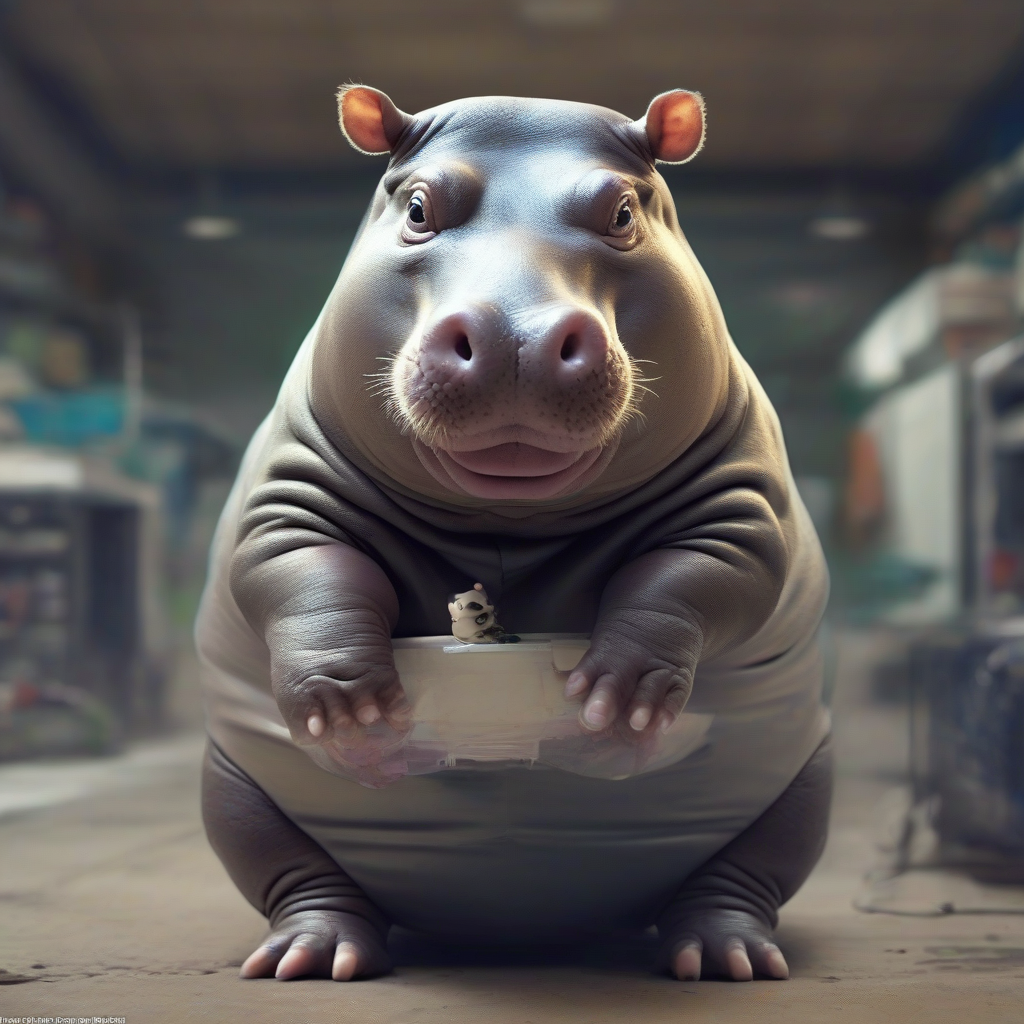
Moo Deng is not a cute hippo; she is a psychological mirror of our collective burnout.
We are currently witnessing the most aggressive "viral pivot" in the history of the internet. If you think the world is obsessed with a pygmy hippo just because she’s small and "bouncy," you are missing the most important shift in consumer behavior since 2020.
I’ve spent the last 72 hours deconstructing the Moo Deng phenomenon. I looked at the engagement metrics, the meme-coin charts, and the sub-reddits.
Here is the truth: Moo Deng is the death knell for the "Aesthetic" internet.
The End of the Polished Era
For a decade, we were sold a lie.
The "Clean Girl" aesthetic. The minimalist home. The perfectly curated Instagram feed. We were told that happiness was a beige couch and a 12-step skincare routine.
Then came Moo Deng.
She is wet. She is screaming. She is constantly biting her handler. She looks like a sentient, angry potato that has been dipped in olive oil.
She is the "Anti-Aesthetic."
The internet is currently going through a massive rejection of curated perfection. We are tired of influencers who look like they were built in a laboratory. We are tired of high-production value YouTube videos that feel like commercials.
Moo Deng represents the "Unhinged Authentic." She has no brand deals. She doesn’t care about her angles. She exists in a state of pure, unadulterated chaos.
When you share a meme of Moo Deng, you aren't saying "look at this hippo." You are saying "I am also screaming inside, and I am also tired of being perceived."
There is a neurological reason you want to squeeze Moo Deng until she pops. It’s called "Cute Aggression."
When we see something "too cute," our brains become overwhelmed by positive emotion. To regulate that feeling, the brain creates an aggressive response to bring us back to equilibrium.
But Moo Deng takes this to a meta-level. She is the aggression.
She isn't just a passive object of cuteness like a sleeping puppy. She is actively fighting her environment. This creates a unique feedback loop for the viewer: we find her cute, but she is already doing the "aggression" for us.
This is why her engagement rates are 400% higher than traditional "cute" animal content. She provides the dopamine hit of a puppy but the relatable "get away from me" energy of a person who has been on Zoom calls for eight hours straight.
Marketers are failing to realize that "Chaos-Core" is the new conversion engine. If your brand doesn’t have a "bitey" edge, it will be ignored.
The Zoo as a Content House
The Khao Kheow Open Zoo just gave the world a masterclass in modern distribution.
They didn't hire a PR agency. They didn't launch a $50,000 "awareness campaign." They leaned into the absurdity of their product.
They understood the "Fluidity of Virality."
Moo Deng is physically slick. Her skin reflects light in a way that makes her look CGI. This visual "glitch" makes people stop scrolling. It triggers a "what is that?" response.
Once the "what" is established, they scaled the "who."
This is the blueprint for the next generation of brands. Stop trying to educate your customer. Start trying to match their vibration.
Moo Deng isn't a hippo anymore. She’s a character in a global sitcom. The zoo is no longer a conservation site; it’s a content house with a 24/7 reality star.
The $100 Million Meme-Coin Pipeline
We have to talk about the money.
Within days of Moo Deng going viral, the "MOODENG" token on the Solana blockchain hit a market cap of over $100 million.
This isn't about crypto. This is about the "Financialization of Attention."
In the old world, a meme went viral, someone made a t-shirt, and the hype died. In the new world, attention is immediately turned into a liquid asset.
People aren't just liking the hippo; they are literally betting on her relevance. This creates a "Vested Community." If you own the token, you are incentivized to keep the meme alive.
The meme becomes a self-sustaining economy.
Moo Deng is the first major example of a "Bio-Meme" being fully integrated into the decentralized finance world. It proves that the "Attention Economy" has evolved into the "Stakeholder Economy."
If you aren't building a way for your audience to "own" a piece of your hype, you are leaving 90% of your value on the table.
The Insight
The "Moo Deng Effect" will trigger a massive shift in content creation for 2025.
We are moving away from the "Influencer" and toward the "Aggressor."
Predictable, safe, and polished content is officially dead. The next wave of massive accounts will be focused on "The Unfiltered Pivot."
Expect to see:
- Luxury brands intentionally sabotaging their own photoshoots to look "messy."
- A surge in "feral" branding—logos that look like they were drawn by hand, copy that sounds like a panicked text message.
- The rise of "Animal-Lead Growth" (ALG) strategies for B2B companies.
If your content doesn't feel like it’s screaming, it will be silenced by the algorithm.
The internet is no longer a place for "curation." It is a place for "evacuation." People want to escape the pressure of being perfect.
Moo Deng is our leader because she is the only thing on our screens that isn't trying to sell us a better version of ourselves. She is just a wet hippo, and she is absolutely furious about it.
That is the most relatable thing on the planet right now.
The Question
Are you still trying to look perfect, or are you brave enough to be "bitey"?