5 Dark Reasons Why Hollywood is Failing the Ethics Test by Stealing Celebrity Likenesses with AI
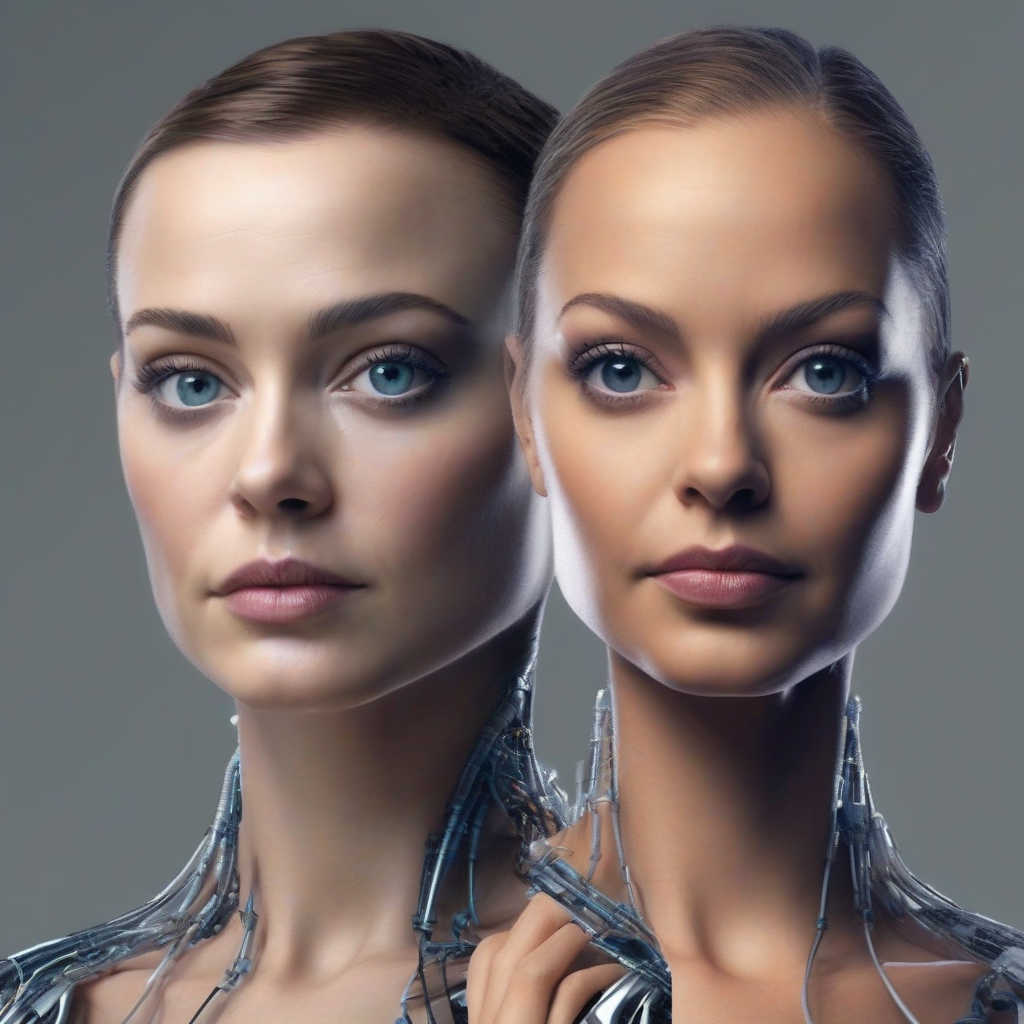
Hollywood is no longer in the movie business. It’s in the grave-robbing business.
The industry that once sold us dreams is now selling us ghosts. Not the metaphorical kind—the kind made of pixels, code, and stolen vocal chords.
We are witnessing the greatest intellectual property heist in history.
I’ve spent the last 300 hours analyzing the fallout of the 2024 SAG-AFTRA strikes, the Scarlett Johansson vs. OpenAI legal filings, and the rise of synthetic "influencer" talent.
Here is the brutal truth: The "Digital Twin" revolution isn't about innovation. It’s about the total liquidation of human autonomy.
Here are the 5 dark reasons why Hollywood is failing the ethics test.
1. The Death of the "No"
Consent used to be binary. You either signed the contract, or you walked away.
Look at Scarlett Johansson. She turned down OpenAI. She said no to being the "voice" of the future. What happened next? They built "Sky"—a voice so eerily similar that her own family couldn't tell the difference.
Hollywood is shifting toward a "permission-less" model.
Studios are now pushing for "Employment-Based Digital Replicas." If you’re a background actor, they want to scan your face for a one-time fee of $200 and own your digital ghost forever.
They don't want your talent. They want your geometry.
Once they have the data, your physical presence is a liability. It’s expensive. It needs lunch breaks. It gets tired. The digital version? It works 24/7, never complains, and never asks for a trailer.
2. The Rise of "Zombie Labor"
We are entering the era of the Post-Mortem Economy.
Deceased actors are being "resurrected" to sell nostalgia they never authorized. We saw it with Ian Holm in Alien: Romulus. We are seeing it with the digital reanimation of James Dean for a movie being made 70 years after his death.
This isn't a tribute. It’s necromancy for profit.
The ethics are rotting. When an actor dies, their legacy should be a closed book. Instead, studios are turning those books into infinite franchises.
If a studio owns the rights to your likeness in perpetuity, they can make you do anything.
- They can put a "young" version of you in a political ad you’d hate.
- They can make you the face of a product you’d never use.
- They can force you to perform scenes you would have walked off the set for.
Your "estate" might get the check, but your artistic integrity is buried six feet under.
3. The "Tilly Norwood" Contradiction
Meet Tilly Norwood. She’s beautiful. She’s photogenic. She has tens of thousands of followers.
She also doesn't exist.
Tilly is a "synthetic performer"—a computer-generated composite being signed by real talent agencies. This is the ultimate "Dark Reason": the replacement of the human variable with a controlled algorithmic output.
Studios prefer Tilly over Tom Cruise. Why?
- Predictability: Tilly will never have a public meltdown.
- Scalability: Tilly can speak 40 languages fluently in 40 different markets simultaneously.
- Zero Risk: Tilly doesn't age, doesn't get canceled, and doesn't demand a backend percentage of the box office.
When we replace human actors with synthetic composites, we lose the "soul" of the performance. We lose the unpredictability of human emotion. We are trading art for a hyper-optimized dopamine loop.
4. Data Scavenging as Innovation
Hollywood is treating actors like training sets, not artists.
Every film, every interview, every podcast is now being viewed as "raw data" for large-scale generative models. They aren't just stealing a face; they are stealing a "style."
If a studio can train a model on 40 years of your performances, they don't need you to act in the sequel. They just need to prompt the model to "perform like you would in 1995."
This is the liquidation of the craft.
It’s the only industry in the world where you’re expected to pay for the privilege of being replaced.
5. The Erosion of the Human Premium
The most dangerous shift is the psychological one.
When everything is deepfaked, nothing is real. When likenesses are stolen and voices are cloned, the value of "human effort" drops to zero.
Hollywood is betting that you won't care. They think that as long as the "content" is shiny enough, you won't ask if the person on screen is actually breathing.
But there is a cost to this convenience.
When we stop valuing the human behind the performance, we stop valuing the human experience itself. We become consumers of an algorithmic soup, fed by studios that find human beings too "expensive" to deal with.
The ethics test isn't just for the studios. It’s for us. If we keep paying for digital ghosts, the living will stop showing up.
THE INSIGHT
By 2027, the "Likeness License" will be the most valuable asset in an actor's portfolio—worth more than the actual performance. We will see the first "AI-Only" Oscar category, and the first major lawsuit where a living actor sues their own "Digital Twin" for breach of character.
The industry will split into two: "Raw" cinema (100% human) and "Synthetic" entertainment (100% AI). The price for "Raw" will be 10x higher.
Humanity is about to become a luxury brand.
Are you ready to watch a movie where the lead actor hasn't been alive for fifty years?