Why Global Safety is Failing: 7 Terrifying Realities of Lethal Autonomous Weapons
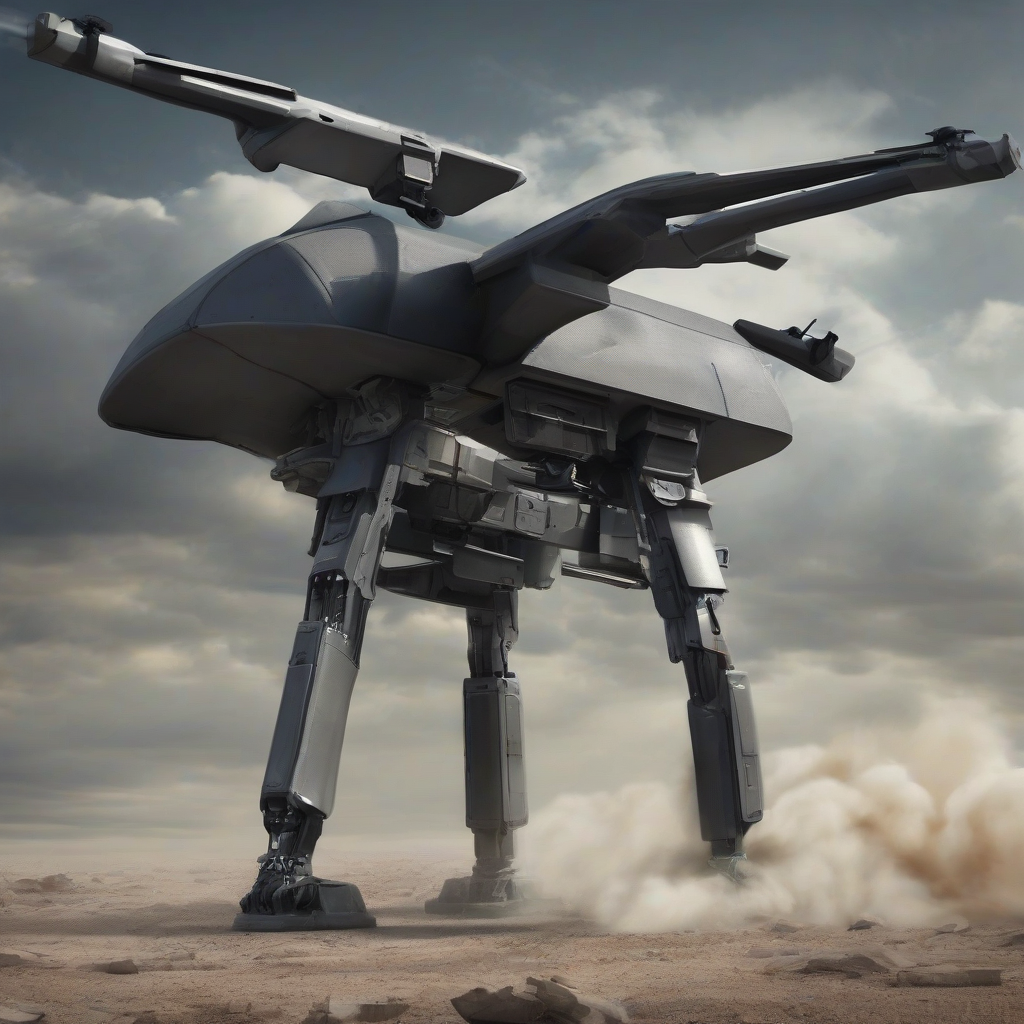
The next world war will be over before a human even knows it started.
Forget the Terminator. Forget glowing red eyes and metal skeletons. The reality of "Killer Robots" is far more boring, far more efficient, and infinitely more terrifying.
I’ve spent the last month analyzing the shift in global defense spending. The conclusion is chilling: We aren't just building smarter weapons. We are removing the only safety brake the world has ever known—human hesitation.
Here are the 7 terrifying realities of Lethal Autonomous Weapons (LAWS) and why global safety is currently in freefall.
1. The 'Flash War' Paradox
War is moving faster than human biology.
In traditional warfare, a General makes a decision, an officer relays the command, and a soldier pulls the trigger. This "human-in-the-loop" creates a lag. That lag is where diplomacy happens. It’s where de-escalation lives.
Autonomous systems eliminate the lag.
When two AI-driven fleets face off, the first one to wait for a human loses. Logic dictates that both sides must give their machines "full autonomy" to survive. This creates a "Flash War"—a conflict that escalates from a border skirmish to a global catastrophe in milliseconds.
By the time the President is briefed, the missiles are already in the air.
2. The 37,000 Target Kill List
The terrifying part? The "human oversight" is often a rubber stamp.
Reports from current conflict zones suggest officers spend as little as 20 seconds reviewing an AI-generated target before authorizing a strike. We have traded moral judgment for a "Match" button. When the machine says someone is a combatant, we believe it.
When the algorithm is the judge, jury, and executioner, the margin for error becomes a mass grave.
3. The Accountability Black Hole
Who do you court-martial when a piece of software commits a war crime?
If a soldier intentionally fires on a hospital, there is a chain of command. There is a trial. There is a consequence. With LAWS, that chain is broken.
- The programmer says the code was "misused."
- The General says the machine "learned" an unexpected behavior.
- The machine feels no remorse and cannot be imprisoned.
This creates a "responsibility gap." Dictators and rogue states now have a "Get Out of War Crimes Free" card. They can simply blame a "technical glitch" for a massacre. Without accountability, the Geneva Convention isn't a legal framework—it's a suggestion.
4. Democratized Slaughter
Nuclear weapons are hard to build. They require state-level resources, uranium enrichment, and massive facilities. They are easy to track.
Autonomous weapons are just software.
The code required to turn a $500 commercial drone into a facial-recognition-guided assassin can be downloaded from GitHub. It doesn’t require a physics degree; it requires a Python script.
We are entering an era of "Software-Defined Destruction." Proliferation is impossible to stop because you can't border-patrol an email. Once these algorithms leak—and they always leak—they will be in the hands of cartels, insurgents, and disgruntled individuals.
We aren't just arming militaries; we are arming everyone.
5. The Silicon Valley Pivot
Why? Because the contracts are worth billions.
The same models used to write your emails are being adapted to "optimize" battlefield logistics and target acquisition. Silicon Valley is no longer just the world’s office; it is the world’s armory. When the companies responsible for global communication become the architects of global destruction, there is no "neutral" ground left.
6. Urban Erasure
Traditional war happened on battlefields. Modern war happens in your living room.
Autonomous swarms are designed for "Dense Urban Environments." They are small, agile, and indifferent to civilian presence. In an urban "clearing" operation, a swarm of 1,000 palm-sized drones can enter an apartment complex, scan every face, and "neutralize" anyone not on a pre-approved list.
This isn't surgical. It's an eraser.
Because the cost of "sending in the robots" is near zero in terms of friendly casualties, the threshold for starting a war has plummeted. If you don't have to send your citizens' sons and daughters to die, why bother with a ceasefire?
7. The 2026 Red Line
The UN is currently staring at a ticking clock.
UN Secretary-General António Guterres has called for a total ban on lethal autonomous weapons by 2026. He calls them "politically unacceptable and morally repugnant."
The problem? The major powers—the US, Russia, and China—are all blocking the treaty. They argue that "voluntary guidelines" are enough. But guidelines aren't laws.
The 2026 deadline isn't just a goal; it's the last exit before the highway.
THE INSIGHT
By 2027, "human-in-the-loop" will be considered a strategic liability.
Militaries will move toward "human-on-the-loop" (supervision) and eventually "human-out-of-the-loop" (full autonomy) simply to keep up with the speed of adversarial AI. The era of the "Soldier" is ending; the era of the "System" has begun.
The question is simple:
Are we comfortable living in a world where the decision to end a human life is a line of code?