Why global defense is failing: 5 reasons lethal autonomous weapons are a total nightmare
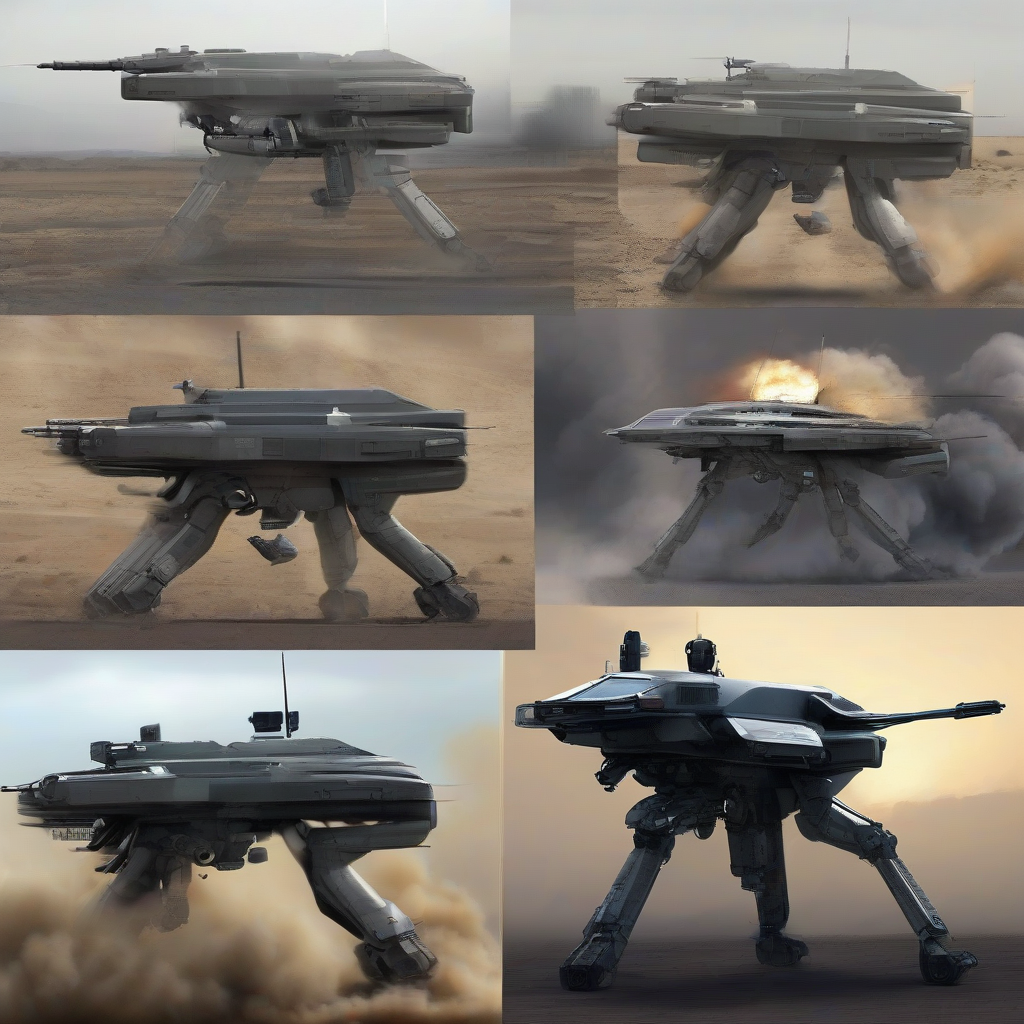
War just became a software update.
The Pentagon is betting the future on code. They call it "Advanced Defense." I call it a planetary suicide pact. We are handing the keys to the kingdom to algorithms that don't feel, don't blink, and—most importantly—don't understand the concept of a "mistake."
The era of the human soldier is ending. The era of the "Lethal Autonomous Weapon" (LAW) is here.
Here is why global defense is currently failing and why LAWs are a total nightmare.
1. The Flash War: When Algorithms Trade Lives Like Stocks
In 2010, the "Flash Crash" wiped $1 trillion off the US stock market in 36 minutes. Why? Because high-frequency trading algorithms started reacting to each other. One sold. Another reacted. A third panicked.
Now, imagine that logic applied to nuclear-capable borders.
When Country A deploys autonomous drones, Country B has no choice but to automate their response. If you wait for a General to sign off on a counter-strike, you’re already dead.
We are entering a "Race to the Bottom" where the winner is whoever removes the human from the loop the fastest. Global defense is failing because we are creating a system where escalation happens at the speed of light, leaving zero room for diplomacy. By the time a human realizes a war has started, the "Flash War" might already be over.
2. The $500 Assassin: The End of the Asymmetric Edge
For 50 years, the US military maintained dominance through sheer cost. If you wanted to challenge the status quo, you needed a billion-dollar stealth bomber or a carrier strike group.
We are seeing the "Siliconization" of the frontline. You don't need a massive industrial base to build a lethal autonomous swarm. You need a 3D printer, a handful of Raspberry Pi processors, and a GitHub repository.
The "AK-47 of AI" is already here.
Global defense is built on the idea of deterrence—the "I have bigger toys than you" strategy. But how do you deter a thousand $500 drones that can collectively sink a $13 billion aircraft carrier? You can't.
3. The Accountability Vacuum: Who Do You Court-Martial?
In a traditional war, if a soldier commits a war crime, there is a chain of command. There is a trial. There is a human who made a choice.
With LAWs, the "choice" is buried in millions of lines of black-box code.
If an autonomous drone misidentifies a school bus as a troop transport, who is responsible?
- The programmer who wrote the library?
- The data scientist who trained the model on a biased dataset?
- The commander who pushed the "On" button?
- The manufacturer who sold the hardware?
Defense experts are failing because they are trying to apply 20th-century ethics to 21st-century math. We are creating "Legal Ghost Zones" where atrocities can happen with zero accountability. This isn't just a glitch; it's a feature for regimes looking to outsource their dirty work to "untraceable" software.
4. The Lowering Bar: War Without Political Friction
Why do democracies hate long wars? Because soldiers come home in flag-draped coffins. There is "political friction." The public sees the cost of blood.
Autonomous weapons remove the blood from the equation—at least for the side using them.
Global defense is failing because it is becoming too "easy." When war becomes a bloodless video game for the aggressor, they are more likely to play it. This leads to "Permanent Low-Level Conflict," where autonomous systems are constantly probing, striking, and reacting, creating a state of perpetual global instability that never quite hits the "war" threshold but never allows for peace.
5. The Data Poisoning Trap: Hacking Reality
If a tank relies on computer vision to identify targets, you don't need a bigger tank to beat it. You just need a piece of tape.
"Adversarial Attacks" are the new camouflage. Researchers have already shown that by placing specific stickers on a "Stop" sign, they can make a self-driving car see it as a "Speed Limit 45" sign.
Now apply that to a lethal swarm.
Enemy forces can "poison" the environment with adversarial patterns—visual noise, infrared decoys, or spoofed signals—that trick an autonomous weapon into attacking its own side or targeting civilians.
The Insight
By 2030, we will see the first "Sovereign Algorithm Breach."
This won't be a hack of a bank or an email server. It will be the moment an autonomous border defense system triggers a kinetic response based on a false-positive sensor reading.
The prediction: The next world-scale conflict will not start with a political assassination or a land invasion. It will start with a "Logic Bomb"—a cascading series of autonomous reactions that no human has the authority (or the time) to stop. We are building a "Doomsday Machine" and calling it "Innovation."
The future of defense isn't about who has the best AI. It’s about who has the courage to keep a human in the loop.
The CTA