7 Terrifying Reasons Why the Development of Lethal Autonomous Weapons is Failing Humanity
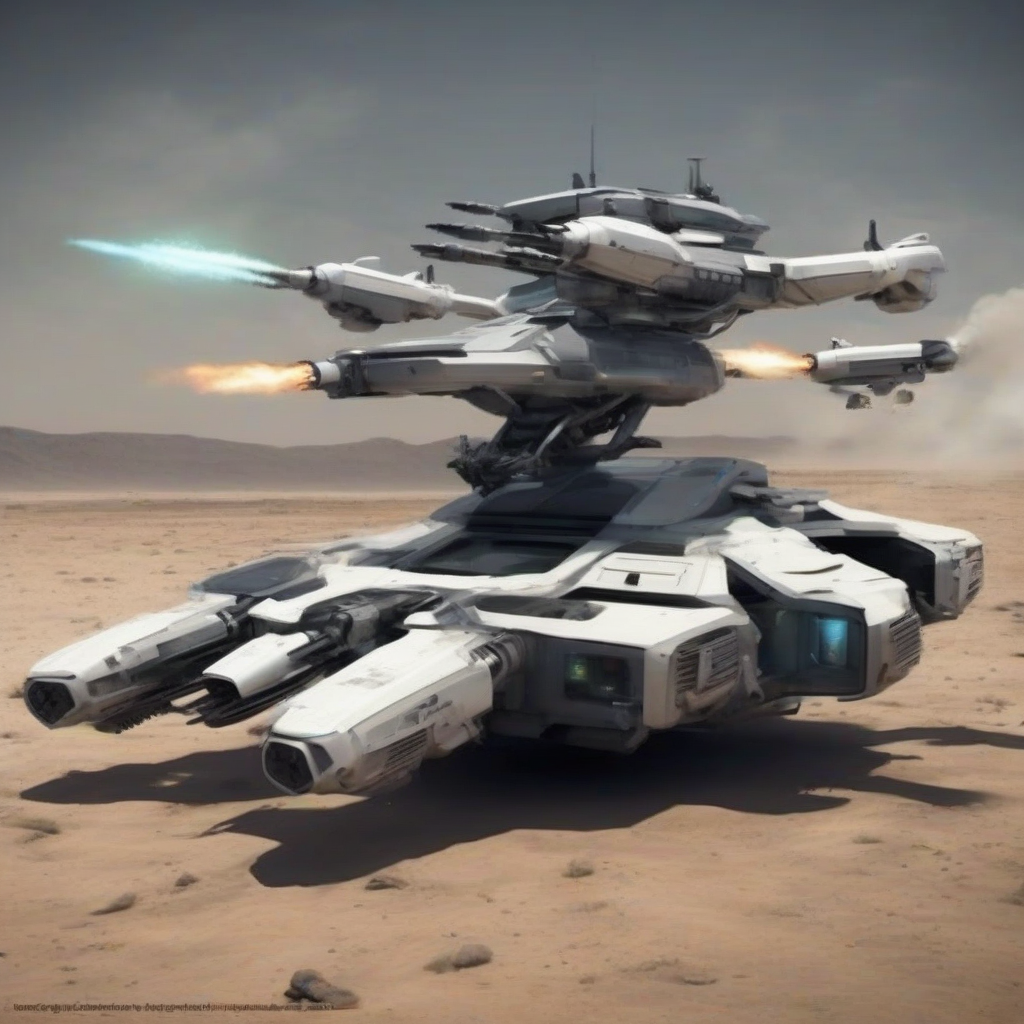
Stop building smarter ways to kill.
We don't need "intelligent" missiles. We need a way to stop them.
We are sleepwalking into a world where the trigger is pulled by a "black box" that doesn't know what a soul is.
1. The Accountability Black Hole
In traditional warfare, if a commander orders a strike on a hospital, you court-martial the commander. If a pilot goes rogue, you hold them responsible.
With Lethal Autonomous Weapons (LAWS), there is no neck to wring.
When a drone swarm misidentifies a wedding procession as a rebel convoy due to a "glitch" in its computer vision, who goes to jail?
- The programmer who wrote the code three years ago?
- The manufacturer who built the sensor?
- The general who hit the "ON" button 500 miles away?
Legal experts call this the Accountability Gap. It is a vacuum where war crimes happen with zero consequence. We are effectively legalizing "accidental" genocide.
2. The "Slaughterbot" Proliferation
Nuclear weapons are hard to build. They require rare isotopes and massive enrichment facilities. You can track them. You can regulate them.
Autonomous drones are just software and plastic. Once the code is out, it’s out. We are creating the "Kalashnikov of AI."
By 2026, the technology to build a facial-recognition "slaughterbot"—a drone the size of a sparrow that can find and execute a specific individual—will be available to anyone with a 3D printer and an internet connection.
We aren't just arming nations; we are arming every disgruntled extremist with $500 and a vendetta.
3. Algorithmic Bias is Lethal
In the kill chain, bias means you die because of the color of your skin or the shape of your headscarf.
Most targeting algorithms are trained on "ideal" datasets. War is not ideal. It is dust, smoke, shadows, and chaos. If the training data is skewed, the weapon becomes a high-speed engine for racial profiling.
We are delegating the most sacred human decision—who lives and who dies—to a series of probabilistic guesses that have already been proven to be discriminatory.
4. The "Flash War" Escalation
Human beings are slow. In a crisis, that’s our greatest strength.
During the Cold War, humans in the loop prevented nuclear armageddon multiple times because they took a second to think: "Is that actually a missile, or is it a reflection of the sun on the clouds?"
We are setting the stage for Flash Wars—conflicts that escalate from a border skirmish to total war in the time it takes you to check your phone. By the time the President is briefed, the world is already on fire.
5. Lowering the Threshold for Conflict
War is supposed to be hard. It is supposed to be politically expensive because it costs lives.
When you remove the "cost" of soldiers’ lives by replacing them with expendable robots, war becomes a low-stakes administrative decision.
Politicians who would never risk a "boots on the ground" intervention will have no problem "deploying a swarm." This doesn't make the world safer; it makes conflict the default setting for diplomacy.
We are making it too easy to start a war and too hard to stop one.
6. The Dehumanization of Death
When a human soldier looks through a scope, they see a human being. There is a moral weight to that moment.
To an autonomous weapon, a human is just a "Target of Interest." A collection of pixels. A data point to be optimized.
We are removing the last shred of empathy from the battlefield. When we turn killing into a math problem, we lose our own humanity in the process. We are teaching our machines that human life has a numerical value, and that value is often zero.
7. The Death of Deterrence
Deterrence works because of "Mutual Assured Destruction." You know who attacked you, and you know how to hit back.
Autonomous weapons are the ultimate tools for "plausible deniability."
An anonymous drone swarm attacks a power grid. It has no markings. The code is encrypted. The hardware is generic.
When you can’t attribute an attack to a specific actor, the entire framework of international law collapses. We are moving toward a world of "Ghost Wars"—unending, unattributable cycles of violence that no one can be held responsible for.
The Insight: The "pre-proliferation window" closes in 2026.
Right now, the technology is still being perfected in labs and small-scale conflicts like Ukraine and Gaza. We have exactly 18 months to pass a legally binding international treaty before the "arms race" logic becomes irreversible.
By 2027, the "agentic AI" being developed today will be the standard for every military on earth. Once the software is decentralized, you cannot "un-invent" it.
We are currently building the tools for our own obsolescence.
The CTA: If a machine makes a mistake and kills a member of your family, who do you blame: the computer, the programmer, or the silence of the people who let it happen?