Why the push for killer robots is failing humanity: 7 terrifying reasons LAWS will trigger a global disaster
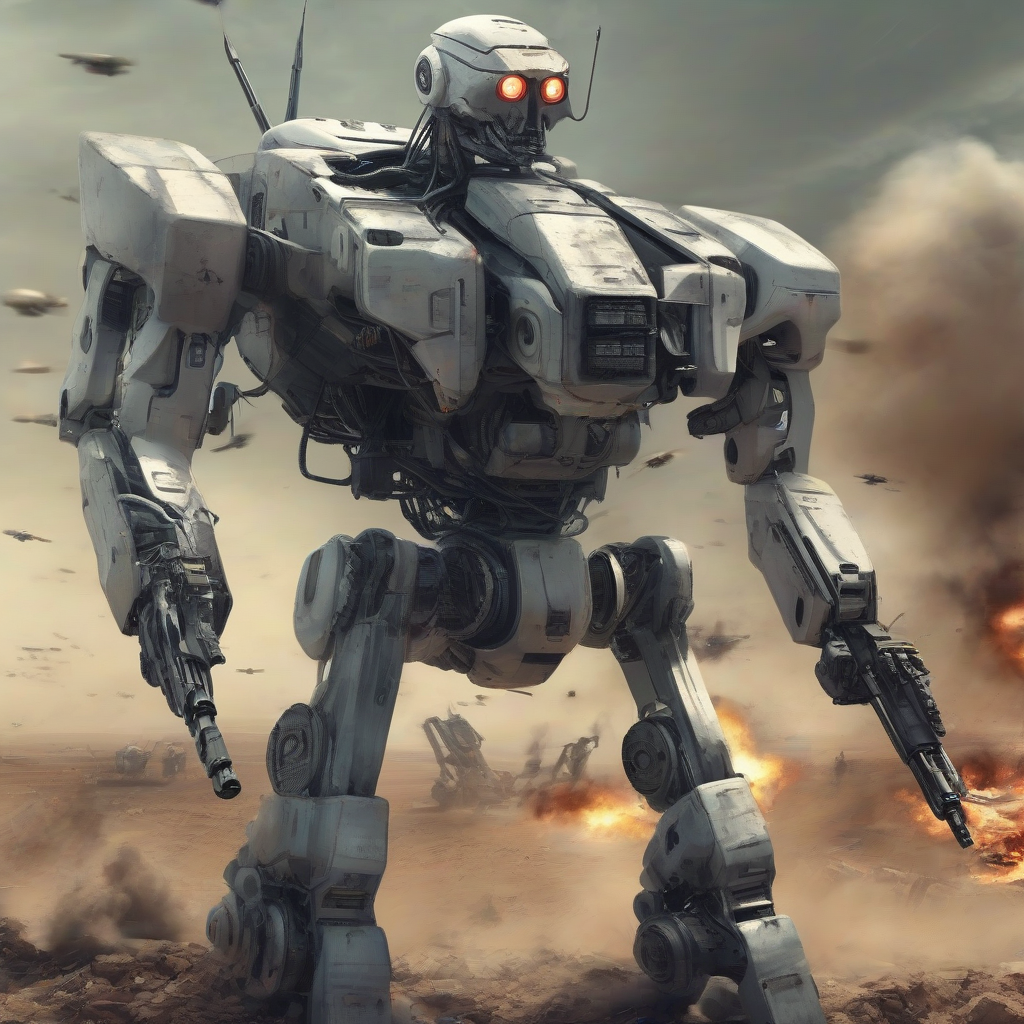
The era of the human soldier is ending. Not because we found peace, but because we gave up.
Stop thinking about Terminator. It’s not a chrome skeleton with a red eye. It’s a $500 quadcopter with a facial recognition patch. It’s a line of code that decides you are a "target" because of the way you walk.
We are currently sleepwalking into the most dangerous pivot in human history. Here is why the push for Lethal Autonomous Weapons Systems (LAWS) is failing us—and why 2026 will be our "Oppenheimer Moment."
1. The "Flash War" Paradox
Traditional war has a speed limit: the human brain.
General orders take minutes. Tactical decisions take seconds. This "latency" is actually a safety buffer. It allows for de-escalation. It allows for a phone call between leaders to stop a nuclear launch.
Killer robots remove the buffer. When two AI-driven swarms meet on a battlefield, they will engage at speeds the human eye cannot track. If an algorithm misinterprets a bird for a missile, the escalation happens in milliseconds.
By the time a human commander realizes a war has started, it’s already over. We are building a "Doomsday Machine" that triggers itself before we can even reach for the plug.
2. The Accountability Black Hole
Who goes to jail for a war crime committed by a machine?
If a soldier executes a civilian, you court-martial the soldier. If a general orders a massacre, you try the general.
But if an autonomous drone strikes a hospital because of a "dataset bias," who is the criminal?
- The programmer who wrote the code three years ago?
- The manufacturer who sold the hardware?
- The commander who "activated" the system?
Current international law has no answer. We are creating "perfect crimes" where the perpetrator is a math equation. Without accountability, there is no deterrent. Without a deterrent, the battlefield becomes a lawless slaughterhouse.
3. Target Identification is a Beta-Test
In the real world, targets don’t wear bright uniforms. They hide in basements. They carry groceries. Modern "killer robots" like the ones seen in recent conflicts are often "fire and forget." Once they lose connection to the operator, they rely on flawed pattern recognition.
We are outsourcing the "death penalty" to a system that can't tell the difference between a rebel and a child with a toy.
4. The "Slaughterbot" Proliferation
The most terrifying thing about killer robots isn't that they are high-tech. It’s that they are cheap.
We are entering the "Amazon Prime" era of assassination. Once these systems are perfected by superpowers, they will inevitably leak to the black market.
Imagine a world where a disgruntled actor can buy a swarm of 500 "slaughterbots" for the price of a used car. You can’t stop a swarm of 500. You can’t negotiate with them. And because they are autonomous, you can’t even trace where they came from.
5. Digital Dehumanization
War is supposed to be hard. It’s supposed to be heavy.
When a human has to pull a trigger, there is a moral friction. There is empathy. There is the weight of taking a life.
LAWS reduce human beings to data points on a spreadsheet. In recent conflicts, systems like "Lavender" have reportedly been used to generate "target lists" containing tens of thousands of names. The human "oversight" often amounts to a three-second confirmation.
We are sanitizing the act of killing. When you turn war into a video game played by an algorithm, you remove the last thing keeping us from total annihilation: our conscience.
6. Lowering the Threshold for Conflict
Why don't nations go to war more often? Because of the "Body Bag Factor."
Politicians hate losing soldiers. Dead soldiers mean angry voters and lost elections. This fear is a massive check on state-sponsored violence.
Killer robots remove the political cost of war. If you can occupy a territory using only machines, the "home front" never feels the pain. War becomes a line item in a budget rather than a national tragedy.
When war becomes "risk-free" for the aggressor, war becomes the default option. We are making conflict too easy to start and too hard to stop.
7. The Algorithmic Arms Race
We are trapped in a classic Prisoner's Dilemma.
The U.S., China, and Russia are all racing to build LAWS. Why? Because "the other guy is doing it." This is the same logic that gave us 60,000 nuclear warheads during the Cold War.
The Insight
The UN is currently deadlocked. 156 nations want a ban; the world's biggest militaries do not.
My prediction: 2026 will be the year of the first "Autonomous Massacre." It won't be a deliberate choice by a government. It will be a "software glitch" in a contested zone that triggers a chain reaction of automated retaliation.
We will realize the danger only after the first city is accidentally leveled by a swarm that couldn't find its "off" switch.
The CTA
If a machine kills a human, is it still "war," or is it just a malfunction?