Why Hollywood’s AI Likenesses Are Failing: 5 Disturbing Ethics Violations Killing Digital Performances
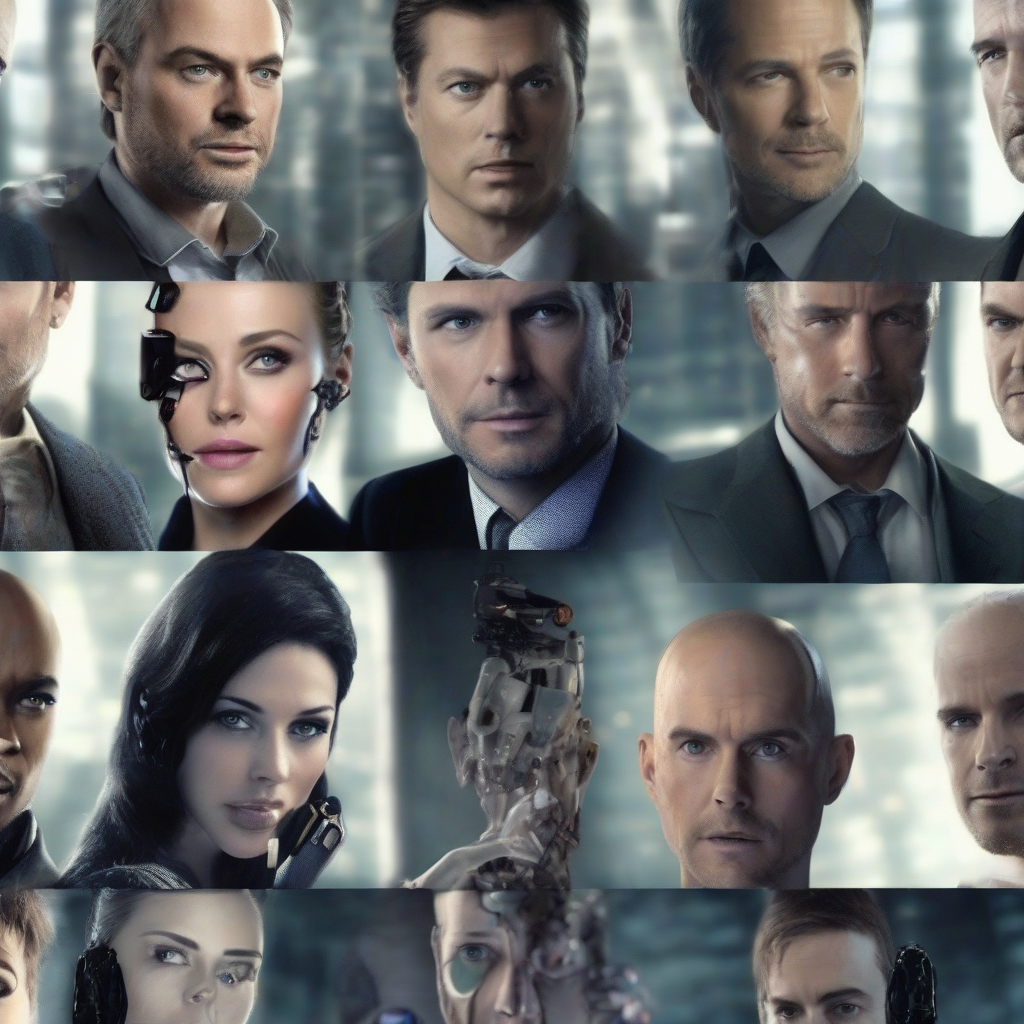
Hollywood doesn’t want to hire actors anymore; they want to own them in perpetuity.
The era of the "Digital Human" is here, but it’s arriving with a corpse-like stench. Studios are betting billions that you won’t care if the face on the screen is a living person or a math equation. They are wrong.
Audiences are revolting. The Uncanny Valley isn't a technical hurdle; it’s a moral one.
I’ve analyzed the shift in production contracts and the psychological feedback from recent "AI-enhanced" blockbusters. Here is why Hollywood’s digital obsession is a failing experiment in human ethics.
1. The "Forever Clause" and the Death of Consent
The biggest heist in cinema history isn't happening on screen. It’s happening in the legal fine print of background actors’ contracts.
Studios are now asking extras to step into "The Volume." It’s a 360-degree scanner. They capture your pores, your gait, your micro-expressions. You get paid for one day of work. The studio gets a digital asset they can use for the next century.
This isn't just automation. It's identity theft sanctioned by a paycheck.
When a background actor’s likeness is used in 50 different films over 20 years without them ever stepping foot on set again, we’ve crossed into "Digital Serfdom." The performance is decoupled from the person.
The ethical violation is clear: Consent cannot be sold in a lump sum for eternity. It must be a living, breathing negotiation. By removing the "human" from the "resource," Hollywood is creating a library of digital ghosts that they own, manipulate, and exploit long after the original body has aged or passed away.
2. Digital Necromancy: The Grave-Robbing Economy
We are currently witnessing the rise of the "Zombie Star."
From Peter Cushing in Rogue One to the controversial resurrection of Ian Holm in Alien: Romulus, Hollywood has developed a taste for the dead. They claim it’s a "tribute." It’s actually a cost-cutting measure disguised as nostalgia.
Dead actors don’t have agents. They don't have egos. They don't demand trailers or points on the backend.
It isn't a performance. It’s a puppet show using a dead man’s skin.
Audiences feel this instinctively. There is a "soul-lag" in the eyes of digital recreations. We aren't watching art; we’re watching a deepfake with a $200 million budget. The more we resurrect the past, the less room we leave for the future. Hollywood is cannibalizing its history because it’s too scared to bet on a new face.
3. The Training Set Betrayal
Studios are using decades of film archives—performances by Meryl Streep, Tom Cruise, and Viola Davis—to train Large Vision Models (LVMs). These models learn the "essence" of great acting. They learn how a lip quivers during a cry. They learn how a brow furrows in anger.
The violation: The actors never agreed to have their craft used as training data for their own replacements.
It is the ultimate "Scorpion and the Frog" scenario. The actors provided the genius that made the studios billions. Now, the studios are using that genius to build an engine that requires 0% human input.
This isn't evolution. It’s plagiarism at scale. When you see a digital character "act," you are seeing a composite of stolen emotions, stripped of the context and the struggle that created them.
4. The Erasure of Imperfection
Digital likenesses are "perfected." Pores are smoothed. Expressions are mapped to a mathematical mean. But great acting is found in the mistakes. It’s found in the crack in the voice, the unintended tear, the awkward beat that wasn't in the script.
They are removing the friction of humanity to make production more efficient. If a digital actor doesn't hit the mark, you just tweak the code. You don't have to wait for the "moment" to happen naturally.
But the "moment" is why we watch movies.
5. The Devaluation of the Human Experience
The final violation is the most disturbing: The message that "anyone is replaceable."
When studios push for digital likenesses, they are telling the audience that the "person" doesn't matter. Only the "brand" of the face matters.
They want the IP of the actor without the humanity of the actor. This creates a psychological distance between the viewer and the screen. We stop empathizing with characters when we know, deep down, that there is no nervous system behind the eyes.
This is why "AI movies" feel like watching someone else play a video game. You are observing a simulation, not a story.
Hollywood is currently failing because they’ve forgotten that cinema is an act of communal empathy. You cannot empathize with a mathematical average. By violating the sanctity of the human performance, they are breaking the "cinematic contract" with the audience.
The Insight
Within the next 36 months, we will see the rise of the "Human-Centric" movement in film.
As AI-generated content floods the market, "100% Human Performance" will become a premium marketing label, similar to "Organic" or "Non-GMO" in the food industry.
The biggest stars of 2027 won't be the ones with the best digital scans. They will be the ones who refuse them. Authentic, uncurated, and messy human imperfection will become the most expensive luxury in entertainment.
The Uncanny Valley isn't a problem for engineers to solve. It’s a boundary that humans are refusing to let machines cross.
Hollywood is trying to build a world without actors. They’ll soon realize they’ve built a world without an audience.
Would you pay $20 to see a movie if you knew not a single human heart was beating on screen?