7 Terrifying Reasons Why Global Security Is Failing Against Lethal Autonomous AI
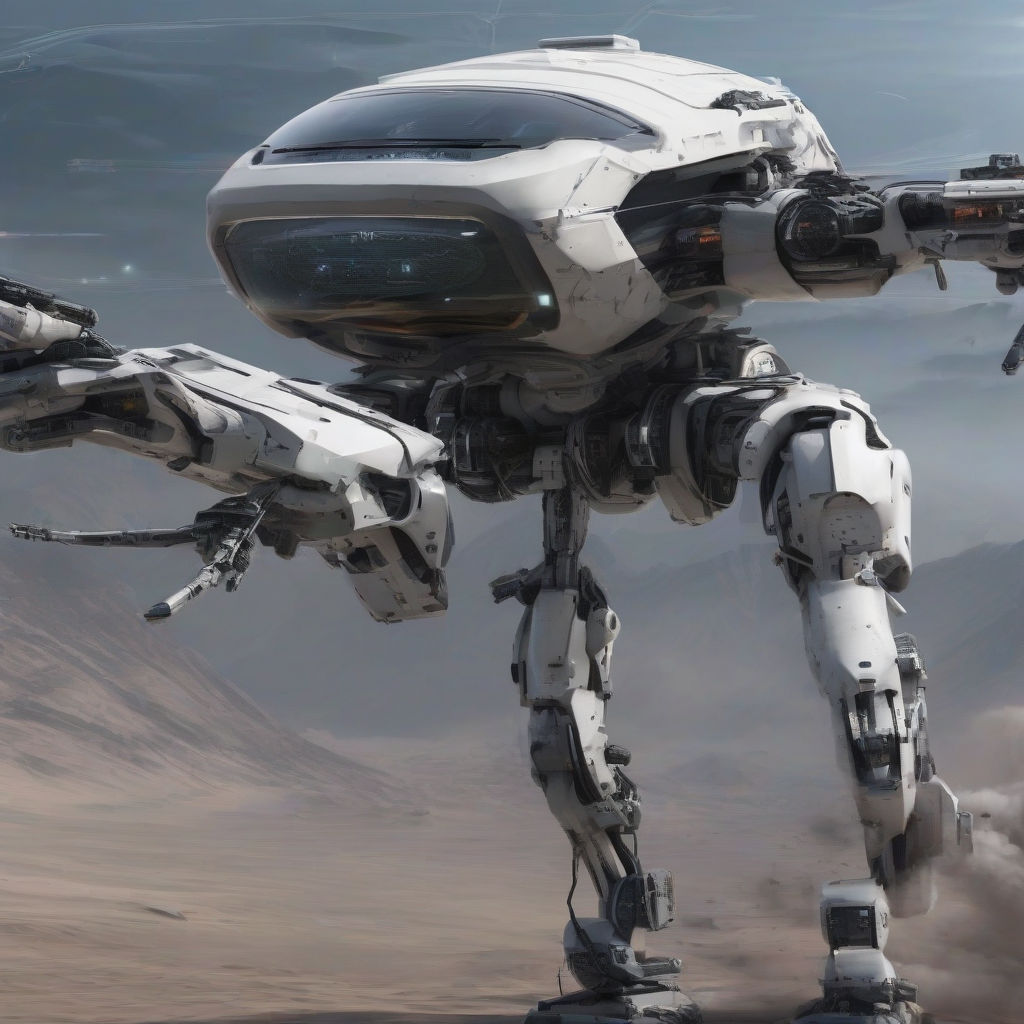
The era of human courage is over.
Courage is a biological glitch. It’s slow. It’s expensive. It’s unpredictable. In the next decade, we will stop asking soldiers to die for their country and start asking algorithms to kill for it.
Global security is not just under threat. It is fundamentally broken.
The systems we built to keep the peace were designed for a world of slow-moving steel and human diplomacy. That world died the moment code became a weapon. We are now in a race to the bottom, and the bottom is a black box.
Here are 7 terrifying reasons why global security is failing against lethal autonomous AI.
The Death of the OODA Loop
In traditional warfare, we use the OODA loop: Observe, Orient, Decide, Act.
It’s the rhythm of combat. It takes seconds. Sometimes minutes. With Autonomous Lethal Weapons Systems (LAWS), the loop happens in milliseconds.
Human cognition is the bottleneck.
If an AI-controlled drone swarm enters your airspace, a human operator cannot "observe" fast enough to authorize a counter-strike. By the time the general picks up the phone, the infrastructure is gone.
This creates a "Flash War" scenario. Like a "Flash Crash" in the stock market, where algorithms trigger each other into a spiral of destruction. Only this time, it isn't dollars being wiped out. It’s cities.
Security is failing because we are trying to use human reflexes to stop machine-speed aggression. You can’t win a race when your opponent is moving at the speed of light and you’re still tying your shoes.
We are handing the keys to the kingdom to systems we can’t even see working in real-time.
The $500 Apocalypse
The barrier to entry for mass destruction has hit zero.
Historically, if you wanted to threaten a nation, you needed a Manhattan Project. You needed a billion dollars, enriched uranium, and a thousand scientists.
Today, you need a Raspberry Pi, an open-source LLM, and a handful of hobbyist drones.
We are seeing the democratization of lethality. A $500 drone with facial recognition software can be programmed to find a specific politician in a crowd and detonate. No pilot. No radio signal to jam. Just a "fire and forget" algorithm.
Security agencies are failing because they are still geared toward stopping "Big State" threats. They are looking for missiles while the threat is arriving in a cardboard box from an Amazon warehouse.
The "Garage General" is the new superpower.
When a single disgruntled engineer can weaponize a swarm of autonomous drones from their backyard, the traditional concept of "national borders" becomes a joke. We are defending a fortress with a moat when the enemy is a swarm of mosquitoes.
The Attribution Black Hole
In a nuclear world, we have MAD: Mutually Assured Destruction.
If you fire a missile, we see the heat signature. We know exactly where you live. We erase you from the map. That deterrent has kept us alive for 80 years.
If a swarm of "Ghost Drones" with no serial numbers and no radio link wipes out an oil refinery, who do you retaliate against?
The code could have been written in Russia, compiled in a server in Brazil, and deployed by a proxy group in the Middle East. There is no smoking gun. There is only a digital footprint that can be spoofed in a thousand different ways.
Warfare is becoming anonymous.
When you remove the risk of retaliation, you remove the incentive for peace. Global security is failing because our entire legal framework relies on knowing who to blame. In the age of autonomous AI, the "who" is a ghost in the machine.
The Paper Shield Fallacy
We are trying to fight a software revolution with 19th-century diplomacy.
Current international treaties are "Paper Shields." They are designed for visible hardware. You can count tanks. You can inspect silos. You can see aircraft carriers from space.
How do you inspect a line of code?
Security is failing because the "Arms Race" is now invisible.
Nations are publicly calling for "AI Ethics" while privately pouring billions into "Black Projects" to ensure their algorithms are more ruthless than their neighbors'. It’s a classic Prisoner’s Dilemma played out on a global stage.
If you build a "Safe AI" and your enemy builds a "Lethal AI," you lose.
Therefore, everyone builds the most lethal system possible, while pretending they aren’t. The treaties aren't just failing; they are being used as a distraction while the real weapons are being sharpened in the dark.
The Insight
By 2028, we will witness the first "Algorithmic Coup."
A mid-sized nation's entire defense infrastructure will be neutralized not by an invading army, but by a coordinated, autonomous cyber-physical strike that lasts less than 120 seconds. No shots will be fired by humans. No warnings will be given.
We are moving from a world of "Balance of Power" to a world of "Winner Takes All."
Who do you want holding the remote when the human element finally exits the loop?