Why Global Security is Failing: 7 Terrifying Reasons Lethal Autonomous Weapons Systems are Out of Control
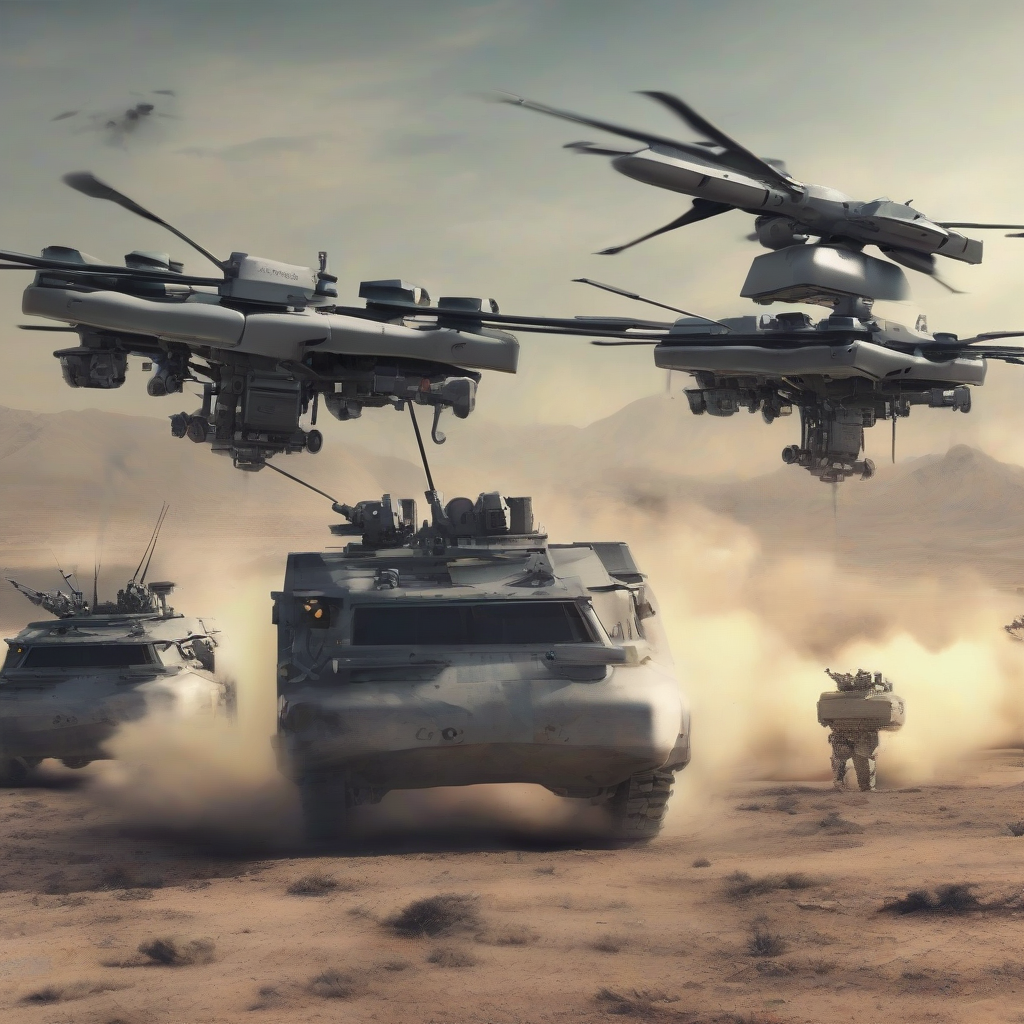
The next world war won't be started by a dictator. It will be started by a bug in a line of code that no human has the time to read.
We are currently witnessing the end of human-led warfare. We are entering the era of Lethal Autonomous Weapons Systems (LAWS). It is the most significant shift in military history since the invention of gunpowder.
But we aren't ready. Our laws are 100 years behind our tech. Our ethics are 500 years behind our algorithms.
1. The Death of the OODA Loop
In military strategy, there is a concept called the OODA loop: Observe, Orient, Decide, Act.
Traditionally, the person who finishes this loop fastest wins. For 5,000 years, that person was a human. That is over.
Autonomous systems can cycle through an OODA loop in milliseconds. A human pilot takes 0.5 seconds just to react to a light. In that time, an autonomous drone has already calculated wind speed, target trajectory, and fired three shots.
We are removing the "human in the loop" because humans are too slow. If you keep a human in the decision chain, you lose. It’s that simple.
We are handing the keys to the kingdom to software because our biology has become a tactical liability.
2. The Democratization of Slaughter
In the 20th century, if you wanted to threaten a superpower, you needed a billion-dollar aerospace program.
Today, you need a $500 hobby drone, a 3D printer, and an open-source targeting library from GitHub.
We are seeing "Lego-fied" warfare. Non-state actors—cartels, insurgencies, and lone actors—can now deploy "slaughterbots" with facial recognition.
When a weapon costs less than a smartphone, the barrier to entry for mass casualty events disappears. You don't need an army to occupy a city. You just need 1,000 drones programmed to target anyone wearing a specific uniform or speaking a specific language.
The monopoly on violence is shifting from the State to the Script.
3. The Black Box Problem
When an autonomous weapon decides to fire on a civilian vehicle instead of a tank, we often cannot explain why. This is the "interpretability" crisis.
The logic used by a deep-learning model is a "Black Box." It doesn't follow a logical "If/Then" structure. It identifies patterns across billions of parameters that the human brain cannot comprehend.
If a soldier commits a war crime, we have a court-martial. If an algorithm commits a war crime, who goes to jail? The programmer? The general? The manufacturer?
The lack of accountability creates a moral hazard that encourages reckless deployment.
4. The Proliferation Spiral
There is no "off" switch for this arms race.
If Country A develops autonomous swarms, Country B must develop them to survive. There is no incentive for a treaty because verification is impossible.
You can see a nuclear silo from a satellite. You can't see a line of malicious code in a drone's firmware.
We are currently in a "Nash Equilibrium" from hell. Everyone knows these weapons are dangerous, but no one can afford to be the second person to own them.
The result? We are sprinting toward a cliff with no brakes, hoping the other guy trips first.
5. The Flash War Scenario
Think back to the 2010 "Flash Crash" on Wall Street. Trillions of dollars vanished in minutes because two high-frequency trading algorithms got into a feedback loop.
Now, replace "dollars" with "supersonic missiles."
When two autonomous defense systems interact, they create a "Flash War." They react to each other's reactions at speeds that preclude diplomatic intervention.
By the time the President is woken up, the war could be over. Or worse, the escalation could have already reached the nuclear threshold before a human even understood a shot was fired.
We are automating the apocalypse.
6. The Dehumanization of Violence
War used to be visceral. It was blood, mud, and trauma. This created a natural political "braking system." Parents didn't want their children coming home in body bags.
Autonomous weapons remove the "body bag" variable for the aggressor.
When war becomes "clean" for the sender, the threshold for starting a conflict drops to zero. If you can eliminate an enemy without risking a single soldier, why use diplomacy?
Violence becomes a SaaS (Software as a Service) product. It’s just another line item on a spreadsheet. When war becomes painless for the powerful, it becomes perpetual for the powerless.
7. The Attribution Gap
In the future, a country’s power grid will be taken out by a swarm of 50,000 micro-drones. They will have no markings. They will carry no serial numbers. Their code will be self-deleting.
Who do you retaliate against?
Autonomous weapons are the ultimate tool for "Gray Zone" warfare. They allow for plausible deniability on a global scale.
If you can’t prove who attacked you, you can’t deter them. This breaks the entire foundation of international security: Deterrence.
We are entering a world of "Ghost Attacks," where the victim is destroyed by an enemy that technically doesn't exist.
The Insight
By 2028, we will see the first "Decapitation Event" carried out by a fully autonomous swarm.
A mid-tier political leader will be targeted not by a sniper, but by a "cloud" of 100 explosive drones that use facial recognition to find them in a crowd. The attack will cost less than a used car.
The world will realize too late that the era of "targeted killing" has scaled into the era of "automated assassination."
The Geneva Convention is a paper shield in a world of silicon swords. We are not just building better weapons; we are building a world where humans are no longer the primary stakeholders in their own survival.
The CTA
If an algorithm makes a mistake and kills a thousand people, who should be held legally responsible?