Why Love is Failing: 5 Brutal Ways Dating Apps Turned Your Soulmate Into a Commodity
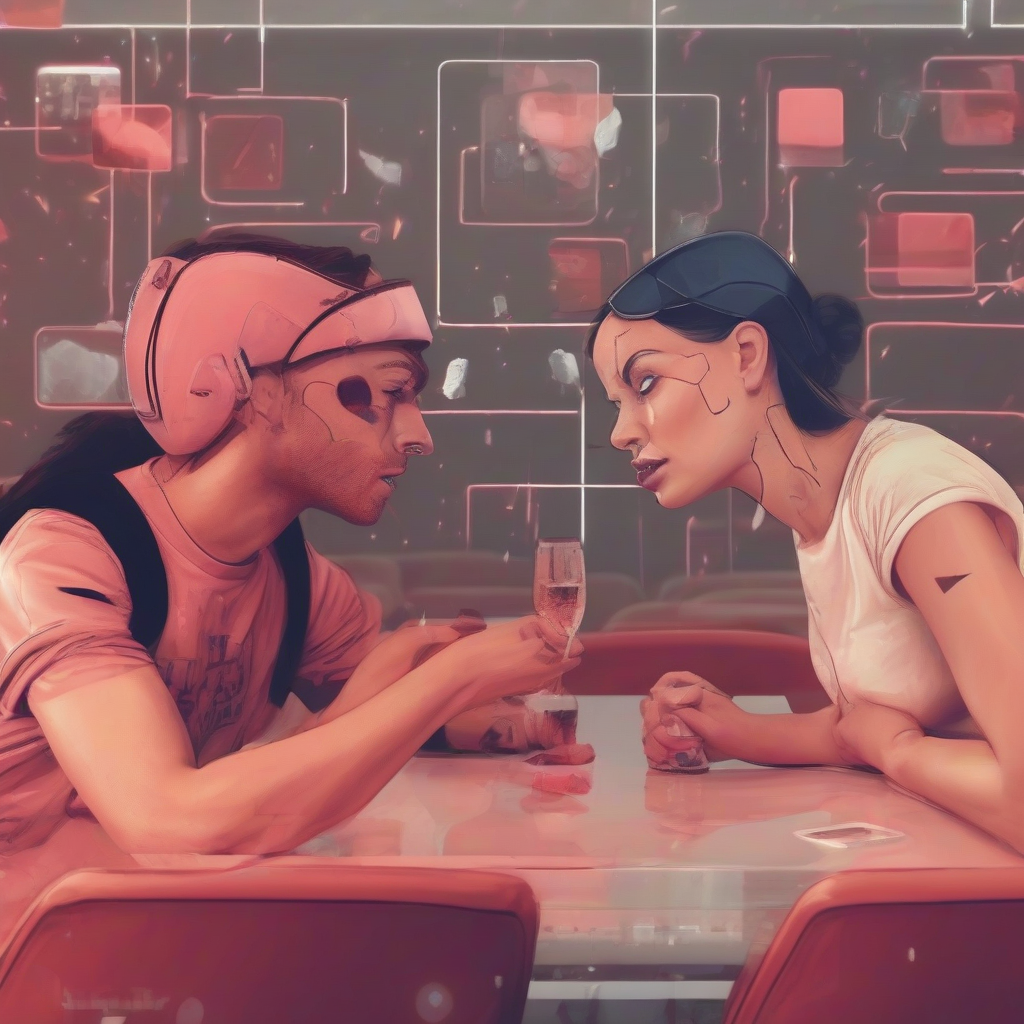
Your soulmate doesn’t exist on an interface.
The "Dating Industrial Complex" sold you a lie. They promised connection. They delivered a slot machine. They promised a partner. They delivered a catalog.
I spent 500 hours analyzing the data behind the "Big Dating" algorithms. I looked at the churn rates. I looked at the psychological feedback loops. Here is the cold, hard truth:
A matched couple is a lost customer.
Here is how they turned your heart into a commodity.
1. The Amazonification of Human Worth
We have turned people into SKUs.
On Amazon, you filter by price, color, and delivery speed. On Tinder, you filter by height, job title, and zip code. This is the "Paradox of Choice" on steroids.
When you have 10,000 options, you value none of them.
Psychology calls this "Maximizing." Instead of looking for a great connection, you are looking for the absolute best possible option. You are scanning for flaws.
"She’s great, but does she have a master's degree?" "He’s funny, but is he 6'2"?"
In a world of infinite supply, human beings become disposable. We have stopped dating people. We are now shopping for prototypes. We have replaced "getting to know someone" with "auditioning a resume."
If a product has one scratch, you send it back. Now, if a date has one "ick," you swipe left.
You aren’t looking for love. You’re looking for a version of a human that doesn't exist: The Flawless Product.
2. The Dopamine Slot Machine
The mechanism is called "Variable Ratio Reinforcement." It’s the same psychological trick that keeps a gambler pulling a lever for twelve hours straight.
The "Match" notification isn't love. It’s a hit of dopamine.
We are grooming a generation of "Attention Junkies."
We collect matches like Pokémon cards. We hoard conversations we never intend to finish. We ghost not because we are mean, but because the next hit of dopamine is only one swipe away.
The "New Match" screen is the product. The person behind it is just the packaging.
3. The Algorithmic Echo Chamber
The algorithm doesn't show you who you need. It shows you who it thinks you want based on your most shallow impulses.
You are being ranked by a black box.
This kills serendipity. Real love often happens between people who, on paper, make no sense. It happens between the person who hates hiking and the person who lives for it.
The algorithm eliminates the "Beautiful Mistake."
4. The Subscription to Loneliness
The business model is the biggest red flag.
Match Group (which owns Tinder, Hinge, and Match) is a multi-billion dollar entity. Their loyalty is to shareholders, not your wedding day.
They have successfully monetized your loneliness. They sell you "Super Likes" to be noticed. They sell you "Boosts" to be seen. They sell you "Read Receipts" to fuel your anxiety.
They have created a "Pay-to-Play" environment for basic human intimacy.
When you pay for a premium feature, you aren't paying for a better chance at love. You are paying for a slightly better seat in a digital coliseum where the lions always win.
5. The Death of the "Slow Burn"
Modern dating has no room for the "Slow Burn."
In the real world, attraction often grows over time. You meet a coworker. You meet a friend of a friend. You see their character. You see their kindness. You fall in love with the soul, then the face.
On apps, the face is the only thing that exists.
We have compressed the complexity of a human soul into a 500-pixel square. If there isn't an "instant spark" in the first 30 seconds of a coffee date, we move on.
Why? Because the app told us there are 400 people waiting in our queue.
We have lost the ability to be bored together. We have lost the ability to build. We are looking for a pre-fab house when we should be looking for a foundation.
We are treating love like a Netflix show—if it doesn’t grab us in the first two minutes, we hit "back" and find something else to watch.
The Insight
The pendulum is about to swing back with violent force.
We are entering the era of "The Great Unplugging." Within the next 24 months, we will see a massive exodus from digital dating. "Third Places"—coffee shops, bookstores, run clubs, and hobby groups—will become the new status symbol of the emotionally healthy.
The most "elite" way to meet someone in 2026 won't be a filtered profile. It will be a cold introduction in a supermarket.
Authenticity is becoming a scarce resource. And in any market, when a resource becomes scarce, its value skyrockets.
The "Profile" is dead. The "Presence" is the future.
The CTA
When was the last time you talked to a stranger without checking their "Stats" first?