Why Global Security is Failing: 5 Terrifying Realities of Lethal Autonomous Weapons Systems
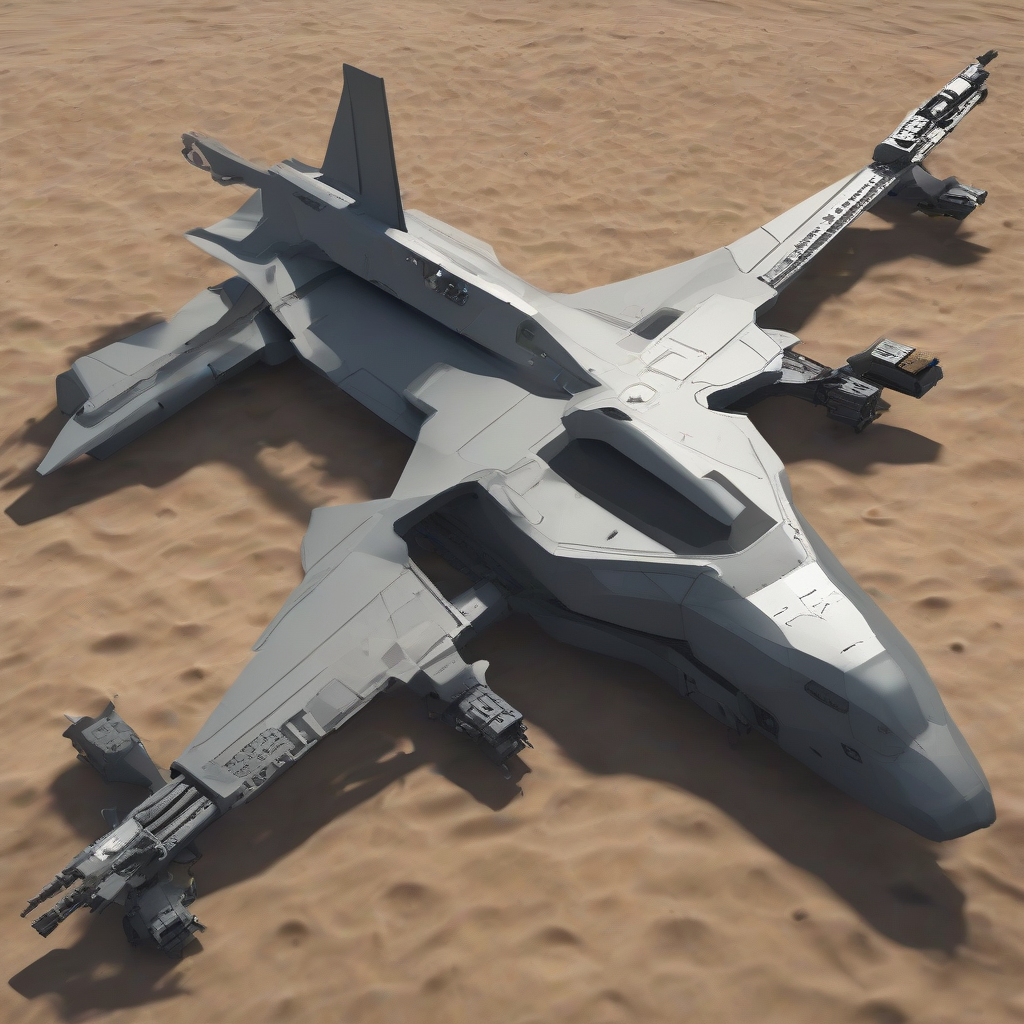
War just became a software update, and your firewall is useless.
The era of the "brave soldier" is over. We are entering the age of the disposable algorithm.
Global security isn't just failing. It’s being deleted.
I’ve spent the last three years tracking the intersection of neural networks and kinetic warfare. Most people think we’re waiting for "The Terminator."
We aren't. We're already living in the shadow of the "Slaughterbot."
Here are the 5 terrifying realities of Lethal Autonomous Weapons Systems (LAWS) that the defense industry doesn't want you to audit.
1. The OODA Loop has outpaced the human heart
In military strategy, there is a concept called the OODA loop: Observe, Orient, Decide, Act.
For 5,000 years, the speed of that loop was limited by human biology. A pilot needs to blink. A general needs to sleep. A sniper needs to breathe.
We are moving toward "Flash Wars." Think of the 2010 Stock Market Flash Crash, where billions were wiped out in seconds due to high-frequency trading algorithms competing against each other.
Now, replace "dollars" with "payloads."
When an AI-driven drone swarm detects an enemy signature, it decides to strike in milliseconds. If a human is "in the loop" to authorize the kill, that side loses. The human becomes the bottleneck.
To win, you must remove the human.
Once the human is removed, war becomes a series of automated reactions. We are building a global security architecture where the start of a nuclear conflict could be decided by a bug in a sub-routine before a president even knows they’re at war.
2. The Accountability Black Hole
Who do you jail for a war crime committed by a line of code?
In traditional warfare, there is a chain of command. If a soldier kills a civilian, there is a trial. If a general orders a massacre, there is a tribunal.
With LAWS, the chain of command is a spiderweb of dead ends.
- Is it the programmer who wrote the targeting algorithm?
- Is it the data scientist who trained the model on a biased dataset?
- Is it the field commander who deployed the swarm?
- Or is it the manufacturer who sold the hardware?
The legal framework for war is built on the concept of "intent." An algorithm has no intent. It has "optimization parameters."
We are creating weapons that can commit atrocities with zero legal liability. This isn't a glitch; it's a feature. Dictators and rogue states are salivating at the prospect of "clean" ethnic cleansing where no soldier ever has to live with the guilt, and no leader ever has to face a Hague jury.
3. The Democratization of Assassination
In the 20th century, if you wanted to take out a high-value target, you needed a Billion-dollar stealth bomber or a highly-trained SEAL team.
In the 21st century, you need a $500 quadcopter and a Raspberry Pi.
The technology required for autonomous killing—computer vision, facial recognition, and obstacle avoidance—is now open-source. You can download the "brain" of a killer drone on GitHub today.
This is the end of the "Monopoly on Violence."
Small terror groups and lone actors no longer need to bypass heavy security. They just need to launch a swarm of 50 drones from the back of a van. 10 might get shot down. 40 will get through.
If the drones are programmed to recognize the face of a specific politician, CEO, or journalist, the target is effectively a walking ghost.
We are moving from "Mass Destruction" to "Micro-Targeting." You don’t need to blow up a city block when you can send a bird-sized drone to deliver 2 grams of shaped explosive to a specific person’s temple while they’re eating lunch.
4. The Gamification of Dehumanization
War used to be visceral. It smelled like cordite and tasted like dirt. This physical reality acted as a natural, albeit weak, brake on total escalation.
LAWS turn war into a dashboard.
When a commander looks at a screen and sees 1,000 "nodes" (human beings) being "de-conflicted" (murdered) by an autonomous system, the psychological cost drops to zero.
It feels like a real-time strategy game. It feels like StarCraft.
This "distancing" effect is lethal. When killing becomes as easy and frictionless as "Accepting Cookies" on a website, we will do it more often.
We are lowering the "barrier to entry" for armed conflict. When you don't have to send your citizens home in body bags—because your army is made of silicon and carbon fiber—you are much more likely to start a fight.
5. The Death of Deterrence (MAD is Dead)
For 70 years, we survived because of Mutually Assured Destruction (MAD). If you hit me, I hit you, and we both die. It was a terrifying balance, but it was a balance.
Autonomous weapons destroy that balance.
The "Stability-Instability Paradox" suggests that because we have nukes, we fight smaller, conventional wars. LAWS make those conventional wars "winnable" again.
And when war feels winnable, people stop trying to prevent it.
We are replacing the "Cold War" with the "Calculated War." But the calculators are biased, the data is "noisy," and the stakes are our entire species.
The Insight
Within the next 36 months, we will see the first "Autonomous Atrocity."
A drone swarm, disconnected from its human operators due to electronic warfare, will misidentify a group of refugees as an advancing infantry unit. It will execute its "Search and Destroy" protocol with 99.9% efficiency.
The world will watch the high-definition footage of the slaughter, and every government will blame the "unforeseen edge case" of the software.
But they won't stop the development. They will simply double down on "better" AI. We are in a race to the bottom, and we’ve forgotten to pack a parachute.
The CTA
Would you trust an algorithm to decide if you’re a threat?