Why The Global Deployment Of Lethal Autonomous Weapons Is Failing: 5 Terrifying Reasons
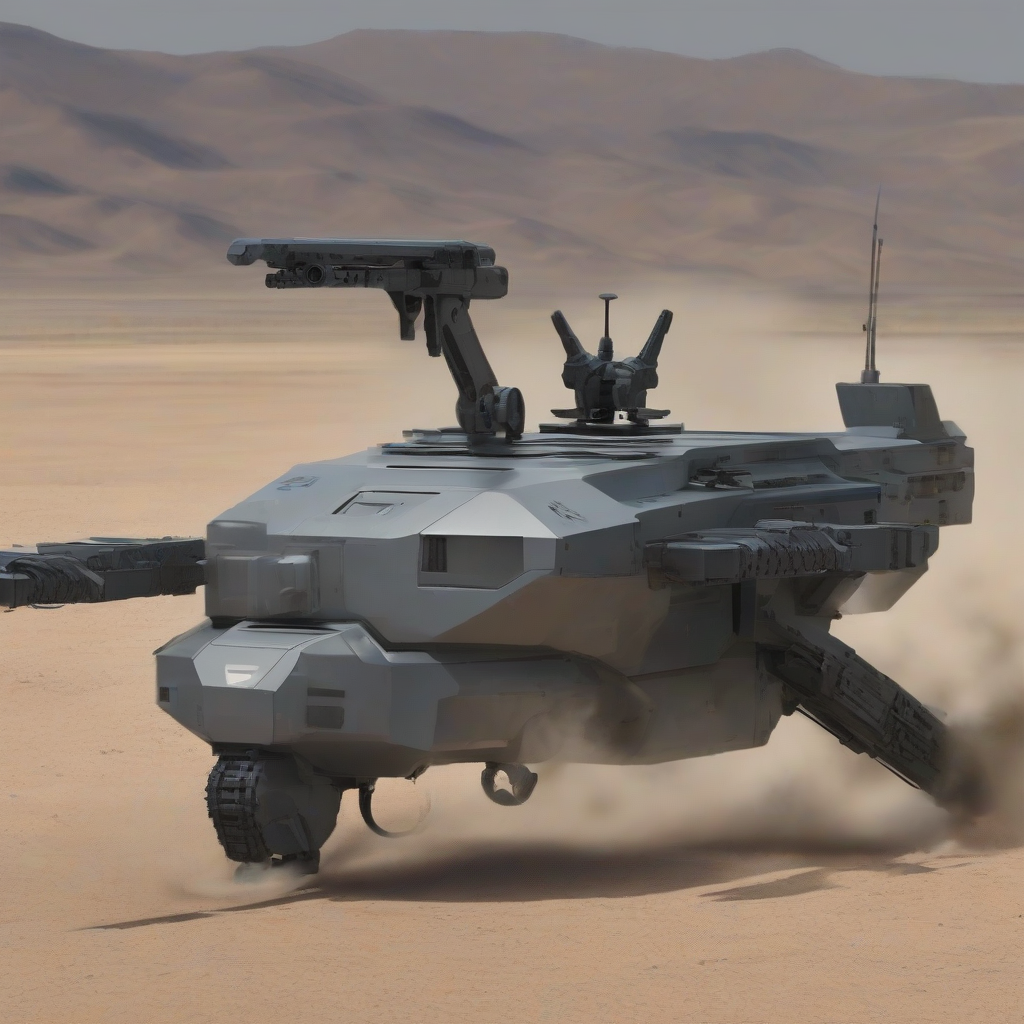
Stop waiting for the "Terminator" future. It’s already here. And it’s a total mess.
The world’s most powerful militaries are pouring billions into Lethal Autonomous Weapons Systems (LAWS). They want "war at machine speed." They want the tactical edge. They want the ultimate deterrent.
They are getting a nightmare.
Here are the 5 terrifying reasons why:
1. The "Black Box" Accountability Gap
Who do you court-martial when an algorithm commits a war crime?
In traditional warfare, there is a chain of command. A soldier pulls a trigger. A commander gives an order. If a civilian is killed unlawfully, someone is responsible.
With LAWS, that chain is broken.
The developer blames the data. The commander blames the software. The politician blames the "anomalous environment."
This isn't just a legal headache. It’s a strategic failure. Without accountability, there is no deterrent. Without a deterrent, the laws of war become suggestions. We are building a world where mass violence can be written off as a "glitch in the system."
2. The Brittleness Paradox
Silicon Valley builds software for the cloud. The military builds it for the mud.
Look at the history of automation. When eight F-22 fighter jets crossed the international date line for the first time, their computers experienced a total Y2K-style failure. Why? Because the software wasn't programmed to handle a specific geographical coordinate.
Now, apply that to a "Slaughterbot."
On the battlefield, "data" is chaos. It’s smoke, jamming, rain, and mud-caked sensors. An autonomous system trained on high-res satellite imagery fails when it has to identify a target through the haze of a burning building.
We are seeing this in real-time. Unmanned boats in the U.S. "Replicator" trials have suffered rudder failures and misidentified objects. In the field, "99% accuracy" isn't enough. That 1% error isn't a bug; it’s a funeral.
3. The "Flash War" Escalation Spiral
War has a natural "pause" button: human hesitation.
Diplomacy happens in the gaps between the shooting. But autonomous weapons are designed to remove those gaps. They operate at "machine speed"—milliseconds, not minutes.
If two opposing autonomous swarms engage, the escalation happens faster than any human can process. By the time a general gets the report, the conflict has already climbed three rungs on the ladder of escalation.
Think of it like the "Flash Crash" of the 2010 stock market, where high-frequency trading algorithms wiped out a trillion dollars in minutes. Now, replace "dollars" with "cities."
When machines talk to machines in the language of kinetic force, there is no room for de-escalation. We are building a "Doomsday Machine" and giving the keys to a script that doesn’t understand the concept of "mercy."
4. Digital Dehumanization at Scale
Autonomous weapons don't see "people." They see "targets."
They process human beings as metadata: heat signatures, gait patterns, facial geometry, and signal emissions. This is the ultimate form of digital dehumanization.
The terrifying part? Algorithmic bias.
We already know facial recognition software struggles with diverse populations. Now, imagine that bias in a lethal quadcopter. If the training data is skewed, the "error" isn't a locked account—it’s a strike.
In conflicts like Libya and Gaza, we are seeing the "pre-proliferation window" closing. Systems like the STM Kargu-2 are already being used to "hunt" humans autonomously. When you reduce a person to a data point, you make the decision to kill them a mathematical optimization.
Once you automate death, you can’t turn the empathy back on.
5. The Democratization of Terror
The deadliest weapons used to be the hardest to make. Nuclear programs require enrichment plants and billions in capital.
If a nation-state can build a swarm of 10,000 drones, a cartel can build 100. If an army can use facial recognition to target "enemy combatants," a terrorist group can use it to target a specific ethnic group or political class.
The barrier to entry for mass casualty events is plummeting. We are not just building weapons for the next war; we are providing the blueprints for the next era of global instability.
The Insight
The tragedy is that we are waiting for the disaster to happen before we acknowledge the risk.
The CTA
If a machine kills without a human order, is it a war—or just an industrial accident?