Why Hustle Culture is Failing: 3 Toxic Reasons Your 24/7 Grind is Killing Your Brain
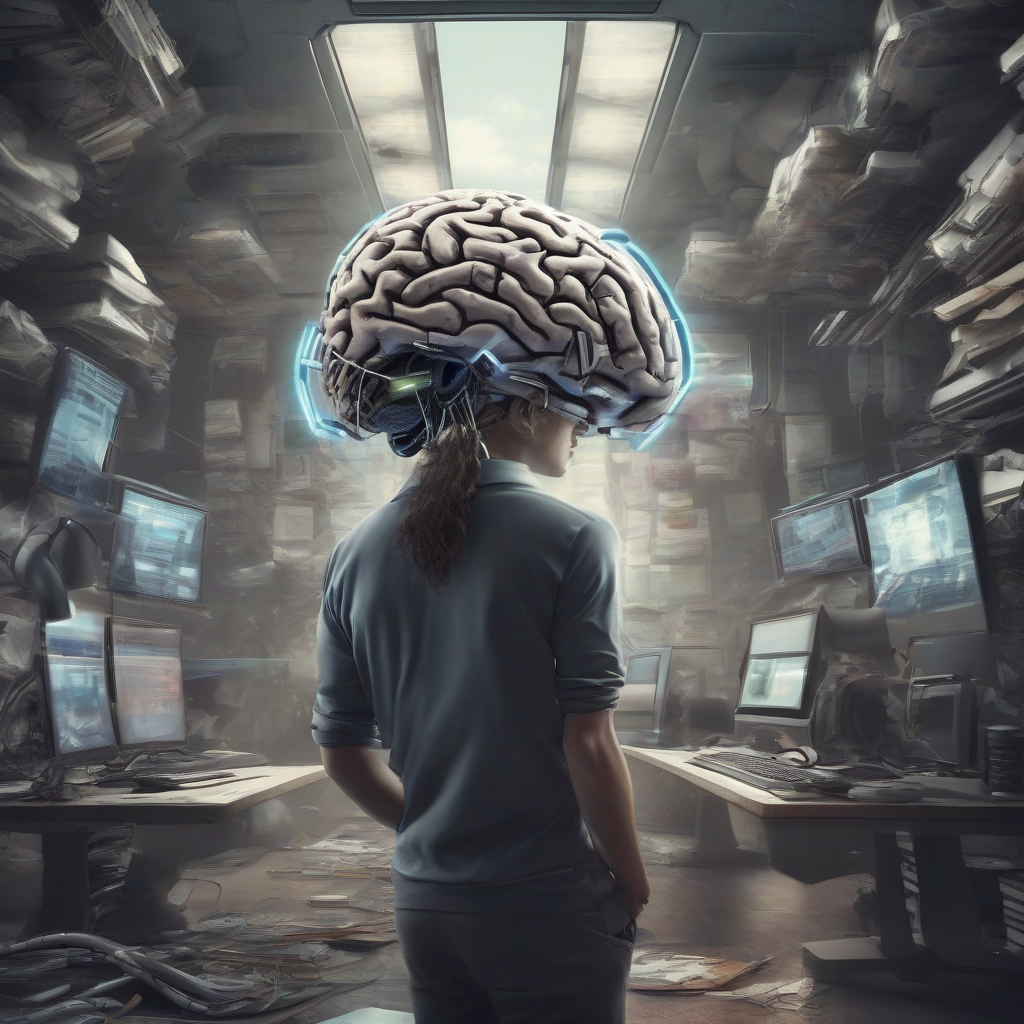
Stop bragging about your 80-hour work week. No one is impressed. They’re just waiting for you to crash.
I spent ten years believing that "sleep is for the weak" and "the grind never stops." I was the first one in and the last one out. My reward? A promotion I was too tired to enjoy and a brain that felt like a browser with 47 tabs open—none of them loading.
Hustle culture isn’t a badge of honor. It’s a collective hallucination.
In 2026, the data is in. The "always-on" lifestyle isn’t just exhausting you. It is physically rewiring your brain to be less effective.
Here are the 3 toxic reasons your 24/7 grind is killing your potential.
1. Your Prefrontal Cortex is Redlining
Most people treat their brain like a laptop. They think if they leave it on, it stays productive. It doesn’t.
Recent MRI studies on overwork are terrifying. Researchers have found that individuals working over 52 hours per week show measurable structural changes in the brain. Specifically, the prefrontal cortex—the part of the brain responsible for planning, logical reasoning, and impulse control—starts to thin.
When you grind for 14 hours straight, you aren't "pushing through." You are entering a state of chronic cognitive overload. Your brain enters a survival mode where it prioritizes immediate threats over long-term strategy.
This is why you spend three hours "working" but actually just moving emails from one folder to another. This is why you snap at your team over a minor typo. Your brain is redlining. It has no bandwidth left for empathy or innovation.
In a "hustle" state, your amygdala—the brain’s fear center—is in the driver's seat. You’re not making moves. You’re just reacting to pings. You think you’re being a shark. You’re actually a hamster on a wheel with high cortisol.
2. The 55-Hour Productivity Wall is Real
The math of the "grind" is a lie.
Studies from the World Health Organization and others consistently show that productivity doesn't scale with hours. In fact, it craters. Once you cross the 50-hour mark, your output per hour drops off a cliff. By the time you hit 55 hours, your total output is virtually the same as someone working 40.
You are effectively working those extra 15 hours for free.
Actually, it's worse than free. It's a net negative. Because those extra hours introduce errors. You make the "tired mistake" on a contract that takes ten hours to fix next week. You send the wrong attachment to a client. You miss the subtle market shift because you were too busy looking at a spreadsheet.
The average worker is only truly productive for 2 hours and 53 minutes a day. The rest is performative busyness. Hustle culture forces you to stretch those three hours of value across a twelve-hour day.
It’s like trying to cover a whole loaf of bread with a single teaspoon of butter. You aren't getting more flavor; you’re just tearing the bread.
Stop measuring your worth by the clock. The market doesn't pay for "time spent." It pays for "problems solved." If it takes you 80 hours to solve a problem that a rested person solves in 20, you aren't a high performer. You’re just inefficient.
In 2024, "hustle" meant being the fastest. In 2026, "hustle" is a suicide mission.
If your value proposition is "I work more hours" or "I respond to emails faster," you are competing with a machine that doesn't sleep, doesn't eat, and costs $20 a month. You will lose that race every single time.
The "Rise and Grind" influencers told you to monetize every second of your life. They told you to turn your hobbies into side hustles. They told you that if you weren't building, you were falling behind.
They were wrong.
By filling every gap in your schedule with "hustle," you are killing the only edge you have left as a human. You are turning yourself into a second-rate algorithm.
High performers in the next decade won't be the ones who work the most. They will be the ones who think the deepest. You cannot think deeply when your brain is in a state of perpetual emergency.
The Insight
We are entering "The Depth Economy."
For the last decade, we optimized for volume. We wanted more content, more meetings, more features, more "hustle." The result was a world of shallow noise.
In 2026, the trend is reversing. Businesses are realizing that one brilliant insight is worth a thousand mediocre Slack messages. Leaders are starting to prize "Slow Productivity."
The next generation of elite performers will be defined by their ability to disconnect. They will protect their sleep like a secret weapon. They will treat their attention like a finite resource, not a faucet they leave running.
The "24/7 Grind" will soon be viewed the same way we view smoking in the 1950s: a self-destructive habit we once thought was cool.
The CTA
When was the last time you did absolutely nothing for 30 minutes?