Why the Creative Arts are Failing: 5 Dark Reasons Generative AI is Killing Human Expression
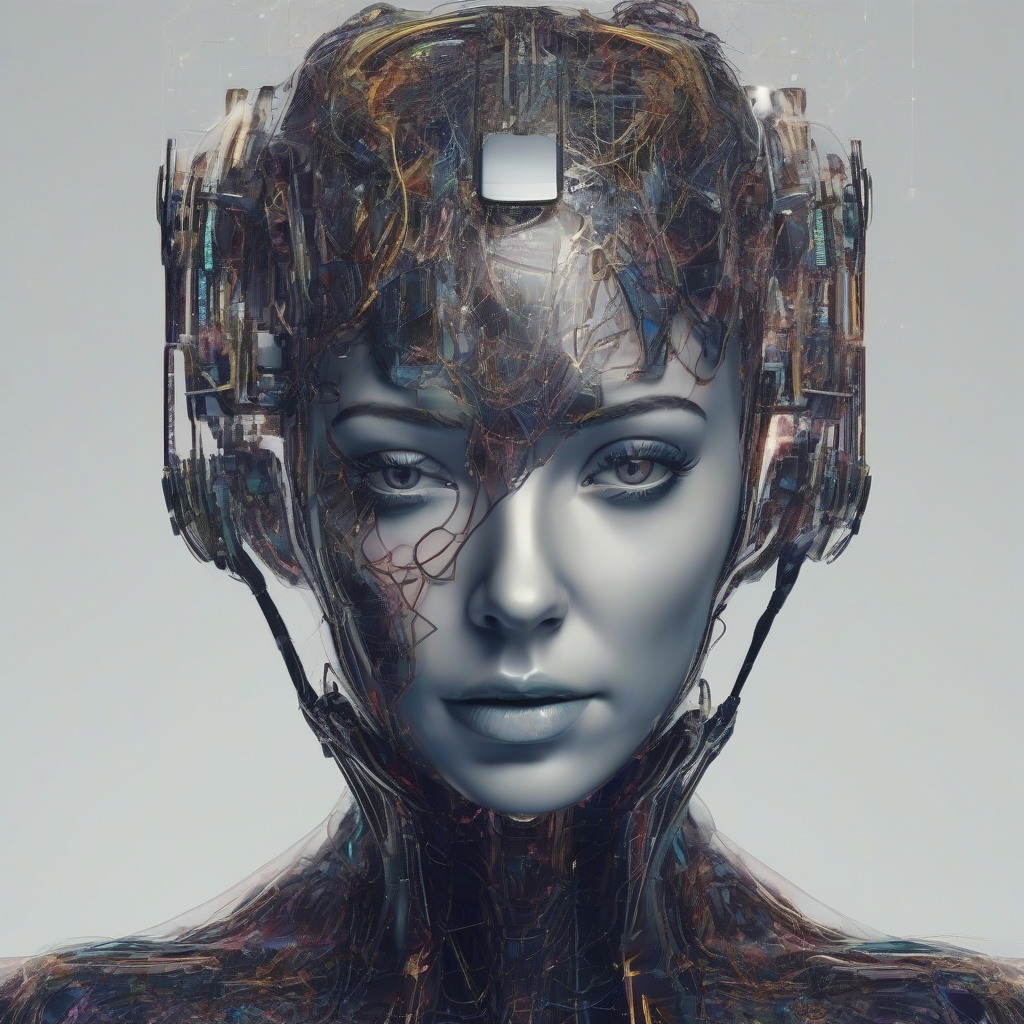
Creativity isn’t evolving; it’s being euthanized.
We are witnessing the greatest heist in human history. It’s not a theft of money. It’s a theft of the "messy middle"—the very space where human genius is born.
Everyone is celebrating "democratization." They’re missing the funeral. We’ve traded the soul of expression for the convenience of a "Generate" button.
Here are the 5 dark reasons why the creative arts are failing in the age of the machine.
1. The Death of the Friction
Art is the byproduct of struggle.
When a painter fights a canvas, the "mistakes" create the style. When a writer labors over a sentence for three hours, the exhaustion forces a breakthrough. Style is just the unique way a human navigates friction.
When you remove the struggle, you remove the soul. You are left with a "perfect" image that says absolutely nothing. We are entering an era of "Frictionless Art." It is smooth, polished, and entirely hollow.
The "messy middle" is where the human lives. By skipping it, we are automating ourselves out of our own stories. We’ve become curators of a machine’s imagination because we’re too lazy to use our own.
2. The Algorithmic Ceiling
Large Language Models (LLMs) and diffusion models are probability engines. They don't know what "good" is. They only know what is "likely."
This is the Algorithmic Ceiling.
We are drowning in a sea of "B+ content." It’s good enough to keep you scrolling, but not good enough to make you feel. When the average becomes the gold standard, excellence dies. We are training a generation to believe that "competent" is the same as "creative."
3. The Zero-Marginal-Cost Trap
Economics kills art faster than censorship.
Value is derived from scarcity. Human art is scarce because human time is finite. It takes 10,000 hours to become a master. That time has a price.
When supply is infinite, value collapses.
Why hire an illustrator when a prompt is free? Why pay a copywriter when the bot can churn out 50 variants in seconds? The market is being flooded with "synthetic slop."
This doesn't just kill the artist’s bank account. It kills the audience's attention. When everything is "special," nothing is. We are devaluing the very act of creation until it becomes a disposable commodity, no more meaningful than a plastic straw.
4. Semantic Cannibalism
This is "Model Collapse."
We are losing the "Human Source Code."
We are cannibalizing our culture to feed a machine that doesn't even know it's eating.
5. The Prompting Delusion
We have confused "Intent" with "Authorship."
Typing "Cyberpunk samurai in the style of Moebius" does not make you an artist. It makes you a customer. You are ordering a pizza, not cooking a meal.
The "Prompt Engineering" craze is a cope for the loss of skill. It’s a way for people to feel like creators without doing the work. But authorship requires a POV. It requires a specific, intentional choice for every line and every shadow.
The danger is that we are losing the "muscle memory" of creativity. We are becoming a species of button-pushers. We are trading our ability to do for our ability to request. When the tools do the thinking, the mind goes soft.
The Insight
The "Human Premium" is coming.
In the next 36 months, the market will split into two tiers.
The bottom 90% of the world will consume "Synthetic Slop"—cheap, personalized, AI-generated entertainment designed to trigger dopamine hits without substance. It will be the "fast food" of culture.
The top 10% will pay a massive premium for "Verified Human" experiences.
The most valuable skill of 2027 won't be "Prompt Engineering." It will be "Analog Depth." The ability to create something without a screen, using nothing but the friction of the physical world.
We are moving from an era of "Information Scarcity" to "Authenticity Scarcity."
The machines can have the "Average." If you want to survive, you have to find the "Edges." You have to be the friction in the machine.
If you can’t prove you’re human, you’re already obsolete.
The Question
When was the last time you created something that a machine couldn't predict?