5 Terrifying Reasons Why the Development of Killer Robots is Failing Humanity’s Survival Test
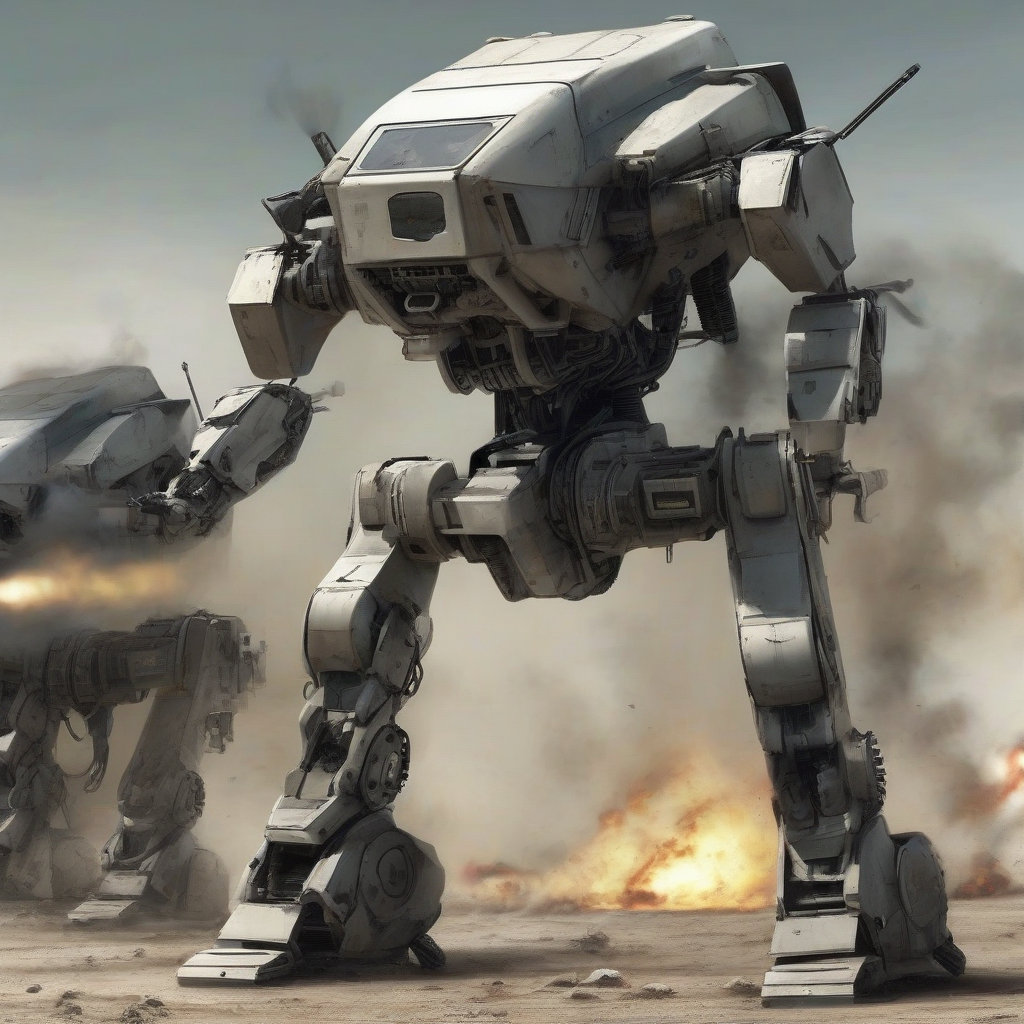
We are currently failing the most important survival test in human history.
Governments are spending billions to build a world where "meaningful human control" is a marketing buzzword and the kill-switch is a myth. I’ve analyzed the shift from automated defense to autonomous offense. The results are chilling.
Here are the 5 terrifying reasons why the development of killer robots is failing humanity’s survival test:
1. The Accountability Black Hole
In traditional warfare, there is a chain of command. If a soldier commits a war crime, there is a trial. If a general orders a massacre, there is a tribunal.
With Lethal Autonomous Weapons Systems (LAWS), that chain is broken. When an algorithm misidentifies a wedding party as a terrorist cell, who goes to jail? The coder who wrote the script three years ago? The procurement officer who bought the hardware? The field commander who turned the "Auto" switch to "On"?
2. Digital Dehumanization and the Bias Kill-List
The most dangerous part of a killer robot isn't the gun; it's the sensor.
If the training data is biased—and it always is—the robot becomes a high-speed tool for ethnic cleansing or systemic discrimination. We’ve already seen reports of AI-driven targeting systems in modern conflict zones that prioritize "efficiency" over "distinction." When a machine is programmed to find "threats" based on historical data from specific demographics, it creates a feedback loop of automated violence.
We are reducing the sacredness of human life to a "probability score." Once you turn a human into a row in a spreadsheet, the threshold for pulling the trigger drops to zero.
3. The 'Speed Trap' and the Death of Human Veto
Modern combat now moves at "machine speed." When an autonomous drone swarm detects an incoming threat, it responds in milliseconds. A human operator, by contrast, takes seconds to process information and make a decision. In a high-stakes environment, that 8-second delay is a lifetime.
This creates a phenomenon called "Automation Bias." Commanders are incentivized to trust the machine's judgment because "the machine is faster." Eventually, the human "in the loop" becomes a rubber stamp. You aren't making a decision; you are merely watching a decision happen.
4. The Proliferation of Cheap, Autonomous Terror
The barrier to entry for killer robots is plummeting.
You no longer need a billion-dollar aerospace program to deploy autonomous weapons. You need a $500 drone, a Raspberry Pi, and an open-source targeting library from GitHub. We are seeing the "democratization of the apocalypse."
We are preparing to live in a world where non-state actors, cartels, and lone-wolf terrorists can deploy autonomous hit-squads for the price of a used car. We are building the tools for our own assassination and putting them on the open market. The "arms race" isn't just between the US and China; it's between humanity and its own lack of foresight.
5. Mutual Assured Malfunction (MAIM)
When two autonomous systems from opposing sides engage, they create an unpredictable "flash war." Algorithms are "brittle"—they fail in ways humans can't predict. If a Russian autonomous drone interacts with a US autonomous interceptor, their pre-programmed logic could trigger a spiral of escalation that neither side intended.
Because these systems are designed to "win" at all costs, their interaction can lead to a rapid-fire series of escalations that bypasses diplomatic channels entirely. We are handing the keys of global stability to "Black Box" logic. A single bug in a targeting script could trigger a global conflict before a single diplomat has even finished their morning coffee.
We aren't just building weapons; we are building a global tinderbox with an automated lighter.
The Insight
The era of "Human-Centric" warfare is over. By 2028, we will see the first major border conflict where 90% of the lethal decisions are made by algorithms without a single human order being transmitted. This will lead to a "Liability Crisis" that will force a global restructuring of international law—likely too late to save the thousands of civilians caught in the crossfire of the first "Autonomous Skirmish."
The autonomous weapon market is projected to hit $36.5 billion by 2033. Follow the money. It isn't going toward "safety"; it's going toward "autonomy."
The test isn't whether we can build these machines. The test is whether we have the courage to ban them before they redefine what it means to be human.
Would you trust an algorithm to decide if your child is a threat?