Why Modern Love is Failing: 5 Brutal Reasons Dating Apps are Killing Monogamy
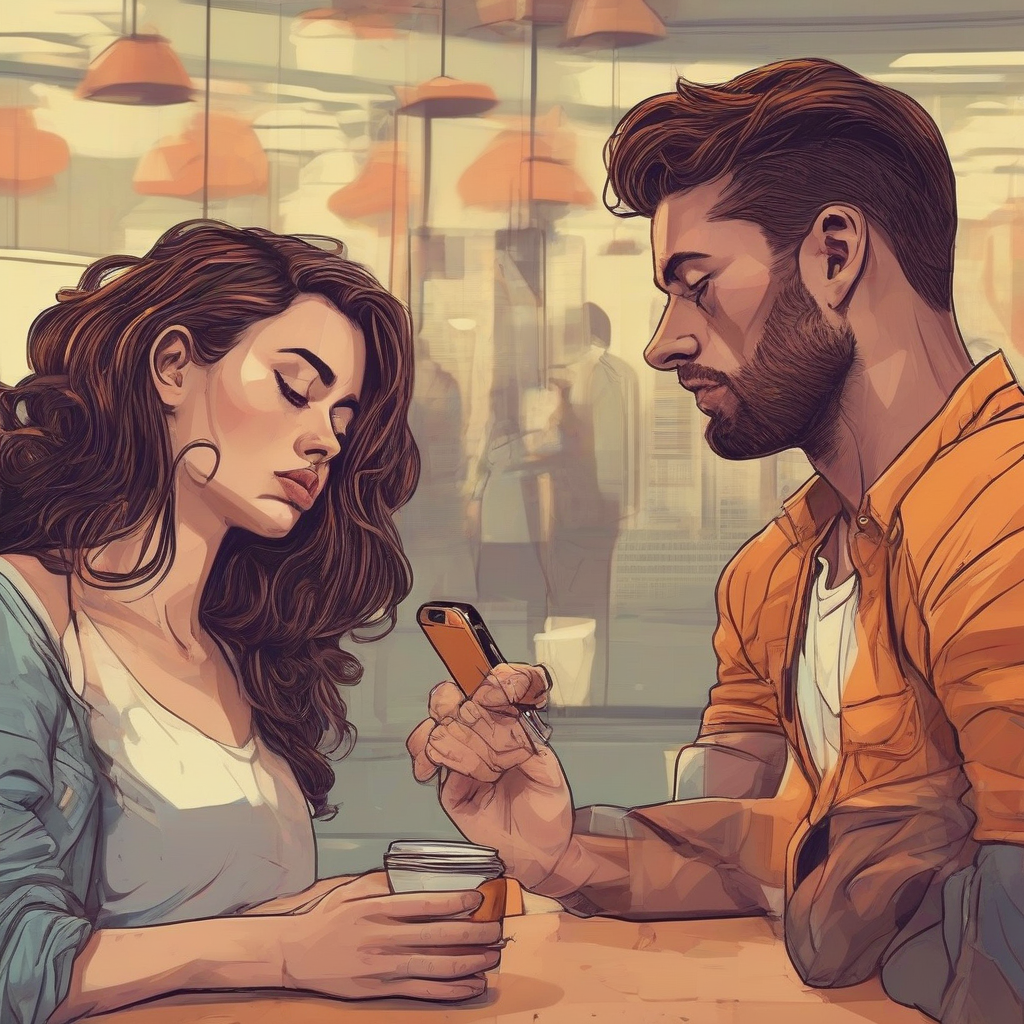
If you find "The One," you delete the app. The app loses a customer. The shareholder loses money.
Modern romance has been hacked by a business model that thrives on your dissatisfaction.
I’ve analyzed the data and tracked the shift in Gen Z sentiment. Monogamy isn’t dying because we want more partners. It’s dying because we’ve been programmed to believe a "better" one is always 20 miles away.
1. The Infinite Buffet Paradox
In the 1990s, your "pool" was your office, your gym, or your friend group. You had 5 options. You picked the best one and worked at it.
Today, your pool is 50,000 people.
This creates the "Paradox of Choice." When you have too many options, you don't choose. You freeze. Or worse, you choose, but you remain chronically dissatisfied because you’re haunted by the 49,999 people you didn't pick.
Psychologically, we have shifted from "Satisficers" (people who find someone great and commit) to "Maximizers" (people who must have the absolute best).
The "perfect" match doesn't exist. But as long as you keep swiping, you can pretend it does. You aren't looking for a partner; you’re looking for a glitch in the matrix.
2. Intimacy as a Slot Machine
The swipe is the lever. The match is the jackpot.
Every match triggers a hit of dopamine. It feels like progress. But it’s a fake signal. You’re getting addicted to the validation of the match, not the vulnerability of the person.
This is why "Dating App Burnout" is at an all-time high. People spend 90 minutes a day swiping just to feel a pulse of relevance.
By the time you actually get to the first date, you are emotionally exhausted. You aren’t meeting a human; you’re meeting a profile that cost you three hours of scrolling. You’re looking for reasons to "swipe left" in real life just to get back to the game.
3. The Devaluation of the Human Commodity
When you can replace a person with a thumb-flick, that person becomes a commodity.
We have entered the era of "Disposable Dating."
If your partner has an annoying habit or a different political view, you don't communicate. You don't grow. You ghost. Why do the hard work of conflict resolution when you can "reset" the game with a new match by Thursday?
We are treating people like Netflix shows. If the pilot episode doesn’t grab us in 10 minutes, we cancel the series and browse the "Trending Now" section.
4. The Optimization Trap
We filter by height, income, "vibe," and star sign. We are looking for a partner who fits a pre-set list of criteria like we’re ordering a custom MacBook.
But love isn't found in the similarities. It’s found in the unexpected "edges" of a person.
By "optimizing" our search, we are filtering out the very people who could actually challenge us and make us better. We are looking for mirrors, not partners.
This creates a culture of "Situationships." We stay in the "talking stage" forever because we’re afraid that committing to one person means closing the door on a "more optimal" data set.
5. The Death of the "Slow Burn"
If there isn't a "spark" in the first 15 minutes of a coffee date, it’s a failure. But real monogamy is built on the "Slow Burn"—the gradual build-up of trust, shared history, and inside jokes.
You can’t find a slow burn on an app designed for high-speed browsing.
The algorithm prioritizes the most "swipeable" people—the ones with the best lighting and the punchiest bios. It doesn't prioritize the person who is a "7" on a screen but a "10" after three months of friendship.
We are losing the ability to let love grow. We want it delivered like DoorDash—instant, hot, and exactly as pictured. When it arrives cold, we demand a refund and order from somewhere else.
The Insight
The pendulum is about to swing back. Hard.
By 2027, "Analog Exclusive" will be the biggest status symbol in dating.
We are already seeing the rise of "Phone-Free" mixers and "Matchmaker-Only" social clubs. The elite are tired of the digital meat market. They are paying thousands for "Choice Limitation"—curated groups where you are forced to choose from a small pool.
The future of love isn't "more" options. It’s "better" boundaries.
We are moving away from the "Infinite Swipe" and toward "The Great De-Digitization."
If you want a relationship that lasts, you have to treat it like it’s the only one you’ve got. You have to kill the "What If" in your pocket.