Why Human Creativity Is Failing: 7 Dark Truths About How AI Is Killing Hollywood Forever
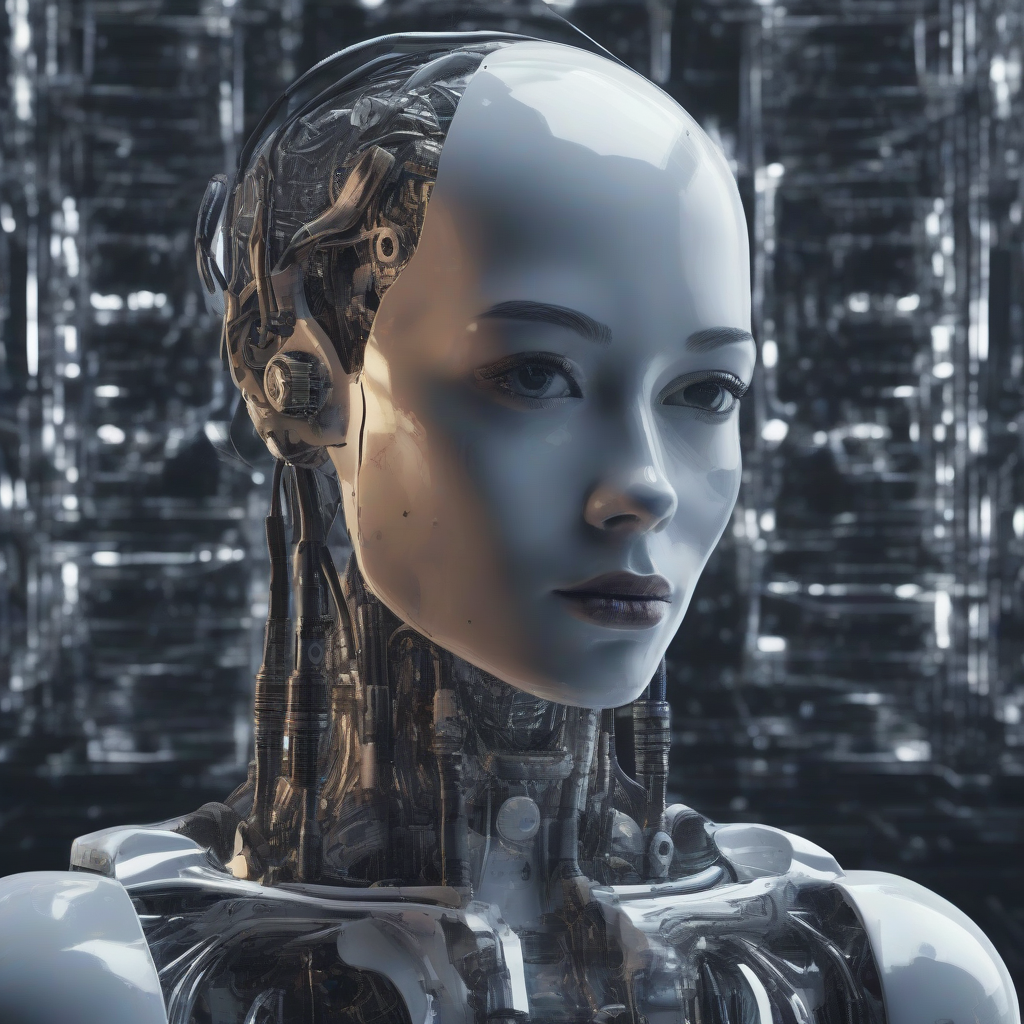
Hollywood is already dead. You just haven’t seen the credits roll yet.
Stop waiting for the “AI revolution” to happen. It happened while you were watching a $200 million sequel that felt like it was written by a committee of robots. Because it was.
Here is the dark truth: 90% of what you call "cinema" is about to become a high-speed data-processing exercise.
The First Reader Is No Longer Human
The biggest bottleneck in Hollywood used to be "The Slush Pile." Thousands of scripts, one human reader, and a lot of coffee. That human was the gatekeeper. They looked for "soul," "voice," and "subtext."
That person has been fired.
The Death of the Entry-Level Ladder
How did the greats start? They were PAs. They were junior writers. They were VFX interns cleaning up frames.
Tools like Runway and Sora can now handle the "boring" work: roto-scoping, background generation, and basic scene cleanup. On paper, this is "efficiency." In reality, it’s a scorched-earth policy for talent. By automating the entry-level tasks, we are burning the ladder that takes a creator from "nobody" to "auteur."
In five years, Hollywood will have plenty of 60-year-old directors and plenty of AI, but zero 25-year-old visionary directors. You can’t learn the craft if the machine does the learning for you.
The Rise of Digital Necromancy
Hollywood has a "new talent" problem because it has an "old IP" addiction.
Why take a risk on a new actor when you can buy the likeness rights to a deceased legend? We are entering the era of Performance Cloning. Studios are already quietly signing deals to use "synthetic likenesses" in perpetuity.
This isn't about de-aging a star for a flashback. This is about a future where a 20-year-old actor has to compete for a role against a perfectly rendered, AI-controlled version of 1970s Harrison Ford. The "human element" isn't being enhanced; it’s being archived. We are trading the unpredictability of human performance for the safety of a digital asset that never ages, never gets sick, and never asks for a raise.
The Industrialization of "Vibe" Over Narrative
But it cannot understand "Why."
We are seeing the rise of the "Prompt Movie"—a collection of high-fidelity visual sequences held together by a thin, nonsensical plot. When the cost of a "spectacular" visual drops to zero, spectacle becomes worthless. We are drowning in beautiful imagery that means absolutely nothing.
The Homogenization Loop
This creates a "Cultural Ouroboros." The machine eats the past to output the present. Then, next year’s machine eats that output to create the future.
Without the "human error"—the weird, illogical, risky choices that humans make—art becomes a circle. We are losing the ability to create something truly new because the technology is built to find the "average" of what is already successful. Hollywood is becoming a factory that produces a 1,000-page book of the same sentence over and over again.
Personalization Is the End of Culture
In three years, you won't watch a "movie." You will watch a "stream."
This sounds like a dream. It is actually a nightmare.
The power of cinema was the "Shared Experience." We all sat in a dark room and felt the same thing at the same time. It was the glue of culture. When everyone is watching their own perfectly-tailored, algorithmically-generated solo-movie, we lose the ability to speak the same cultural language. We will be a society of 8 billion people, each living in their own private, synthetic cinematic universe.
The "Moat" Is Gone, But So Is the Value
The only thing keeping Hollywood alive was its "Moat": the fact that it cost $100 million to make a movie that looked "real."
But when anyone can do it, nobody cares. We are about to be flooded with "Synthetic Cinema"—millions of AI-generated movies that look like blockbusters but feel like static. The value of a film used to be the "proof of work"—the knowledge that 500 people spent two years of their lives making this thing. When that work is done by a GPU in twenty minutes, the emotional weight vanishes.
THE INSIGHT
By 2028, the "Traditional Blockbuster" will be extinct.
The industry will split into two extremes:
- The $1 Synthetic Sludge: Millions of AI-generated, personalized movies consumed like fast food on social platforms.
- The Ultra-Human "Analog" Experience: High-ticket, live-theater, or "certified human-made" films that people pay a premium for because they are tired of the digital fake.
The "middle" of the industry—the $40 million human-made drama—is dead. It’s either a machine-made vibe or a human-made event. There is no in-between.
Are you ready to live in a world where your favorite actor doesn't actually exist?