Why Hollywood is Failing: 5 Dark Reasons Generative AI is Killing the Entertainment Industry
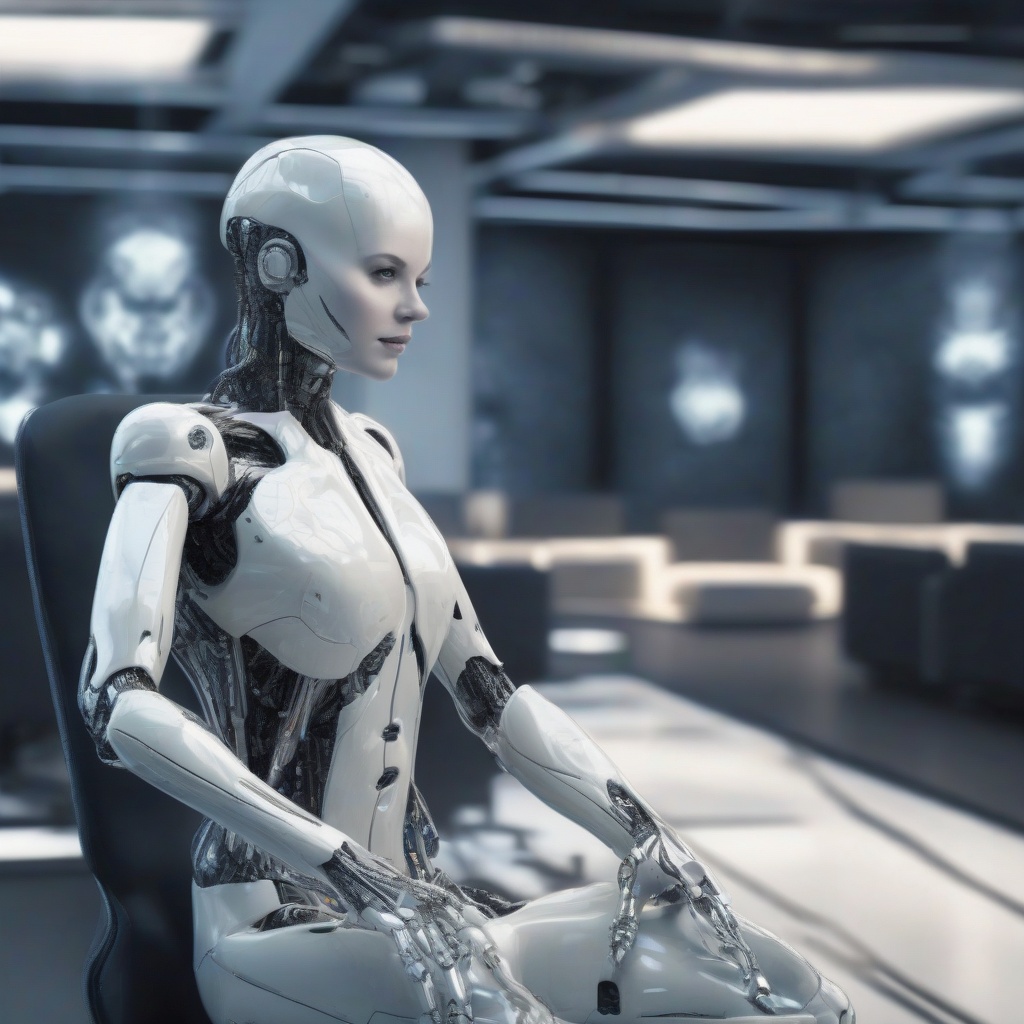
Stop watching the credits. By 2027, most of the names on that screen won't be human.
Hollywood is currently in a terminal tailspin. The numbers are a bloodbath: ticket sales are down 40% compared to 2019, and 2025 marked a 45-year box office low. But the real "killer" isn't Netflix or the economy. It’s a quiet, algorithmic takeover happening behind closed doors.
The Death of the Physical Moat
For a century, Hollywood’s "moat" was money. To build a world, you needed $200 million, 12 soundstages, and 500 construction workers.
That moat just dried up.
In early 2024, Tyler Perry halted an $800 million expansion of his Atlanta studio. Why? Because he saw what OpenAI’s Sora could do. He realized that 12 new soundstages are useless if a director can generate a photorealistic Colorado mountain range or a 1920s jazz club from a text prompt.
When anyone with a laptop and a $20 subscription can produce "Marvel-grade" visuals, the billion-dollar studio lot becomes a liability. The physical overhead is killing the incumbents, while the lean, AI-native creators are moving in for the kill.
Digital Necromancy and the Likeness War
The most valuable thing an actor owns is their face. Right now, that face is being stolen in broad daylight.
With the launch of Sora 2 and its "Cameo" features, the line between "real" and "synthetic" has officially vanished. We’ve entered the era of Digital Necromancy. Users are already creating viral "mashups" of dead celebrities like Michael Jackson and living stars like Bryan Cranston.
Hollywood’s biggest agencies—WME, CAA, and UTA—are in a full-blown panic. They aren't just fighting for better pay; they are fighting to stop their clients from being turned into "digital puppets" that can be rented out for eternity. The dark reality? Many studios are already drafting "post-mortem" clauses into contracts. They don't want to hire you; they want to own your "digital twin" forever.
The Rise of the "Slop" Economy
The studios are so desperate for revenue that they’ve started eating their own children.
In 2025, a massive controversy erupted over "AI Slop." Channels like Screen Culture and KH Studio began amassing billions of views with fake AI-generated trailers. Think Margot Robbie and Ryan Gosling in a "Barbie 2" that doesn't exist.
The 200,000 Job Massacre
The industry mantra used to be "Survive 'til '25." Now, it’s "Exist 'til '26."
The layoffs are not a "correction"—they are a permanent replacement. In 2025, over 17,000 entertainment jobs were slashed in the first 11 months alone. Analysts predict that by 2026, over 200,000 jobs in the U.S. entertainment sector will be "disrupted" (read: eliminated) by generative AI.
VFX artists, junior writers, and editors are the first to go. Why hire a team of 50 compositors when one "AI Orchestrator" can do the work in a weekend? The "middle class" of Hollywood is being hollowed out. What’s left is a tiny elite of "A-list" stars and a massive ocean of algorithmic content, with nothing in between.
The "Zombie Franchise" Collapse
Hollywood is currently addicted to "Zombie Franchises"—dead IPs that are kept alive through sheer marketing spend.
Look at the 2024-2025 scoreboard:
- Joker: Folie à Deux: -$144M loss.
- Furiosa: -$119M loss.
- Snow White: Estimated $115M loss.
- Thunderbolts: ~$100M loss.
The Insight
The "Premium" label is moving.
For 100 years, "Premium" meant a movie that cost $200 million. By 2027, "Premium" will mean a movie that is 100% human-verified.
We are entering a bifurcated market. On one side, you will have "Infinite Content": personalized, AI-generated movies that cater to your specific niche (e.g., "The Matrix but starring me and my friends"). This will be free, abundant, and disposable.
On the other side, you will have "Human Heritage": small-batch, artisanal films with a "Human-Made" certification. These will be the only things people are willing to pay for in a theater. The era of the "Mega-Blockbuster" is over. The era of the "Human-Auteur" is just beginning.
The CTA