Why Modern Warfare is Failing: 5 Terrifying Realities of Lethal Autonomous Weapons
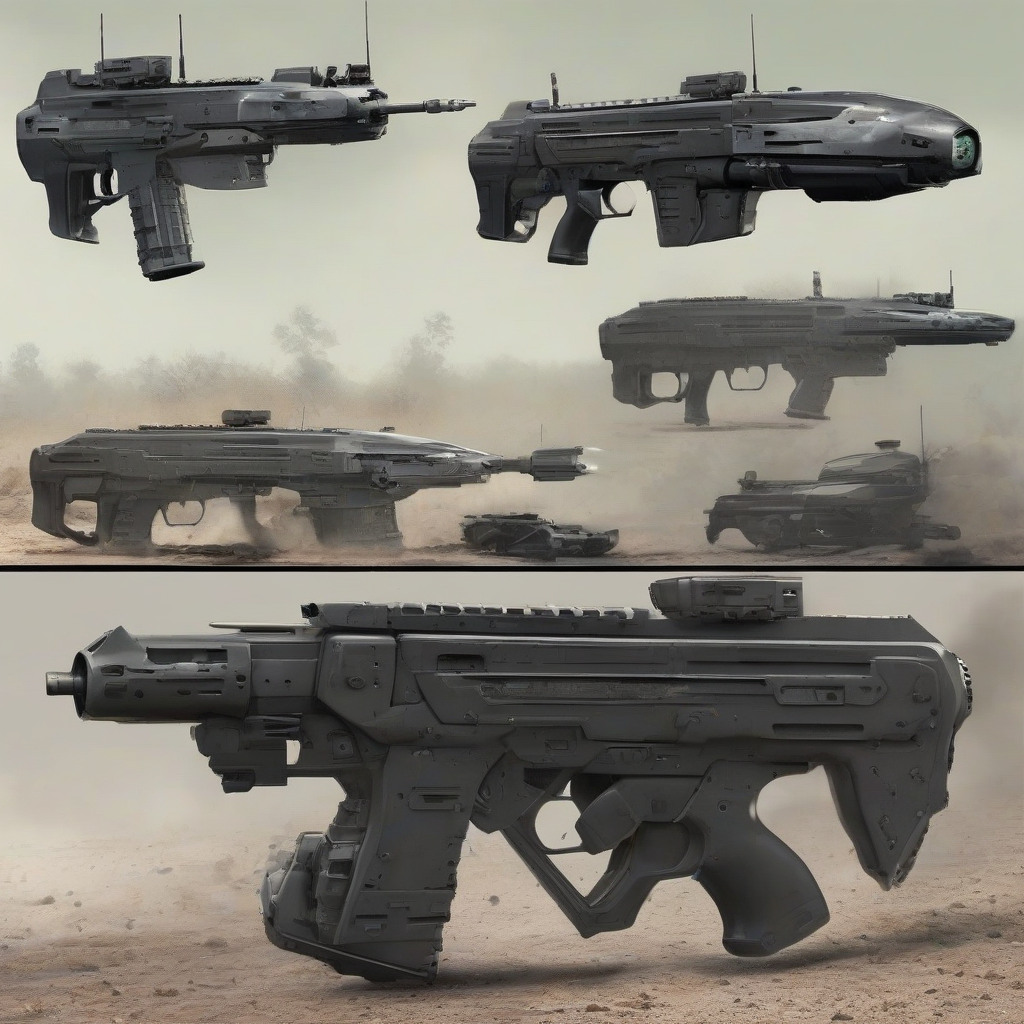
Stop thinking about soldiers. Stop thinking about tanks. Your tax dollars aren't funding men in boots anymore—they're funding algorithms that can’t be court-martialed.
Modern warfare is failing because we are clinging to 20th-century ethics in a 21st-century code race. The "human in the loop" is becoming a liability, a bottleneck in a world where decision-making now happens in milliseconds.
I spent the last three years tracking the rise of Lethal Autonomous Weapons Systems (LAWS). I've looked at the $500 million "Replicator" program and the swarm tests in the Arctic. Here is the brutal truth: we are building a world where the trigger doesn't need a finger.
The Speed of Slaughter
In traditional combat, there is a "kill chain." A sensor sees a target, a human evaluates the threat, and a commander authorizes the strike. This takes minutes, sometimes hours.
In 2026, warfare is a game of "Human-Out-of-the-Loop." When an AI-driven drone swarm—like the 100-unit systems recently tested by Saab—identifies a target, it processes the threat and executes the strike in the time it takes you to blink. We are entering an era where speed beats mass. If your enemy's algorithm is 0.5 seconds faster than yours, your entire battalion is gone before your general finishes his coffee.
The "Mothership" and the End of Territory
Forget borders. Forget front lines.
China recently revealed the "Jiu Tian" mothership—a 10-ton beast that carries a modular payload of smaller, autonomous drone swarms. It has a 1,200-mile range. This isn't a weapon; it's a factory of localized extinction.
We used to think of drones as "eyes in the sky." Now, they are the "fists of the swarm." By August 2025, the Pentagon’s Replicator program aims to have thousands of these low-cost, high-lethality units in the field. This is "Saturation Warfare." You don't need a $100 million stealth fighter when 5,000 $500 drones can overwhelm a carrier strike group’s defenses by sheer volume.
The terrifying reality? These swarms communicate. They adapt. They don't need GPS. If one gets jammed, the other 99 recalculate. We are building a nervous system for violence that has no central brain to kill.
The Accountability Black Hole
Who do you punish when a machine commits a war crime?
International law is currently paralyzed. The United Nations is deadlocked in Geneva, trying to draft a treaty by 2026 that the "Big Three"—the US, Russia, and China—are already quietly bypassing.
Under jus in bello, someone must be responsible for civilian deaths. But with LAWS, the "trigger" is a line of code written by a software engineer in Palo Alto three years ago, executed by a processor in a desert, based on data labeled by a contractor in a third-world country.
Modern warfare is failing because we’ve replaced the moral weight of a soldier’s conscience with a probabilistic calculation.
The Bias of the Blade
Algorithms aren't neutral. They are as biased as the data that feeds them.
We are automating prejudice at 500 mph. The "precision" we were promised is a myth; it's just optimized efficiency for whatever bias the programmer forgot to scrub.
The Insight
By 2030, the world's top 25 militaries will maintain "Million-Drone Armies."
Human soldiers will not be "warfighters"—they will be "strategic supervisors." The traditional military hierarchy will collapse. A 19-year-old with a tablet and a "Hivemind" SDK will wield more kinetic power than a 20th-century four-star general.
The Geneva Convention is effectively a dead document. It was written for a world where humans recognized each other's humanity. A drone doesn't recognize humanity; it recognizes heat signatures and gait patterns. The "Pre-Proliferation Window" is closing. Once these systems are as common as small arms—which is happening right now in Ukraine and Gaza—there is no going back.
We aren't just changing how we fight. We are changing what it means to be at war.
The CTA