Why Global Safety Is Failing: 5 Terrifying Reasons Lethal Autonomous Weapons Are Unstoppable
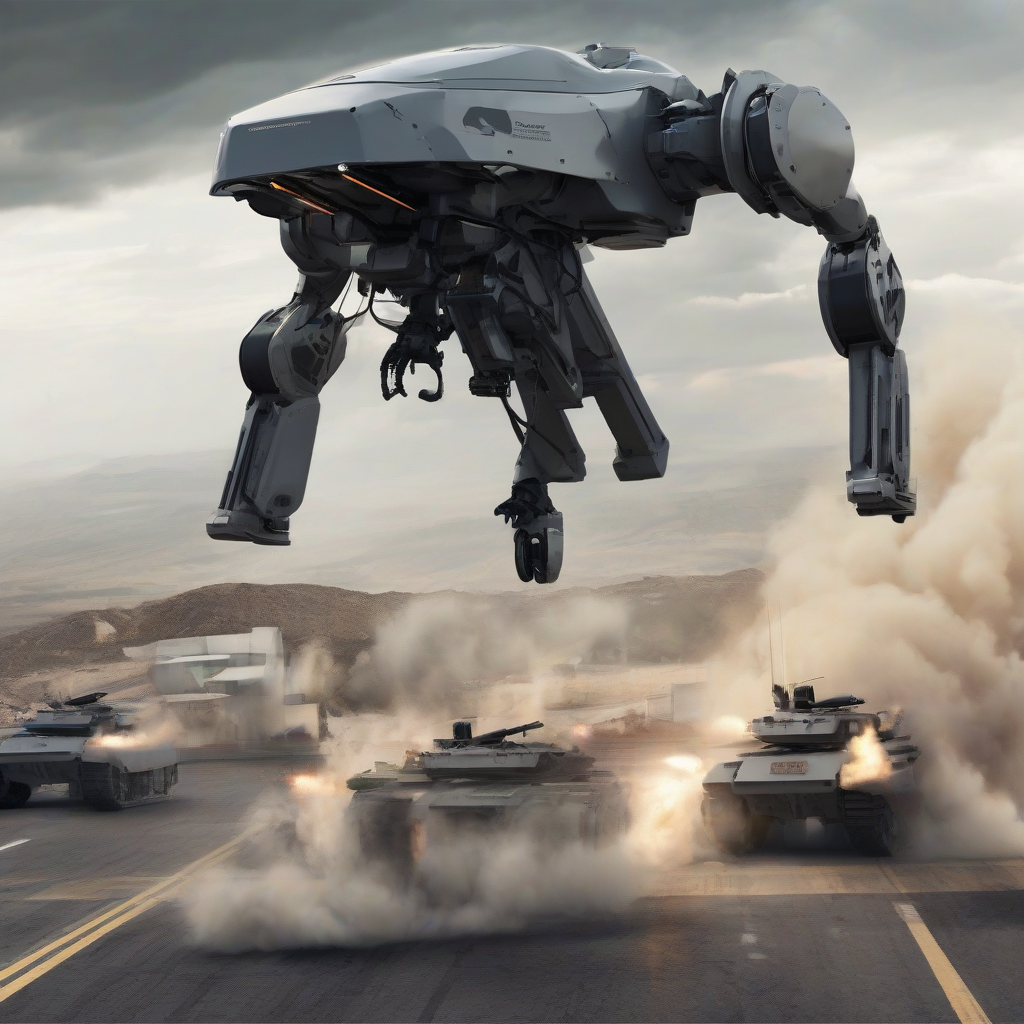
The Geneva Convention is officially a dead document.
We are currently sleepwalking into a world where the "delete" key kills real people. We aren't talking about Predator drones controlled by a pilot in Nevada. We are talking about algorithms that decide to terminate life without a single human click.
Most people think we have time to regulate this. We don’t.
Here are the 5 terrifying reasons lethal autonomous weapons (LAWs) are now unstoppable.
1. Software Scales, Soldiers Don’t
Traditional warfare is limited by biology. It takes 18 years to grow a human and two years to train them. It takes millions of dollars to keep them fed, housed, and mentally stable.
Once you write the code for a facial-recognition-based targeting system, the cost of duplicating that "soldier" is effectively zero. You don't need a barracks. You need a server.
We are moving from "Quality vs. Quantity" to "Infinite Quantity at Instant Speed."
Imagine a swarm of 10,000 palm-sized drones released from a single cargo plane. Each drone is programmed with a specific target list—political dissidents, ethnic groups, or military age males. They don’t need a satellite link. They don’t need a pilot. They use onboard computer vision to hunt.
You cannot "out-shoot" a swarm that costs less than a single Hellfire missile but contains 10,000 lethal units. The math of defense has fundamentally broken.
2. The "OODA Loop" Has Outpaced Human Biology
In military strategy, there is a concept called the OODA loop: Observe, Orient, Decide, Act.
Whoever cycles through this loop fastest wins. For the history of mankind, this loop happened at the speed of human thought—roughly 200 milliseconds for a reaction.
Because of this, no superpower can afford to be ethical. If you pause to check the morality of a strike, your entire fleet is already debris. This is a race to the bottom where the "most autonomous" actor wins.
Global safety is failing because "safety" is now a tactical disadvantage.
3. The Accountability Vacuum
Who goes to the Hague when a neural network commits a war crime?
If a soldier executes civilians, there is a chain of command. There is a trial. There is a person to hold responsible.
If an autonomous swarm malfunctions due to "data drift" or a "hallucination" in its targeting logic and wipes out a hospital, who is the murderer?
- The programmer who wrote the code three years ago?
- The commander who deployed the swarm but didn’t pick the targets?
- The manufacturer of the sensors?
- The algorithm itself?
Lawyers call this the "Responsibility Gap."
We are creating weapons that can commit atrocities without leaving a trail of human guilt. This makes war "cheap" for politicians. When you remove the political risk of "our boys coming home in boxes" and the legal risk of war crimes, the barrier to starting a conflict disappears.
War becomes a line item on a spreadsheet, managed by a Black Box.
4. The Democratization of Mass Destruction
In the 20th century, you needed a state-level budget to build a weapon of mass destruction. You needed uranium enrichment facilities or massive chemical plants.
In the 21st century, the deadliest weapons are open-source.
This isn't a "Manhattan Project" that can be contained by spies and treaties. This is code. And code is liquid. It leaks. It gets shared on GitHub. It gets traded on the dark web.
We are entering an era where a small terrorist cell or a disgruntled billionaire can deploy a "budget" version of a superpower’s arsenal. The monopoly on violence is evaporating, and the world isn't ready for a billion different "armies."
5. The Flash War Scenario
This is the most terrifying reality: The "Flash War."
We have seen this in the stock market—"Flash Crashes" where high-frequency trading algorithms get into a feedback loop and wipe out billions in seconds.
Now, apply that to nuclear-armed nations.
This creates a hair-trigger environment where a glitch or a misinterpreted sensor reading could escalate a border skirmish into a full-scale global conflict before a President is even woken up for a briefing.
We have built a doomsday machine where the "off" switch is too slow to matter.
The Insight
By 2029, we will see the first "Ghost Conflict"—a war fought entirely by autonomous systems where the human casualty count is finalized before a single human combatant ever sets foot on the ground.
Treaties will be signed, but they will be meaningless. You can’t inspect code the way you inspect a nuclear silo. The "Great Filter" of our civilization might not be a meteor or a virus. It might simply be the fact that we built a smarter version of the sword, and it stopped recognizing its master.
Stop looking for the Terminator. It doesn't look like a chrome skeleton. It looks like a $500 drone with a software update.
The CTA