Why 5 Global Treaties are Failing to Stop the Terrifying Rise of Killer Robots
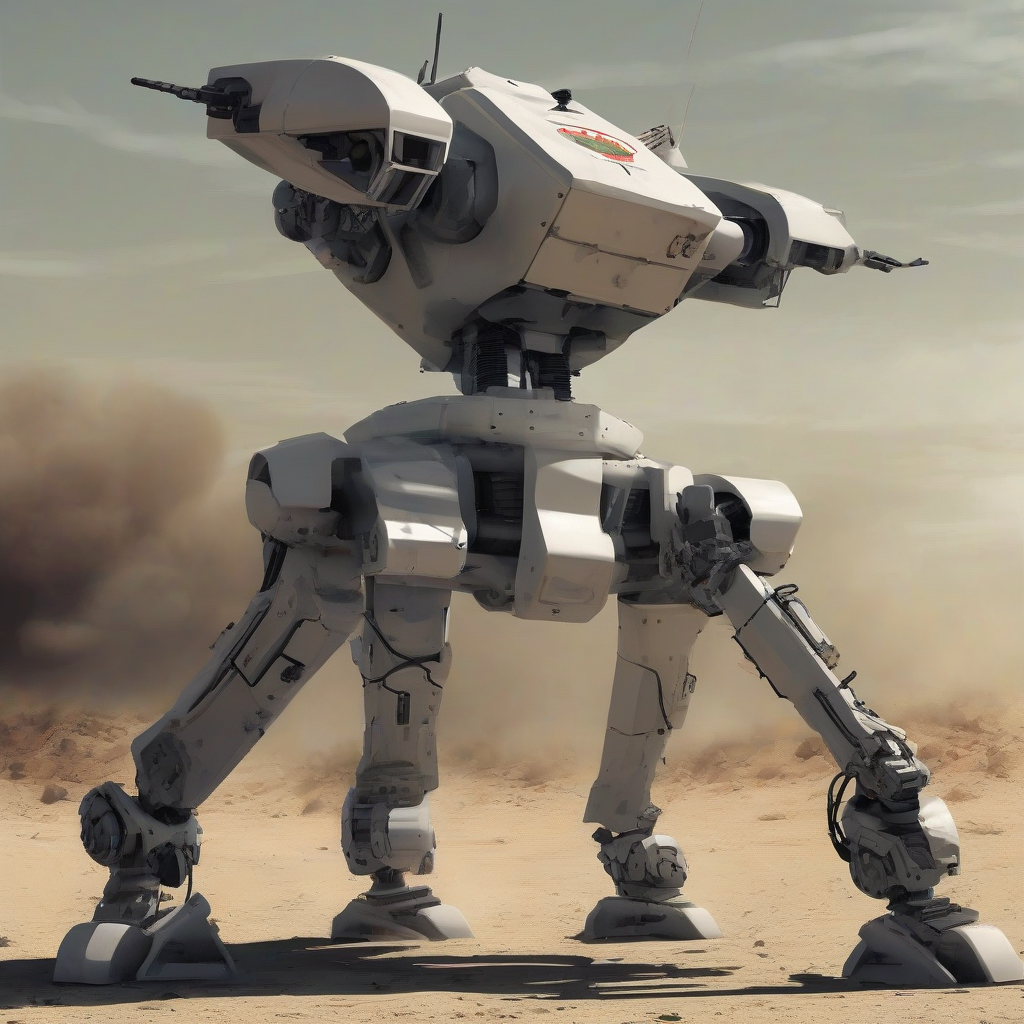
The era of human-led warfare is over. We just haven’t updated the paperwork yet.
Right now, 5 global treaties stand between us and a future where an algorithm decides who lives and who dies.
Spoilers: They are all losing.
Here is why the global legal wall is crumbling.
The "Consensus" Trap: Why the CCW is a Ghost Ship
For over a decade, the primary battleground for regulating "Killer Robots" has been the Convention on Certain Conventional Weapons (CCW) in Geneva.
On paper, it’s the gold standard for banning "excessively injurious" weapons. In reality, it is a masterclass in bureaucratic paralysis. The CCW operates on a "consensus" model. This means a single country can veto a proposal even if 160 other nations agree.
Major military powers—the US, Russia, and Israel—have mastered the art of the procedural filibuster. They argue that we shouldn't ban what we haven't "precisely defined." While diplomats spend years arguing over whether a "loitering munition" is a drone or a missile, the hardware is already being mass-produced.
We are literally debating the definition of a fire while the house is burning down.
The "Black Box" Loophole: The Death of the Geneva Conventions
The Geneva Conventions are built on two pillars: Distinction (telling a soldier from a civilian) and Proportionality (ensuring the military gain outweighs the civilian harm).
- The programmer who wrote the code three years ago?
- The commander who pressed "on" five miles away?
- The algorithm itself?
Our current laws require a "guilty mind" to prosecute a war crime. You can’t put an algorithm in a jail cell. By removing the human from the loop, we are effectively deleting the concept of accountability from the battlefield.
The Software Blindspot: The Arms Trade Treaty (ATT)
The Arms Trade Treaty was supposed to stop the flow of dangerous weapons to war zones. It works reasonably well for tanks, jets, and rifles.
But a "Killer Robot" isn't just a physical object. It’s a piece of software.
You can’t track the "export" of an algorithm the same way you track a crate of AK-47s. The most dangerous part of a modern autonomous weapon can be sent via an encrypted Telegram message or a GitHub repository.
Because the ATT focuses on the hardware (the drone), it completely misses the brain (the AI). This has allowed a shadow market of "lethality upgrades" to flourish. Countries are now selling "dumb" drones that can be converted into "slaughterbots" with a single firmware update. The treaty is bring a knife to a code-fight.
The Sovereignty Myth: The UN Charter & "Gray Zone" Robots
Article 2(4) of the UN Charter prohibits the use of force against another state's sovereignty. But autonomous systems have created a "gray zone" that makes this law unenforceable.
Imagine a swarm of 500 micro-drones, the size of dragonflies, entering a city. They have no markings. They use local Wi-Fi to communicate. They target specific individuals using facial recognition.
If no human pulls the trigger, and no traditional military vehicle crosses a border, did an "invasion" happen?
Militaries are now using autonomous "attritable" systems—cheap, expendable robots—to probe defenses and carry out assassinations. Because these systems are unmanned, the "political cost" of losing one is zero. This lowers the threshold for war. When war becomes a "low-risk" activity for the aggressor, the UN Charter becomes nothing more than a polite suggestion.
The Accountability Gap: The Rome Statute (ICC)
The Rome Statute, which governs the International Criminal Court, is designed to punish individuals. It is based on the "Chain of Command."
Autonomous weapons break that chain.
In 2020, a UN report confirmed that a Kargu-2 drone "hunted down" retreating soldiers in Libya without human intervention. This was the first documented case of an autonomous kill. No one was charged. Why? Because under the Rome Statute, a commander is only liable if they "knew or should have known" their subordinates were committing crimes.
If the "subordinate" is a piece of software that evolves and learns in real-time, the commander can honestly say they had no idea what it would do. We have created a "Legal Vacuum" where the most horrific acts of war can be committed with zero legal consequences.
The Insight: The 2027 "Flash-War" Prediction
The tipping point isn't coming; it’s here.
By 2027, we will witness the first "Flash-War." Much like the "Flash Crash" of the stock market in 2010, where algorithms triggered a trillion-dollar collapse in minutes, a Flash-War will occur when two opposing autonomous swarms engage.
Because the machines operate at speeds human brains cannot process, the escalation from a border skirmish to a full-scale regional conflict will happen in under 120 seconds.
By the time a human General is even briefed, the war will already be over—or lost.
The treaties we rely on are analog tools in a digital death-match. We are trying to regulate a supersonic future with 20th-century ink.
The Question
If a machine kills the wrong person, and no human is held responsible, is it still a war—or just an industrial accident?