Why Hustle Culture is Failing: 5 Harsh Truths Killing Your Productivity
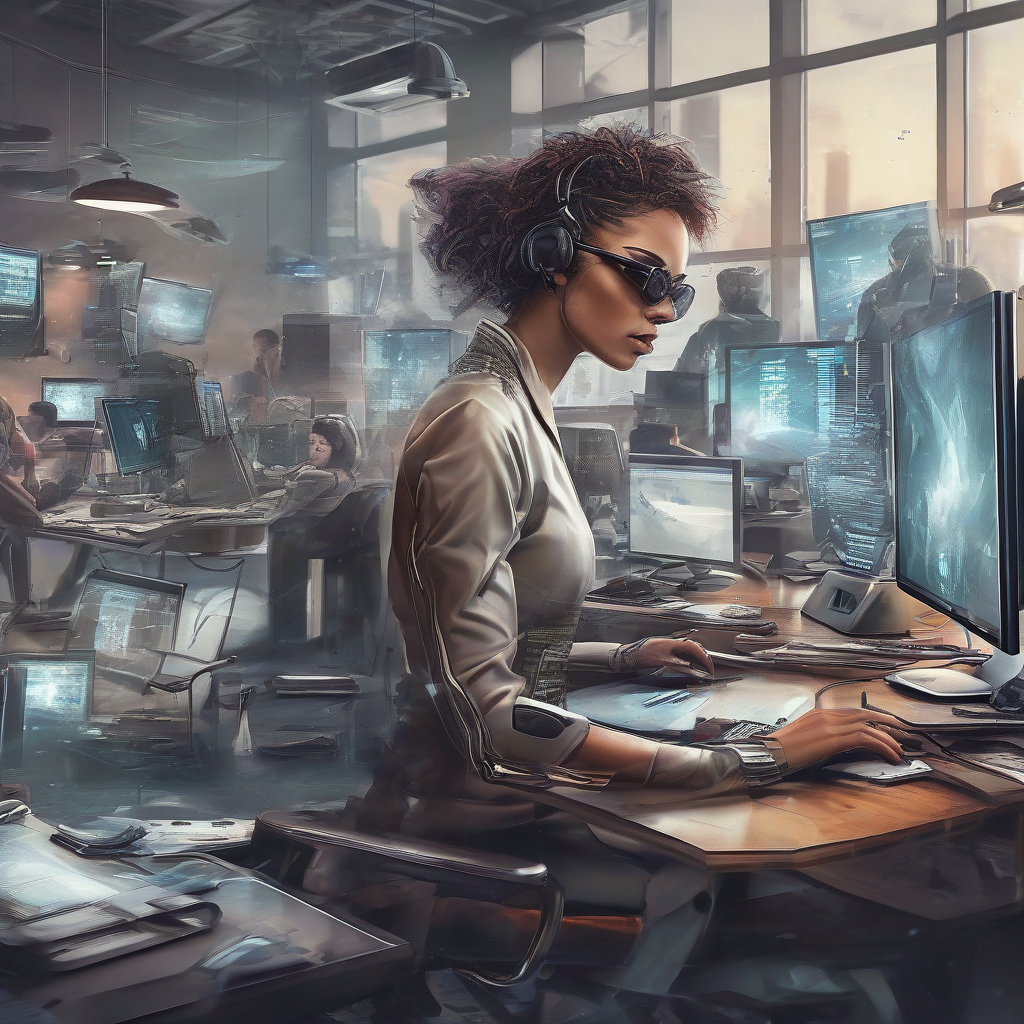
Your 80-hour work week is a form of laziness.
It is easier to stay busy than it is to stay focused. It is easier to grind until 2 AM than it is to prioritize your energy. The "hustle" is the new procrastination.
I spent $2,000 on productivity software last year. I bought every "second brain" tool, every AI-auto-scheduler, and every task-manager on the market. 90% of it was noise. I wasn't being productive. I was practicing "Productivity Theater."
Hustle culture isn't just failing; it’s making you obsolete. Here are the 5 harsh truths killing your output in 2026.
1. Your Tool Stack is a Digital Graveyard
Stop buying productivity apps. You don’t need another subscription. You need a system. The average professional now juggles 12 to 15 different tools daily. This is "Digital Hoarding."
Every time you switch from Slack to Notion to Linear, you pay a "context-switching tax." Research shows it takes 23 minutes to regain deep focus after a distraction. If you check your "productivity dashboard" 10 times a day, you never actually work. In 2026, the elite are consolidating. They don't have a "stack." They have a workflow. If your tool doesn't automate a task or protect your time, it’s a toy. Get rid of it.
2. The 55-Hour Nosedive is Real
The data is in. Hustle culture lied to you. Stanford University researchers found that productivity per hour drops sharply after 50 hours of work per week. By the time you hit 55 hours, your output plateaus. If you work 70 hours, you produce the same amount as someone working 55. The extra 15 hours? Wasted.
You aren't a robot. You are a biological system. Your brain has a finite amount of "Cognitive Load" it can handle. Working more hours doesn't make you a high-performer. It makes you an error-prone liability. 83% of workers in 2026 report burnout. The high-performers of this year aren't "grinding while they sleep." They are sleeping so they can out-think you in four hours.
3. Availability is a Proxy for Incompetence
"Always on" is a trap. If you respond to an email in three minutes, you aren't "dedicated." You are reactive. When you are constantly available, you are telling the world your time has no value. You are letting other people's emergencies dictate your priorities.
The most productive people I know are the hardest to reach. They work in "Deep Work" blocks. They use asynchronous communication. They understand that being "reachable" is the opposite of being "impactful." If your calendar is a mosaic of 30-minute meetings, you aren't leading. You are being managed by your inbox. Protect your "Focus Time" like you protect your bank account.
4. Presence is Not Performance
We have moved from "Industrial Productivity" to "Knowledge Leverage." In a factory, hours worked equals units produced. Yet, many still measure success by how early they arrive and how late they leave. This is "Presence-Based Management." It is a relic of the 1950s.
In 2026, the market doesn't care about your effort. It cares about your outcome. If it takes you 40 hours to do the same thing, you are inefficient. Hustle culture glorifies the 40 hours. The future rewards the two. Shift your metric from "hours logged" to "value created."
5. Burnout is an Operational Failure
We used to treat burnout as a badge of honor. "I'm so busy, I'm burned out." No. Burnout is a sign of a broken system. It means you didn't build a sustainable workflow. It means you failed to delegate, failed to automate, or failed to prioritize.
Success is a marathon, not a sprint. If you collapse at the 10-mile mark, nobody cares how fast you ran the first two. The elite professionals of 2026 have moved from "Time Management" to "Capacity Management." They monitor their nervous systems, not just their calendars. They treat rest as a strategic asset. If you don't schedule your recovery, your body will schedule it for you at the worst possible time.
The Insight: The Rise of the Capacity Economy
By the end of 2026, "Time Management" will be dead. "Capacity Management" will replace it. Traditional calendars will be replaced by "Energy-Aware Schedulers." These tools use bio-data—like your sleep quality and heart rate variability—to tell you when to do deep work and when to take a nap. Productivity won't be about doing more things. It will be about doing the right things at the exact moment your brain is primed for them. The winners won't be the ones who worked the hardest. They will be the ones who managed their biology the best.
Are you working on the right things, or are you just busy?