Why the Arts are Failing: 5 Brutal Reasons Generative AI is Killing Entertainment
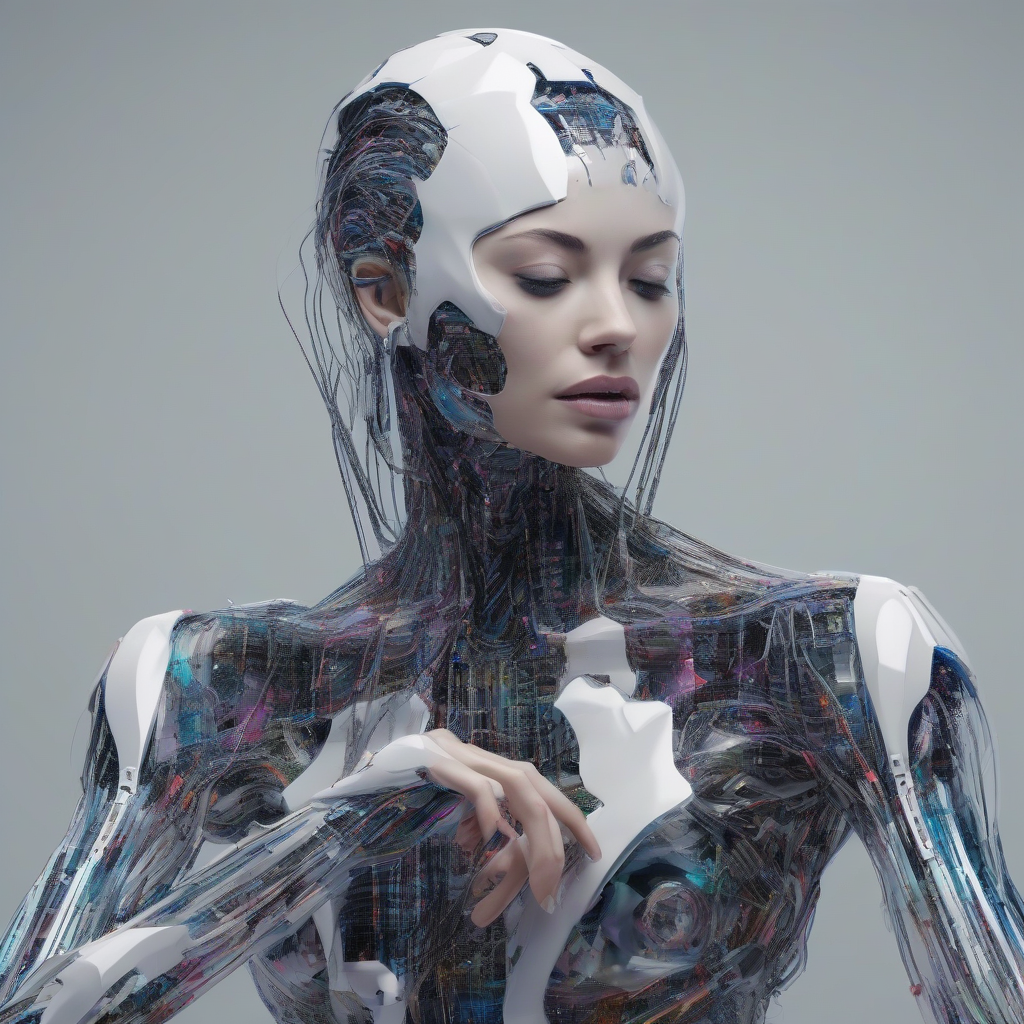
Entertainment is no longer an industry. It’s a landfill.
We are witnessing the heat death of human creativity.
Every movie looks like a Marvel template. Every song sounds like a TikTok loop. Every book feels like it was written by a committee of HR reps.
I’ve spent the last decade analyzing digital shifts. I’ve seen the rise of the creator economy and the fall of the gatekeepers. But this is different. This isn't a new tool. It’s a replacement for the human spirit.
1. The Infinite Mid
It creates the "Infinite Mid."
Art used to be about the edges. It was about the weird, the uncomfortable, and the transgressive. It was about the things only one specific person could say.
When you lower the barrier to entry to zero, you don't get more masterpieces. You get a flood of "good enough."
We are drowning in a sea of 7/10s. When everything is "fine," nothing is special. We are losing the ability to be truly moved because we are being constantly pacified by the "pleasant."
The "Mid" is the silent killer of taste.
2. The Death of Friction
Art requires a tax. That tax is struggle.
The best albums in history were recorded by people who were broke, angry, or heartbroken. They had to fight through technical limitations. They had to spend years mastering an instrument.
That friction is where the magic happens.
But without the process, the result is hollow.
When you remove the effort, you remove the intentionality. Every brushstroke in a painting by Caravaggio was a choice. Every note in a Coltrane solo was a battle.
An AI-generated image has no choices. It has math. It has probability.
When creation becomes effortless, it becomes worthless. We are raising a generation of "creatives" who don't know how to solve problems. They only know how to ask a machine to solve them for them.
The struggle wasn't a bug. It was the feature.
3. The Algorithmic Feedback Loop
Art used to lead the culture. Now, it follows the data.
We are entering a closed-loop system.
There is no room for the "New." There is no room for the unexpected.
This is the death of cultural evolution. We are stuck in a digital Groundhog Day, re-consuming the same tropes until our brains turn to mush.
4. The Marginal Cost of Zero
Economics 101: Value is derived from scarcity.
If gold grew on trees, it wouldn't be precious. It would be mulch.
When supply becomes infinite, value becomes zero.
We are devaluing the very concept of "The Artist." Why pay a person to spend three weeks on a cover design when a bot can do it in three seconds for free?
The market doesn't care about "soul." The market cares about margins.
As the world is flooded with AI-generated noise, the "signal"—human effort—becomes harder to find. People will stop looking for it. We are training audiences to stop valuing the human touch.
We are turning the arts into a commodity. Like air or water, but without the life-sustaining benefits.
5. The End of Shared Mythology
This is the most dangerous one.
Hyper-personalization is the final boss of Generative AI.
Soon, we won't all watch the same movie. You will prompt a movie that features your favorite actors, in your favorite setting, with a plot tailored to your specific psychological triggers.
Your neighbor will do the same.
We are losing the "Watercooler Moment."
Art used to be the glue that held society together. We shared stories. We debated themes. We had a common language of symbols and myths.
AI-driven personalization shatters that glue. It creates a "Culture of One."
If everyone is trapped in their own personalized entertainment bubble, we lose the ability to relate to one another. We lose the shared experience of humanity.
Entertainment is becoming a mirror, not a window. We aren't looking out at the world anymore; we are just looking at reflections of our own biases.
The Prediction
Within 36 months, "Human-Made" will become the most expensive luxury brand on earth.
We will see the rise of "Pure-Human" certifications. People will pay a 500% premium for music that was actually played by a person and books that were actually typed by a hand.
The elite will move away from screens. The masses will stay plugged into the AI-generated dopamine drip.
We aren't just losing the arts. We are losing our grip on reality.
When was the last time a piece of digital content made you feel something you didn't expect to feel?