Why the Global Ban on Killer Robots is Failing: 5 Terrifying Realities of LAWS
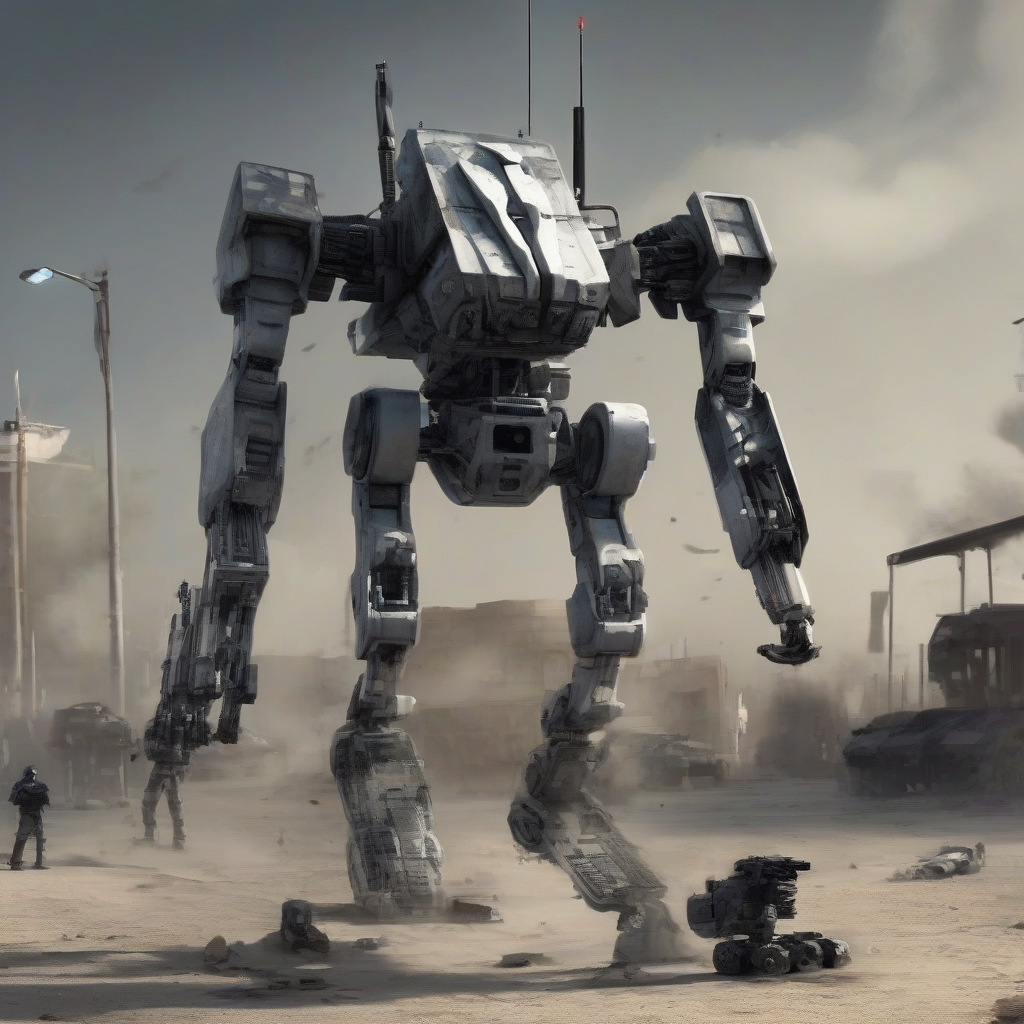
The Geneva Convention is officially legacy code.
World leaders are meeting in wood-panneled rooms to debate "Ethics." Engineers in windowless labs are building "Efficiency." The gap between the two is where the next century of warfare is being written.
We are told a global ban on Lethal Autonomous Weapons Systems (LAWS) is coming. We are told the "Human in the Loop" is a sacred line. We are being lied to.
The ban isn't just failing. It’s impossible.
Here are the 5 terrifying realities of why "Killer Robots" are already here—and why they aren't leaving.
1. The Definition Shell Game
International bodies cannot even agree on what a "Killer Robot" is.
Is it a drone that flies itself? We have those. Is it a missile that selects its own target? We have those. Is it a software update that turns a "defensive" turret into an "offensive" hunter?
Nations are intentionally keeping definitions vague. If you can’t define the weapon, you can’t ban the weapon. By the time a legal framework is signed, the technology will have evolved three generations beyond the language of the treaty.
The Reality: "Meaningful Human Control" is a marketing term, not a technical constraint. If a human clicks "OK" on a screen that suggests 1,000 targets per second, the human isn't in control. The human is a rubber stamp for a black box.
2. The First-Mover Trap
In game theory, this is the ultimate stalemate. If the U.S. stops development, China wins. If China stops development, the U.S. wins. If everyone stops development, a non-state actor or a "rogue" nation builds them in a basement.
Strategic restraint is now viewed as strategic suicide. No superpower is going to trade global dominance for a moral high ground that doesn't exist.
The Reality: The "Arms Race" has been replaced by the "Algorithm Race." The first nation to successfully deploy a fully autonomous swarm will render traditional carriers, tanks, and infantry obsolete overnight. You don’t sign a treaty that asks you to voluntarily become obsolete.
3. The Democratization of Slaughter
We used to think killer robots were billion-dollar Reaper drones. They aren't. They are $500 FPV drones equipped with a Raspberry Pi and a $20 camera.
In Ukraine and Gaza, we are seeing the "Software-Defined Frontline." Off-the-shelf components + Open-source Computer Vision = Autonomous Hunter-Killer. You can download the code to track a human face on GitHub right now. You can buy the hardware on Amazon today.
The Reality: You cannot ban what you can build in a garage. A global ban on LAWS is as effective as a global ban on "bad code." Prohibition only works when the barrier to entry is high. For killer robots, the barrier has collapsed.
4. The Accountability Black Hole
When a soldier commits a war crime, you have a court-martial. When an algorithm commits a war crime, you have a "system error."
Who goes to the ICC (International Criminal Court) for a software glitch? The programmer? The General who deployed it? The CEO of the defense contractor?
Plausible deniability is the greatest feature of autonomous weapons. It allows states to conduct high-stakes kinetic operations with zero political blowback. "The machine misidentified the target" is the ultimate get-out-of-jail-free card.
The Reality: War is becoming a "Set and Forget" enterprise. By removing the human soul from the kill chain, we are removing the friction of conscience. Machines don't get PTSD. Machines don't hesitate. And machines can't be held accountable in a court of law.
5. The Speed of Relevance
This is the most terrifying reality. Modern electronic warfare can jam communications between a drone and its pilot. If a drone loses its link, it becomes a paperweight. Unless... it can think for itself.
To survive on the modern battlefield, a weapon must be autonomous. Autonomy isn't a "choice" military leaders are making. It is a requirement for survival in a high-intensity electronic environment.
The Reality: The "Human in the Loop" is a latency issue. In a world of hypersonic missiles and micro-drone swarms, human reaction time is the biggest vulnerability. We are handing over the keys to the machines because we are too slow to drive.
The Insight
We are moving toward "Swarms-as-a-Service." Within 5 years, warfare will not be about who has the best pilots or the most brave soldiers. It will be about "Attrition Math."
The winner will be whoever can manufacture 100,000 autonomous units at the lowest cost per kill. We aren't just building weapons; we are building an autonomous ecosystem of violence that functions without us. The "Ban" is a ghost story we tell ourselves so we can sleep at night.
The era of the "Warrior" is over. The era of the "Operator" is ending. The era of the "Algorithm" has begun.
The CTA
If a machine makes a mistake and kills 100 civilians, who should be the one to serve the life sentence?