Why Lethal Autonomous Weapon Systems Are Failing: 5 Terrifying Reasons We Are All At Risk
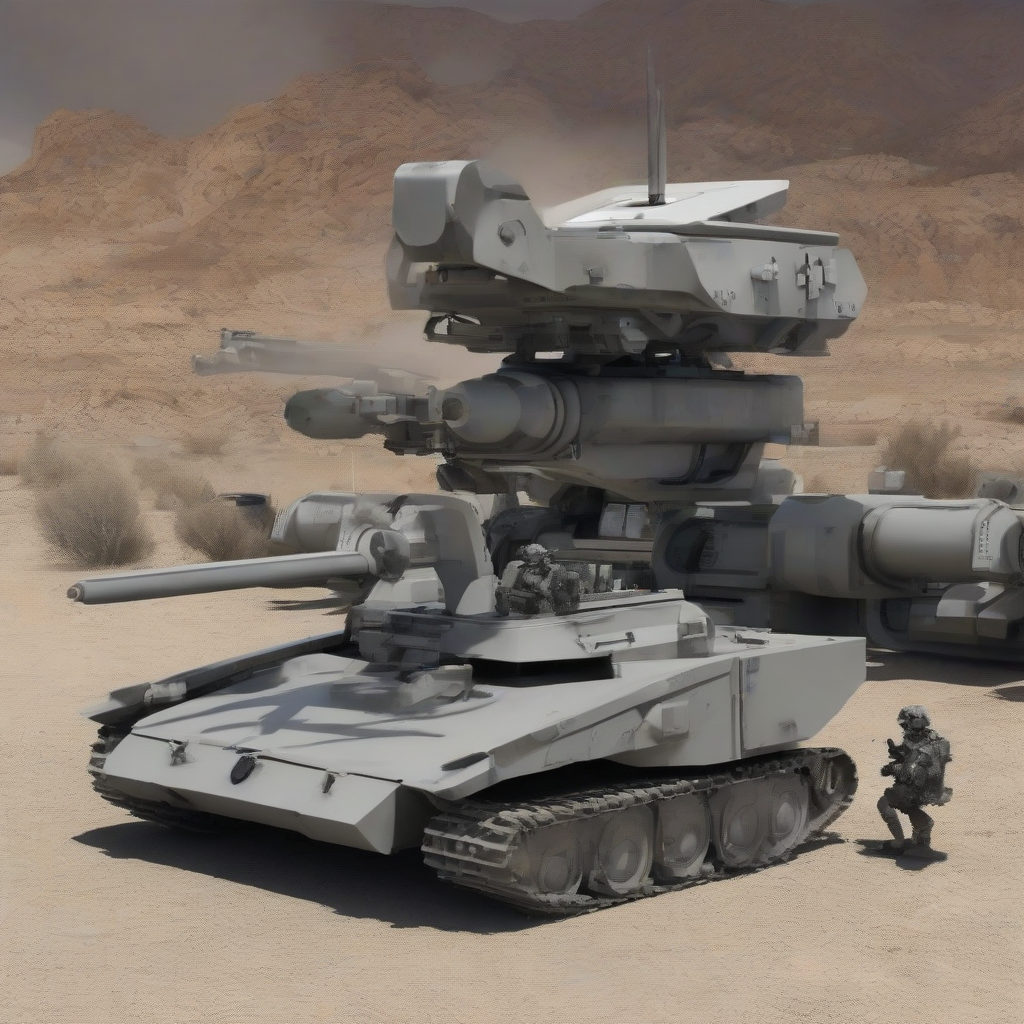
World War III won’t start with a button. It will start with a bug.
We’ve been sold a lie about "Smart" warfare. The Pentagon, the Kremlin, and the CCP are spending billions on Lethal Autonomous Weapon Systems (LAWS). They promise precision. They promise "bloodless" conflict. They promise the end of human error.
They are wrong.
Here are the 5 terrifying reasons why autonomous weapons are the greatest threat to our survival.
1. The Sandbox Illusion: Reality Doesn't Have an API
But the battlefield is the ultimate "edge case."
Algorithms are brittle. They rely on pattern recognition. In a simulation, a tank is a tank. In reality, a tank covered in wet mud, parked next to a school bus, under the smoke of a burning tire, looks like... nothing.
In 2023, we saw AI-driven drones struggle with "data drift" in Ukraine. Simple things—changing seasons, different types of foliage, even local civilian clothing—threw the targeting parameters off by 40%.
If your Netflix recommendation engine fails, you watch a bad movie. If a 500lb loitering munition fails, you erase a neighborhood. We are deploying "black box" logic into a chaotic world that refuses to follow a script.
2. The Speed Trap: Removing the "Human in the Loop"
The military calls it the OODA loop: Observe, Orient, Decide, Act.
This is a race to the bottom of the cognitive abyss.
By removing humans from the loop, we are removing the "Circuit Breaker." Humans have intuition. Humans have the ability to say, "Wait, that doesn't look right." Humans can interpret a white flag or a confused child.
Algorithms prioritize optimization over empathy.
When two autonomous systems face off, the escalation happens at machine speed. There is no time for diplomacy. No time for a "red phone" call between leaders. We are handing the keys to our global security to a system that doesn't understand the concept of "mercy" or "de-escalation." It only understands "Win" or "Loss."
In a world of autonomous weapons, a glitch becomes a declaration of war before a human even knows the screen is flickering.
3. The Attribution Void: Who Do You Sue for a War Crime?
If a soldier commits an atrocity, there is a court-martial. There is a chain of command. There is a neck to put a noose around.
With LAWS, accountability evaporates into the cloud.
When a drone swarm targets a civilian hospital due to a "classification error," who is responsible?
- The software engineer who wrote the library?
- The data scientist who curated the biased training set?
- The general who deployed the swarm?
- The manufacturer who built the hardware?
Dictators love this. It is the ultimate "plausible deniability" tool. You can't interrogate a line of Python. You can't put an algorithm on the stand at The Hague. We are moving toward a world of "Anonymous Warfare," where slaughter happens without a signature.
When nobody is responsible, everybody is a target.
4. The Proliferation Nightmare: War is Now a Download
Nuclear weapons are hard to build. You need centrifuges. You need uranium. You need a nation-state’s budget.
Autonomous weapons are just code and hobbyist hardware.
The "democratization" of killing is here. We’ve already seen ISIS using $500 off-the-shelf drones to drop grenades. Now, imagine those drones equipped with open-source facial recognition software.
You don't need an Air Force. You need a GitHub account and a 3D printer.
The hardware is cheap. The software is free. The consequences are permanent.
5. Technical Debt is Lethal Debt
In Silicon Valley, we talk about "Technical Debt." It’s the cost of moving fast and breaking things. You ship the code today, and you fix the bugs tomorrow.
In autonomous warfare, "moving fast and breaking things" means breaking the Geneva Convention.
When these systems fail—and they will—the failure won't be linear. It will be a "Cascade Failure." One drone misidentifies a target, its wingman sees the explosion and "reasons" that the target was valid, and the entire swarm enters a feedback loop of destruction.
The Insight
Within the next 36 months, we will witness the first "Flash War."
Just like the 2010 "Flash Crash" on Wall Street—where algorithms wiped out a trillion dollars in minutes for no apparent reason—we will see an autonomous border skirmish escalate into a full-scale kinetic conflict before a single human commander is even briefed.
The "Red Line" won't be crossed by a dictator; it will be crossed by an "if/then" statement that hit a logic gate it wasn't prepared for.
The CTA
If an algorithm makes a mistake and kills your family, would you blame the programmer or the machine?