Why AI is failing creators: 5 dark ethical reasons the music and film industries are doomed
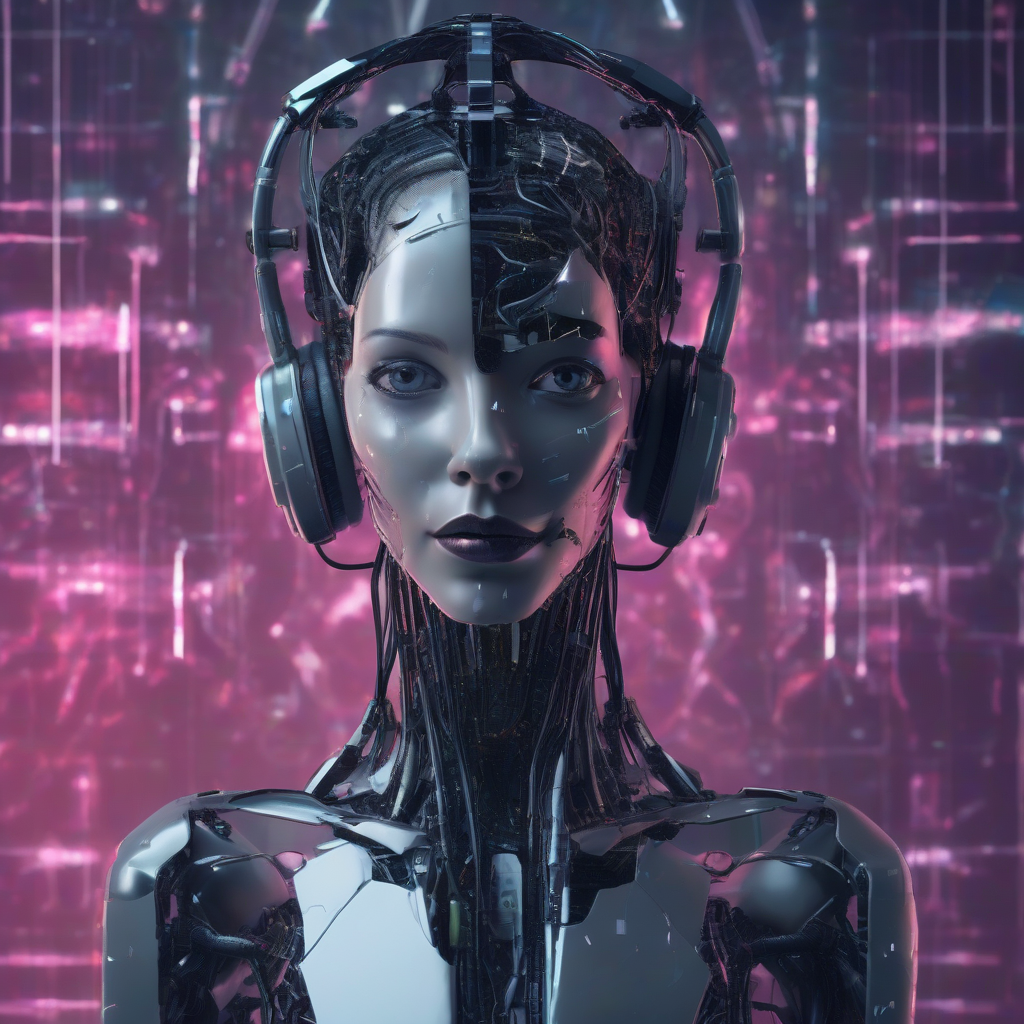
The creative economy isn’t being upgraded. It’s being liquidated for parts.
I’ve watched the data. I’ve talked to the engineers. I’ve seen the lawsuits.
The "Gold Rush" is over. We are now in the "Great Extraction."
Here is why the music and film industries are currently on a suicide mission.
1. The Data Laundering Scandal
The industry is currently legalizing theft. They are taking the "Fair Use" doctrine—originally intended for criticism and parody—and stretching it until it snaps. By the time the courts catch up, the original creators will be bankrupt.
The ethical rot starts at the foundation. You cannot build a "creative future" on a foundation of stolen labor.
2. Digital Necromancy and the Death of Consent
We are entering the era of the "Eternal IP."
Film studios are no longer looking for the next Meryl Streep or Denzel Washington. They are looking for ways to own the ones they already have—forever.
In the music world, it’s even worse. Voice cloning is the new piracy.
When an AI-generated "Drake" song went viral, the industry panicked. Not because of the ethics, but because they didn’t own the royalties. Now, labels are rushing to "license" the voices of their artists.
Think about that. You won't own your voice. You will lease it to a corporation that can make you "sing" anything, long after you’re in the ground.
We are turning artists into puppets. The soul is gone; only the brand remains.
3. The "Slop" Tsunami and the Discovery Crisis
We are currently being buried under a mountain of "Content Slop."
On Spotify alone, 100,000 songs are uploaded every single day. With AI, that number will jump to 1,000,000. Most of it will be mathematically perfect, emotionally hollow noise designed to trigger an algorithm.
When the cost of production drops to zero, the value of the product follows.
If everyone can make a movie, nobody wants to watch one. If everyone is a "creator," there is no audience.
We are creating a cultural feedback loop where the machine trains on itself. We are losing the outliers. We are losing the "weird." We are losing the very things that make art worth consuming.
4. The Ownership Mirage
Current copyright law in the US and EU is clear: Works produced by a machine without significant human intervention cannot be copyrighted.
The industry is sprinting toward a future where "Intellectual Property" no longer exists because the "Intellect" was replaced by a GPU.
The majors think they can lobby their way out of this. They can't. They are destroying the very legal protections that made them billionaires in the first place.
5. The Homogenization Paradox
By definition, Large Language Models (LLMs) and diffusion models work on probability. They predict the most likely next pixel or the most likely next note.
The most likely thing is, by definition, the average.
Art, however, thrives on the unlikely. It thrives on the mistake. The crack in the singer’s voice. The lens flare that shouldn't be there. The script choice that defies logic but hits the heart.
By moving to an AI-centric production model, the film and music industries are guaranteeing a future of "Average Art."
Every movie will have the same pacing. Every song will have the same "perfect" mix. We are sanitizing the humanity out of the creative process to save 20% on the budget.
We are trading "Magic" for "Efficiency." It is a bad trade.
The Insight
The "Human Premium" is coming.
In the next 36 months, we will see a massive market correction. The novelty of AI-generated content will wear off. The "Slop" will become background noise, as ignored as elevator music.
The real money won't be in AI. It will be in "Verifiable Humanity."
Prediction: By 2027, "100% Human-Made" will be the most valuable luxury brand in the world. We will see digital watermarks not for AI, but for humans. "Analog" will become the new "Gold."
People don't connect with pixels. They connect with the person behind them. The industries that forget this will vanish.
The Question
When everything is perfect, instant, and automated, what will you actually care about?