3 Reasons AI Copyright Is Failing: Why You're Doing It Wrong
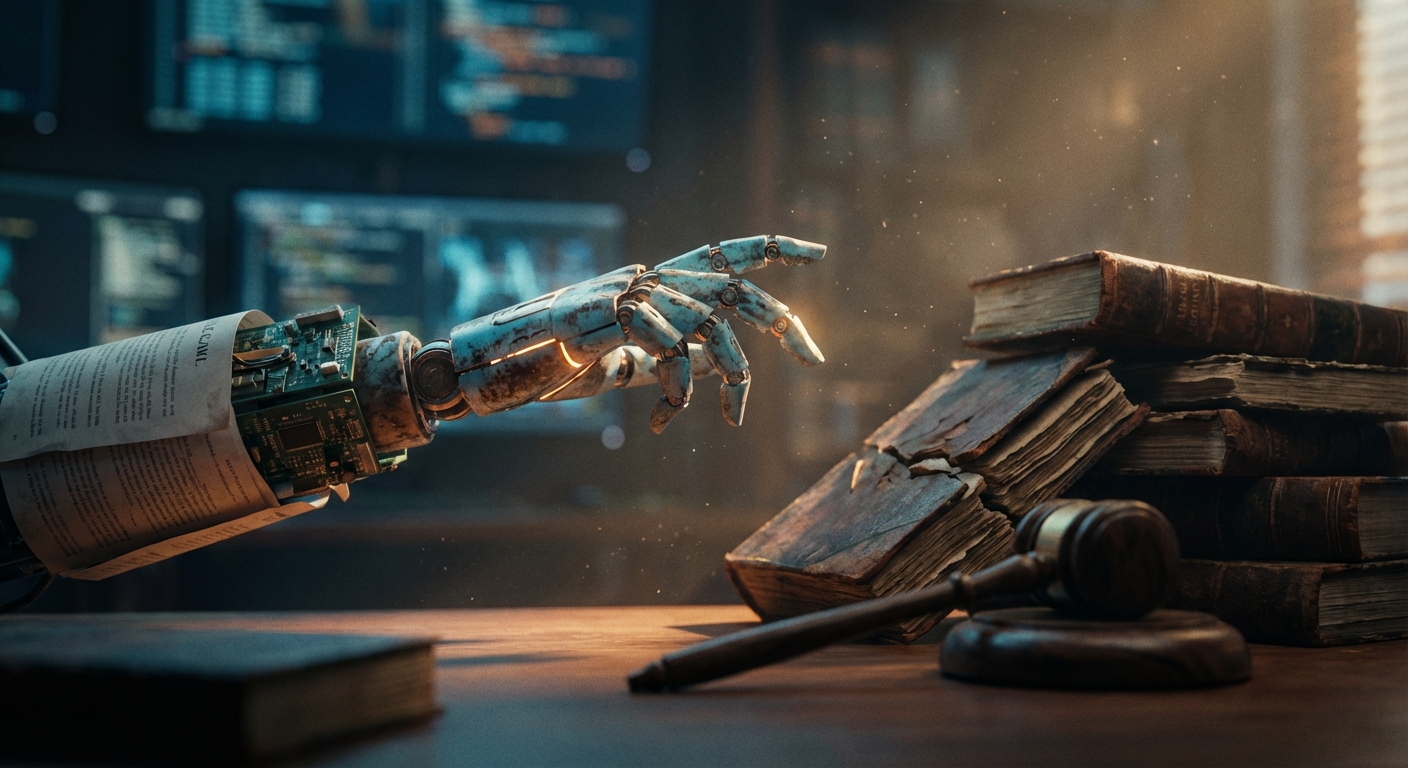
Your prompt isn't art. It’s a shopping list.
Stop trying to copyright your Midjourney outputs. You are wasting your time and your legal budget.
I spent the last six months diving into USCO filings, court transcripts, and the messy reality of generative tech. Everyone is looking for a "hack" to own AI-generated IP.
Here is the truth: Most of you are doing it wrong. You are applying 19th-century logic to a 21st-century engine. You think because you worked hard on a prompt, you own the pixels.
You don’t.
The law doesn't care about your "effort." It cares about your "control."
The Prompting Delusion
I hear this every day: "I spent six hours perfecting this prompt. I am the author."
No. You are the customer.
Imagine you walk into a high-end restaurant. You tell the chef you want a steak. Medium-rare. Peppercorn crust. Sliced at a 45-degree angle. Served on a blue plate.
The chef delivers exactly that.
Do you own the recipe? No. Could you sue the chef if he served that same steak to someone else? Absolutely not.
The US Copyright Office sees prompts as "specifications." They are instructions. They are not the "creative spark." When you type a prompt, you are giving an order to a machine that has already learned how to draw from a billion other people.
I’ve tested this. I took a "highly complex" 500-word prompt. I ran it three times. I got three different masterpieces. I had zero control over where the light hit the eyes or how the shadows fell.
The machine made those choices. Not me.
If you don't control the specific expression of the pixels, you don't own the image. You just bought a digital meal.
Stop calling yourself a "Prompt Engineer" and expecting the government to protect your "code." It’s a dead end.
The "Human-in-the-Loop" Lie
People think adding a filter or clicking "Upscale" counts as human intervention.
It doesn't.
The current standard for copyright is "substantial human authorship." This is a brick wall. Most creators are trying to climb it with a toothpick.
I looked at the Zarya of the Dawn case. Kris Kashtanova created a comic book using Midjourney. She wrote the story. She arranged the layout. She spent months on it.
The result? She got the copyright for the arrangement of the images, but zero protection for the images themselves.
The government’s logic was simple: A human didn't draw the lines. A human didn't pick the colors. Therefore, the images belong to the public domain.
Most creators are too lazy for this. They want the "Generate" button to be a "Get Rich" button.
Training Is Learning, Not Theft
The biggest legal battle right now is about "scraping."
Artists are suing OpenAI and Midjourney for "stealing" their style. They want the training data to be considered a copyright violation.
They will likely lose.
Here is why: Training isn't copying. It’s reading.
If I spend a weekend at the Louvre and look at 1,000 Picassos, and then I go home and paint something "in the style of Picasso," I haven't committed a crime. I’ve learned a technique.
The law protects specific expressions, not "vibes." It protects a specific drawing of a mouse, not the idea of a "cartoon mouse."
I’ve watched the industry panic over this. People are trying to sue the "process" because they don't like the "result." But the legal system doesn't care about your feelings. It cares about whether a specific piece of work was duplicated.
We are fighting the wrong war. We are trying to stop the tide with a bucket.
The Insight: Ownership is Dead. Attention is the New IP.
Here is my "Hot Take" that nobody wants to hear:
In five years, copyright won't matter.
We are entering an era of infinite content. If anyone can generate a Pixar-quality movie on their phone for $10 a month, the "ownership" of that movie becomes worthless.
Supply is hitting infinity. Demand is staying the same. You know what happens to the price of a commodity when supply is infinite? It goes to zero.
The "Disney Model" is collapsing. Disney’s entire value is built on locking characters in a vault and charging you to see them. But you can't lock up a "vibe." You can't sue a million teenagers for generating "legally distinct" space wizards that look 99% like Jedi.
The future isn't about "Who owns this image?" The future is about "Who has the audience?"
I predict we will see a shift from "Intellectual Property" to "Influential Presence."
Brands will stop suing for infringement. They will start paying for distribution. They won't care if you "stole" their character's likeness if you have 10 million people watching your stream. They will want to be part of your stream.
Stop building an IP vault. You are building a museum for a world that has stopped buying tickets.
Build a distribution engine. Build a community. Build a brand that people recognize even if the "copyright" is technically owned by nobody.
The "Public Domain" is about to become the biggest marketplace in human history. Most people are terrified of it. The smart ones are already moving in.
Are you building an IP vault, or are you building an audience?