Why Hustle Culture is Failing: 3 Reasons You’re Doing the "Soft Life" Wrong
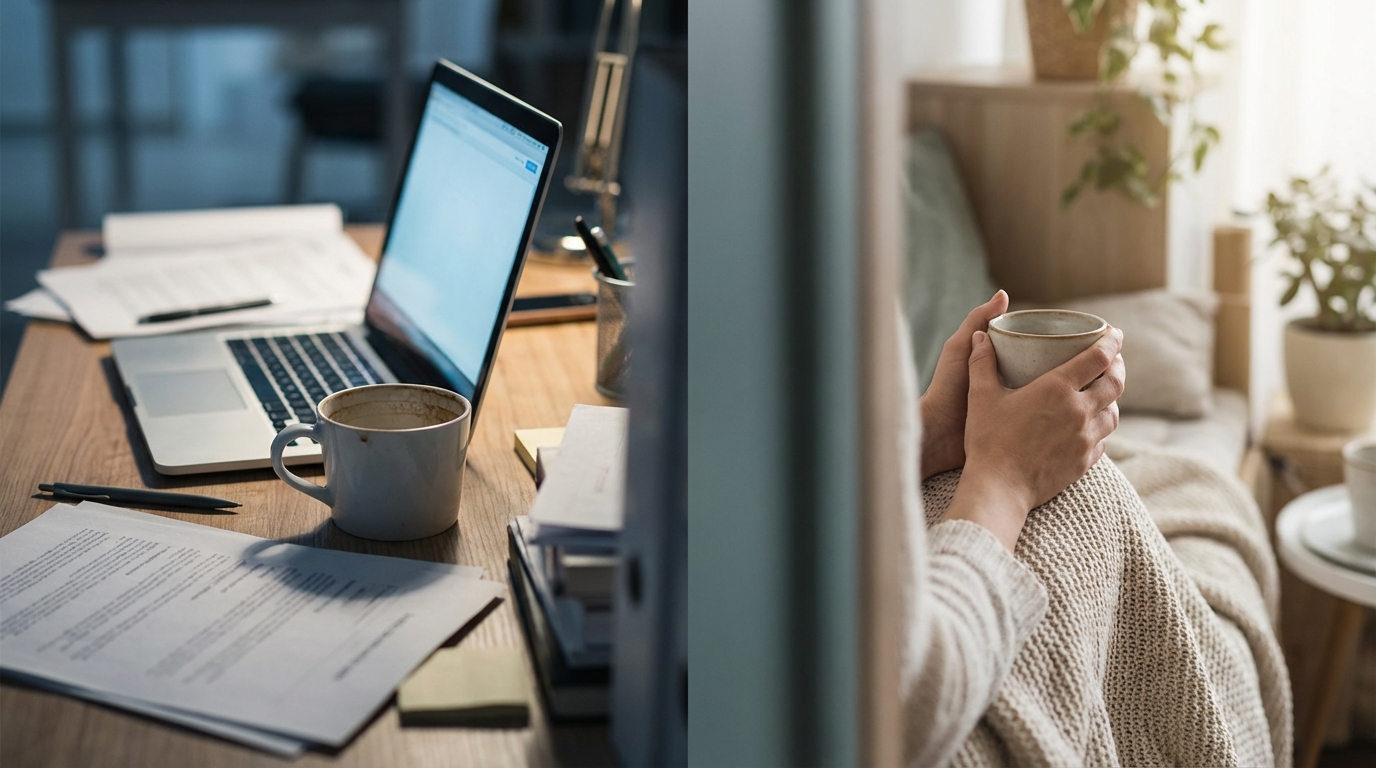
Stop romanticizing your life. You’re just working a second shift as a content creator for an audience of zero.
Hustle culture didn’t die. It just changed clothes. It swapped the 5 AM cold plunge for a $14 matcha and a silk robe.
I spent five years chasing the "grind." I burnt out. Then I spent two years chasing the "soft life." I stayed burnt out.
Here is the hard truth: Most people aren't practicing self-care. They are practicing aesthetic maintenance. They are trading the "Girl Boss" mask for the "Clean Girl" mask, and the weight of the mask is the same.
The "Soft Life" was supposed to be the antidote to the 100-hour work week. Instead, it became a new set of KPIs.
If your "rest" requires a tripod, it isn’t rest. It’s production.
Here are the 3 reasons you are doing the "Soft Life" wrong.
1. You Replaced "Output" with "Aesthetics"
Hustle culture was about what you could produce. The Soft Life—the way most people do it—is about what you can signal.
I see it every day on my feed. The "Day in the Life" videos. The perfectly rumpled linen sheets. The staged book on the nightstand.
Do you know how long it takes to make a bedroom look that "effortlessly" peaceful? Forty minutes. You are spending forty minutes of your limited morning energy to prove to strangers that you are relaxed.
That isn't peace. That’s a branding exercise.
When I was at my peak "hustle," I was obsessed with my calendar. Every minute was monetized. When I pivoted to the "soft life," I became obsessed with my environment. Every corner of my house had to be a "vibe."
I realized I was just as stressed. The source of the stress shifted from my inbox to my interior design.
If your peace depends on the lighting being perfect, you don't have peace. You have a set.
True "softness" is ugly. It’s wearing a t-shirt from 2012. It’s a messy kitchen because you were too busy laughing to clean it. It’s an unmade bed because you slept in.
If you can’t be "soft" when the camera is off, you aren't living it. You’re just acting.
2. You’re Buying, Not Being
The wellness industry is worth $5.6 trillion. It didn't get that way by helping you sit in silence. It got that way by convincing you that "softness" is a commodity.
We’ve been lied to. We think we need:
- $120 leggings to do yoga.
- $80 candles to meditate.
- A $4,000 mattress to sleep.
- A $500 skincare routine to feel "clean."
I fell for this. I bought the specialized journals. I bought the weighted blankets. I bought the ergonomic everything.
I realized I was just "Hustling" at being a consumer.
The "Soft Life" has been hijacked by marketers. They took a radical concept—rejecting the exploitation of your labor—and turned it into an excuse to sell you overpriced lounge wear.
You cannot buy your way out of burnout.
Burnout is a systemic issue and a boundary issue. A $15 bath bomb is just a scented Band-Aid on a bullet wound.
If your self-care routine has a monthly subscription fee, it’s not self-care. It’s a bill.
The most "soft" things you can do are free. Saying "no" to a meeting. Taking a nap without an alarm. Walking outside without your phone.
But you can’t film a walk without a phone. So you don't do it.
3. You’re Using "Softness" as an Escape, Not a Foundation
This is the most dangerous one.
People use the "Soft Life" as an excuse to stop doing the hard things that actually matter.
I see people "protecting their peace" by ghosting friends who need them. I see them "honoring their capacity" by quitting projects the moment they get difficult.
That isn't a soft life. That’s an avoidant life.
The original intent of the "Soft Life" (originating in Nigerian influencer circles) was about choosing a life of ease over a life of struggle. It was a protest against the expectation that certain people must suffer to be worthy.
It was never about being lazy. It was about being intentional.
If you use "softness" to avoid the friction of growth, you will end up brittle.
I tried to live a life with zero friction for six months. I did the bare minimum at work. I avoided hard conversations. I stayed in my "bubble."
I didn't feel rested. I felt weak. I felt disconnected.
A real soft life requires a hard spine. You need the discipline to set boundaries so that you have the energy to do the "Great Work."
Rest is the fuel for the fight. If you aren't fighting for something—a career, a family, a craft, a community—then your rest has no purpose. It’s just stagnation.
The Insight: The "Soft Life" is the new Corporate Ladder
Here is what nobody is telling you: The "Soft Life" is becoming the new status symbol.
In the 80s, status was a Rolex. In the 2010s, status was being "so busy." In the 2020s, status is "leisure."
We are seeing a shift where the ultimate flex is showing how little you have to do. But it's a trap. It creates a new hierarchy.
"I’m more healed than you." "My nervous system is more regulated than yours." "I'm more 'present' than you."
We’ve turned human existence into a competitive sport. We are optimizing our "peace" with the same intensity we used to optimize our spreadsheets.
Stop optimizing.
The "Soft Life" isn't an end goal. It’s a tool.
If you are spending more time thinking about your "vibe" than your values, you’ve lost the plot.
The goal isn't to have a life that looks soft. The goal is to have a soul that feels light.
That requires you to stop performing. It requires you to be okay with being "unproductive." It requires you to be okay with being invisible.
Most people can't handle being invisible. That’s why they keep posting their "slow mornings" to Instagram.
They don't want peace. They want the reputation of peace.
My prediction? In two years, the "Soft Life" trend will be replaced by something else. Probably "Extreme Competence" or "Rugged Utility." The trend cycle will keep moving.
Don't follow the trend.
Build a system where you work hard on things that matter, and you rest without telling a soul about it.
Anything else is just a different kind of hustle.
Are you actually resting, or are you just performing rest for an audience?