Why Utility Investing is Failing: 3 Reasons You’re Doing Crypto Wrong
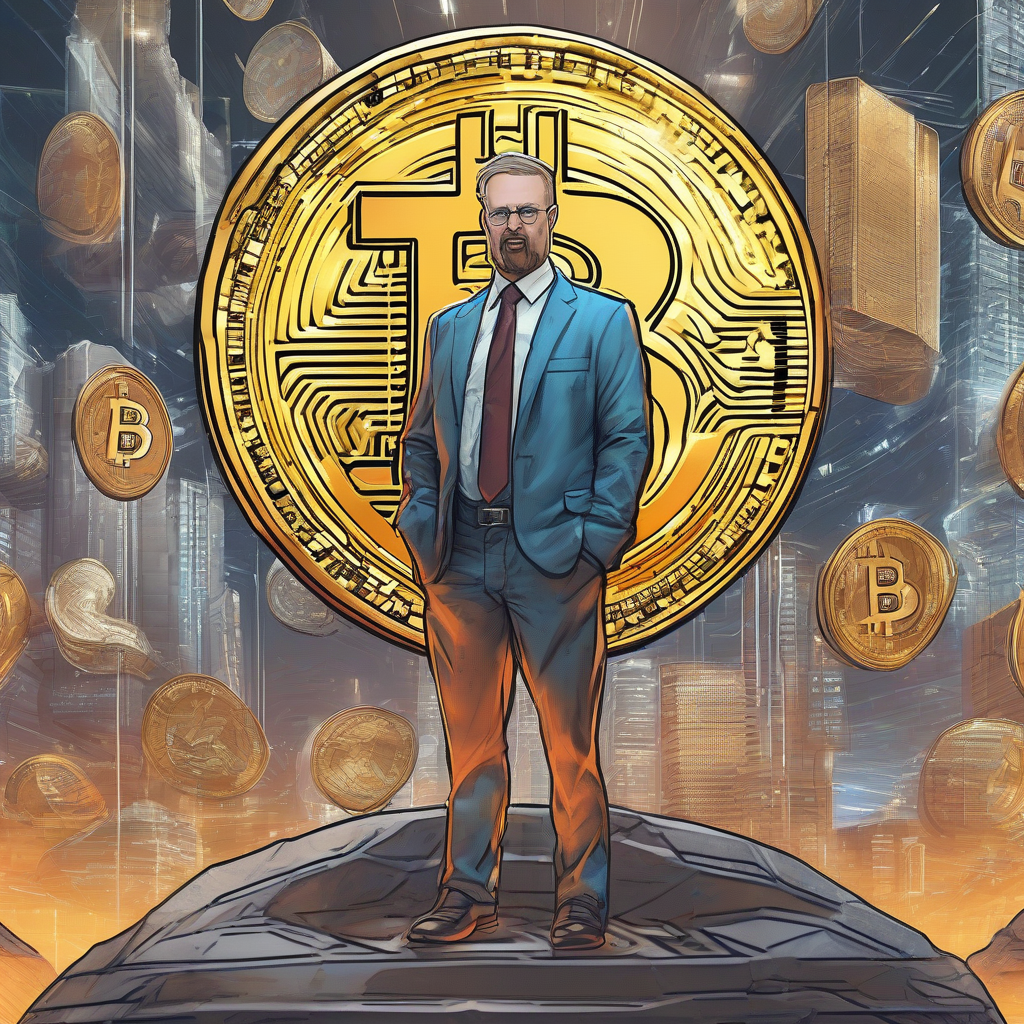
Stop looking for "real-world utility." It’s the fastest way to stay poor in crypto.
I spent three years reading whitepapers. I tracked GitHub commits. I analyzed TPS, sharding, and zero-knowledge proofs. I thought I was being smart. I thought I was an "investor."
I was a bagholder for projects that had everything except a reason to exist.
Meanwhile, a 19-year-old with a cartoon dog avatar turned $500 into a house. He didn’t read the docs. He didn’t care about the roadmap. He understood something I refused to see: Crypto is not a software market. It is an attention market.
If you are buying tokens because of their "revolutionary tech," you aren’t early. You’re the exit liquidity.
Here is why your utility-first strategy is failing and why you’re doing crypto wrong.
Utility is a post-hoc cope.
We have been lied to by the venture capital class. They sold us the dream of "Decentralized Uber" and "Blockchain for Supply Chains." It sounds professional. It sounds like something your dad would approve of.
But it’s a lie.
In the real world, utility drives value. If a hammer works, people buy it. In crypto, utility is a story we tell ourselves to feel better about gambling. We buy the coin first, then we search for a reason why it should be valuable.
I call this "Post-Hoc Rationalization."
You see a token pump 50%. You don't want to feel like a degen. So you look at the website. You see "Cross-chain interoperability for AI-driven data markets." You nod. You buy.
Three months later, the price is down 90%. The "utility" is still there. The code still works. But nobody cares. The attention moved.
Complexity is the enemy of liquidity.
I used to think that the more complex a project was, the higher its "moat" would be. I was wrong. Complexity is a bug, not a feature.
If you need a PhD to explain why a token has value, that token is going to zero.
Liquidity follows the path of least resistance. It flows toward things that are easy to understand, easy to meme, and easy to buy. This is why "Store of Value" (Bitcoin) works. It’s one sentence. This is why "The World Computer" (Ethereum) works. It’s three words.
Compare that to the average "utility" project.
"We are a modular liquidity layer utilizing optimistic rollups to facilitate high-throughput fractionalized RWA ownership."
I just fell asleep writing that. So did the market.
Retail investors—the people who actually drive the parabolic moves—do not want to do homework. They want to belong to a tribe. They want to be part of a movement. They want to have fun.
Complexity kills fun. It creates friction.
I’ve looked at the data. The highest-performing assets over the last two cycles weren't the most advanced. They were the most infectious. They were the projects that could be explained in a 5-word tweet.
If you’re betting on "the best tech," you’re betting against human nature. Human nature is lazy. Human nature wants a shortcut. The market will always choose the simple narrative over the complex solution.
You are trading attention, not software.
We are no longer in the "Infrastructure Phase" of crypto. We are in the "Attention Phase."
A profile has no "utility." You can’t eat it. You can't use it to build a house. But if 10 million people are looking at that profile every day, it is worth billions. That is how attention works.
When you buy a "utility" token, you are betting that developers will build on it. That is a long-term, high-risk bet. When you buy a narrative, you are betting that people will talk about it. That is a measurable, high-reward bet.
I stopped looking at the "Total Value Locked" (TVL). It’s a fake metric manipulated by VCs. I started looking at "Total Volume of Conversation."
Is the project polarizing? Is there a cult-like community? Is the founder a character?
In the digital age, attention is the only true currency. Software can be forked. Code can be copied. Utility can be replicated in an afternoon. But you cannot fork a community. You cannot copy a legend.
If you’re still valuing tokens based on their P/E ratio or their "use case," you’re playing a game that ended in 2019. The new game is "Mindshare Monopoly."
The Insight: The Death of the "Product"
Everyone is waiting for the "Killer App." They think one day, a blockchain-based version of Facebook will arrive and we will all use it.
It’s never happening.
The "Killer App" isn't an application. The "Killer App" is the token itself.
The token is the product.
The successful projects of the next five years won't be the ones that solve technical problems. They will be the ones that create new ways for people to coordinate, speculate, and belong.
We are moving toward a world where "Culture" is the primary driver of value. We are seeing the financialization of everything. Your sneakers, your tweets, your memes—they are all becoming assets.
The "Utility" tokens are the legacy banks of the crypto world. They are slow, boring, and obsessed with "compliance" and "fundamentals."
The winners will be "Cultural Legos." Projects that allow people to express who they are and what they believe in through their portfolio.
My hot take: The next trillion-dollar asset won't be a "better" version of Ethereum. It will be something that looks like a toy, sounds like a joke, and makes the "serious investors" absolutely furious.
If it doesn't make the smartest people in the room angry, it’s probably not a good investment.
You have to decide. Do you want to be "right," or do you want to be rich?
If you want to be right, keep reading whitepapers. Keep chasing utility. Keep waiting for the world to realize how "revolutionary" your favorite ghost-chain is.
If you want to be rich, follow the noise. Look for the projects that people can't stop talking about—even if they’re just complaining. Look for the tribes.
The market doesn't care about your "fair value" assessment. The market is a giant, chaotic, global conversation.
Are you listening to the conversation, or are you just talking to yourself?