Why Your Dates Are Failing: 3 Ways You’re Paying Wrong
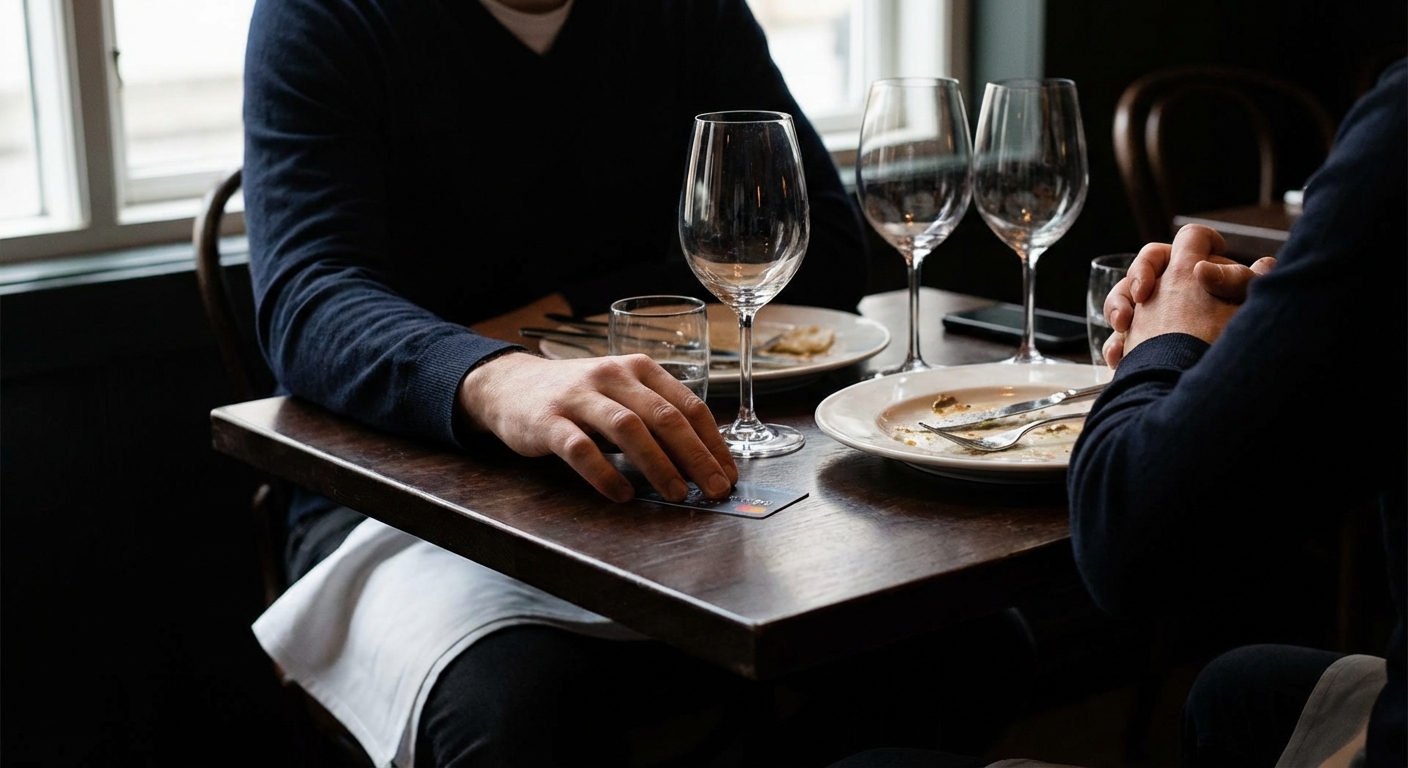
Stop splitting the bill.
You aren't roommates. You aren't business partners. You are auditioning for a role in someone’s life.
I spent $5,000 on first dates in 2023. I went to the rooftop bars. I bought the vintage bottles. I paid for the Ubers.
Most of those dates ended in a polite text and a "no spark" emoji.
I was buying attendance. I wasn't building attraction.
The way you pay is a signal. It tells the other person how you view value, how you handle friction, and how you view them.
If your dates are failing, it’s not your shoes. It’s your math.
Here is why you are paying wrong.
The 50/50 Accounting Trap
We have been lied to. Modern dating culture says splitting the bill is "fair."
Fair is for taxes. Fair is for courtrooms. Fair is the death of romance.
When you split a bill, you trigger a mental ledger. You turn a romantic experience into a commercial transaction. The moment the calculator comes out, the vibe dies.
I call this the "Spreadsheet Date."
I once went on a date where we split a $120 dinner. We spent five minutes discussing who had the extra drink. We spent another three minutes figuring out the tip.
By the time we stood up, we weren't two people who liked each other. We were two accountants finishing a quarterly review.
The psychology is simple: People remember how a date ends.
If the end of your date involves math, Venmo requests, or "Who had the sea bass?", you have failed. You have replaced chemistry with arithmetic.
Stop aiming for equity. Aim for momentum.
One person pays. Period. If you invited them, you pay. If they want to pay next time, let them. But never, under any circumstances, do the "split."
The "fairness" of 50/50 is a mask for a lack of leadership.
The Performance Tax
You think spending $300 on a first date shows status.
It doesn't. It shows insecurity.
I used to book the hardest-to-get tables in the city. I thought the Michelin stars would do the heavy lifting for my personality.
I was paying a "Performance Tax."
When you overspend early, you set a baseline you cannot maintain. You create a dynamic where the environment is the entertainment, not you.
If the most interesting thing about the date is the wine list, you are replaceable. Any guy with a credit card can buy that wine.
High-intent dating isn't about the price tag. It’s about the curation.
A $15 cocktail at a hidden dive bar you actually know the history of is worth more than a $200 steak at a generic chain.
The elite play is "Low Cost, High Context."
When I stopped trying to impress women with my bank account, my success rate tripled. Why? Because when the bill is $40, the money doesn't matter. The conversation does.
If you are using your wallet to fill the silence, you’ve already lost the game.
The Friction Gap
The "Wallet Dance" is the most awkward ten seconds in human history.
The bill arrives. It sits in the middle of the table like a live grenade. You look at it. They look at it. You reach. They do the "fake reach."
This is the Friction Gap. It kills the "flow state" of the evening.
I learned this from a billionaire mentor. He never touched a check. Not because he was cheap, but because he was fast.
He would arrive five minutes early. He would give the host his card. He would say: "I’m hosting tonight. Don't bring a bill to the table. Just charge the card and I’ll sign on the way out."
The result? The meal ends. We stand up. We walk out.
The psychology of this is massive. It feels like magic. It feels like the world is taken care of.
Most people use the bill as a transition. They use it to signal the date is over.
"Should we get the check?" is code for "I’m ready to leave."
By removing the bill from the table, you remove the friction. You keep the focus on the person. You show that you are a person who handles logistics behind the scenes.
Leadership is the absence of visible effort.
If you want better dates, stop making the payment a "moment." Make it a non-event.
The Insight
Here is the hot take that your "dating coaches" won't tell you:
The "Cheap Date" is the ultimate status symbol of 2026.
We are moving into an era of "Experience Scarcity." Everyone has money. Everyone can buy the sushi.
What people can't buy is taste. What they can't buy is a curated evening that feels personal.
The person who spends $2,000 on a date is a client. The person who spends $50 on a sunset hike and a specific local food truck is a curator.
Status used to be about what you could afford. Now, status is about what you know.
The future of dating isn't "Who pays?" The future is "Who planned?"
Money is the least interesting thing you can bring to a table. If it's the loudest thing you’re offering, don't be surprised when the person across from you leaves when the funds run dry.
Stop buying dates. Start designing them.
What is the most you’ve ever spent on a first date that went absolutely nowhere?