How AI-Generated Digital Twins Will Dominate 2026 and Make Real Hollywood Stars Obsolete!
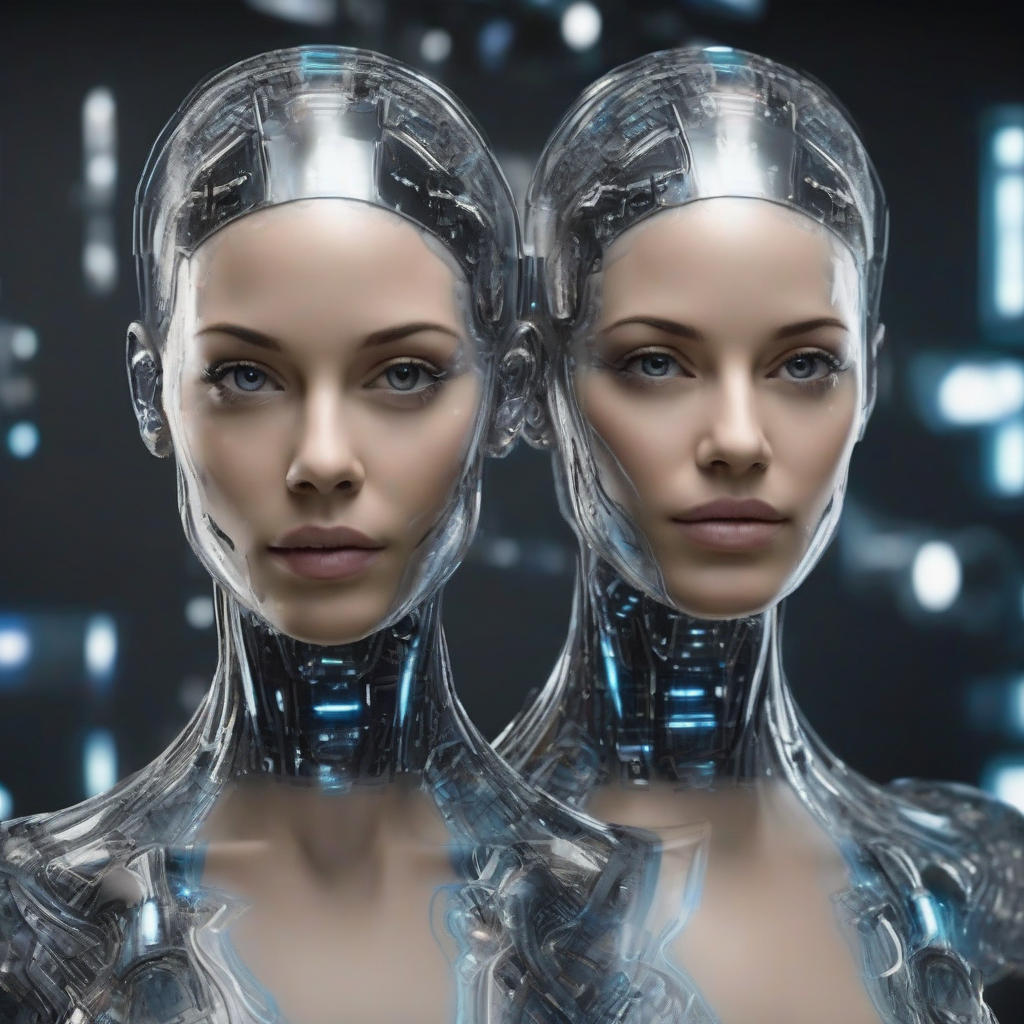
The era of the "A-List Actor" died yesterday. You just haven’t realized it yet.
By 2026, the biggest movie star in the world won't have a heartbeat. They won't have a trailer. They won't have a drug problem, a PR scandal, or a $20 million upfront fee.
They will be a file on a localized server.
We are moving from the era of "Human Talent" to the era of "Digital Assets." The shift will be faster than the move from silent film to talkies. It will be more violent than the move from cable to Netflix.
Hollywood is terrified. They should be.
The End of the Biological Bottleneck
Humans are a bad investment.
Think about the math of a modern blockbuster. You hire a superstar. You pay them $25 million. You spend $100 million on insurance because if they break a leg, the production stops. You spend $50,000 a day on their "entourage."
Then, they get old. They lose their hair. They lose their box-office draw.
Digital Twins solve the biological bottleneck.
In 2026, a studio won't "hire" Tom Cruise. They will license the "Cruise Asset." This asset doesn't age. It doesn't get tired. It can perform a 100-foot stunt 1,000 times in a row without a scratch.
We are seeing the rise of the "Eternal IP."
Legacy stars are already scanning their bodies and cloning their voices. They realize that their physical body is now just a liability. Their "Digital Twin" is the real product.
Studios are shifting from "Production Companies" to "Asset Management Firms." If you own the digital rights to a star's likeness, you own a money-printing machine that lasts 500 years.
The Rise of Parallel Cinema
Right now, a movie star can make one movie at a time. Maybe two a year if they don't sleep.
In 2026, a Digital Twin can be in 5,000 movies simultaneously.
This is "Parallel Cinema." Imagine a world where Marvel releases a movie, but the protagonist is different depending on who is watching.
You like Keanu Reeves? Your version of the movie stars Keanu. Your friend likes a 25-year-old Harrison Ford? Their version stars Ford.
The script is the same. The "Skin" is swapped in real-time.
We are moving away from "Theatrical Releases" toward "Dynamic Streams."
The scarcity of a star’s time is what created the $20 million paycheck. When time is infinite, the price of talent crashes to zero. The value moves to the prompt and the platform.
The "Star Power" of 2026 isn't about who showed up to set. It’s about whose Digital Twin has the highest "Conversion Rate" in the algorithm.
The Democratization of the Blockbuster
For 100 years, the "Gatekeepers" were the ones with the cameras and the stars.
If you wanted to make a movie, you needed a $200 million budget to get the talent. Without the talent, you didn't get the distribution. Without the distribution, you didn't exist.
That wall just fell.
In 2026, a kid in a basement in Jakarta will have access to the same "Digital Twins" as Disney.
AI-generated actors will allow "Indie" creators to produce films with the visual fidelity of Avatar. You won't need a casting director. You will need a "Character Architect."
You will build your cast from a library of hyper-realistic, non-existent humans. Or, you will license a "Legacy Pack" of stars who have been dead for 50 years.
The "Uncanny Valley" is gone. We are in the "Synthetic Peak."
When anyone can cast a digital version of Marilyn Monroe or a custom-built "Perfect Lead," the value of "Being a Famous Human" evaporates.
The industry is moving from "Who you know" to "How you prompt."
The content glut is coming. 1,000 movies will be uploaded to the internet every hour. Most will be garbage. But the ones that hit will be built entirely by "Ghost Studios"—small teams using Digital Twins to out-produce Universal and Warner Bros.
The Ownership of the Soul
The biggest legal battles of 2026 won't be about copyright. They will be about "Biometric Sovereignty."
Who owns your face? Who owns the "vibe" of your voice?
We are seeing the birth of the "Identity Marketplace."
A-List stars are currently rushing to set up "Digital Estates." They want to ensure their grandkids are getting paid every time their Digital Twin is "spawned" in a new VR game or interactive movie.
But here is the kicker: The audience might not care about the "Real" stars anymore.
The Digital Twin of 2026 is interactive. It’s personalized. It’s 24/7.
The "Real" Hollywood Star is a 20th-century relic. They are too expensive, too slow, and too fragile for the high-frequency entertainment world we are building.
The screen doesn't care if the heart is beating. The screen only cares if the pixels are perfect.
The Insight
In 2026, the first "Best Actor" Oscar will be contested by a performance that never happened in physical reality. A studio will win not because they hired the best talent, but because they optimized the best "Emotional Dataset."
The "Star System" isn't being disrupted. It's being replaced by a "Synthetic Ecosystem" where fame is a software update.
The celebrities of the future won't be born. They will be compiled.
The Question
Would you rather watch a movie starring a human you'll never meet, or a Digital Twin designed specifically to know exactly what makes you cry?