The End of Hustle Culture: How Slow Productivity Will Dominate 2026
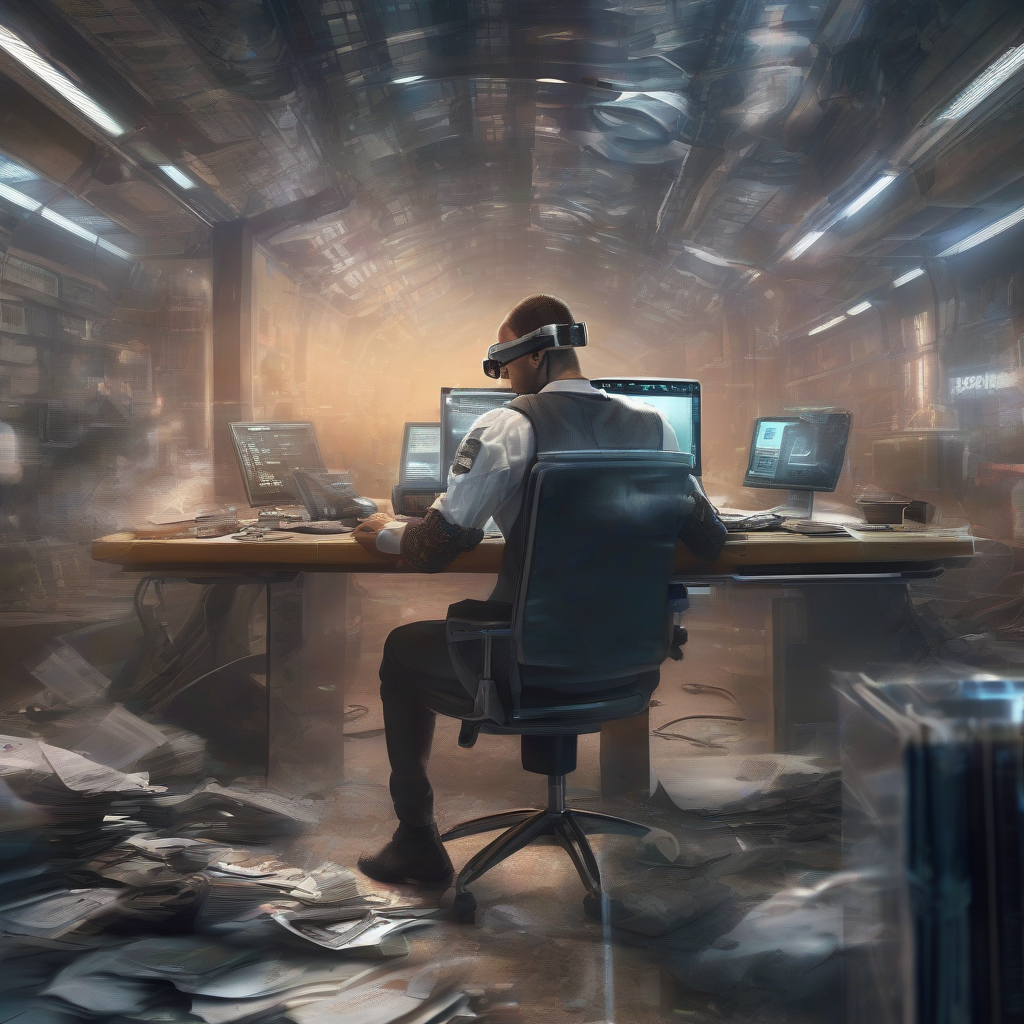
Your 80-hour work week is a sign of inefficiency, not ambition.
The "grind" is officially dead. In 2026, the most successful people you know won't be the ones answering Slacks at midnight. They will be the ones who are hardest to reach.
We spent a decade worshipping at the altar of "hustle." We bought the blue-light glasses. We optimized our sleep cycles. We downloaded every "second brain" app on the market.
The result? Global burnout levels are at an all-time high.
Output has decoupled from hours logged. The era of performative busyness is over.
Welcome to the era of Slow Productivity.
The Death of the Green Dot
For years, we lived by a lie: Presence equals Productivity.
If your Slack dot was green, you were working. If you responded to an email in ninety seconds, you were a "rockstar." This created a culture of shallow work. We spent 90% of our energy proving we were busy and 10% actually creating value.
In 2026, the "Green Dot" is a red flag.
Top-tier talent has realized that "Always On" means "Always Distracted." You cannot solve complex problems while checking a notification every six minutes. You cannot write a strategy that changes a multi-million dollar company while hovering over an inbox.
The new status symbol is unavailability.
Elite performers are now adopting "Ghost Hours." They disappear for four days a week. They don't attend "syncs" that could have been a memo. They have realized that the world doesn't end if an email sits for 48 hours.
If you are always available, you are a commodity. If you are a commodity, you are replaceable. Slow productivity is about becoming an artisan, not a cog.
The Three Pillars of the 2026 Workflow
Slow productivity isn't about doing less. It’s about doing better. It rests on three non-negotiable pillars:
Do Fewer Things. The most successful people in 2026 have shorter To-Do lists than you. They pick one "Big Move" per quarter. They ignore the "urgent" to protect the "important." Most of what you do today is busy-work designed to hide your fear of doing the hard thing.
Work at a Natural Pace. The Industrial Revolution taught us to work like machines—linear, constant, and unwavering. Humans aren't machines. We are seasonal. There are weeks for sprinting and weeks for thinking. In 2026, the "Seasonal Sabbatical" will be a standard part of high-level contracts. We are moving from a marathon mindset to a series of purposeful sprints followed by deep recovery.
Obsess Over Quality. In a world flooded with AI-generated garbage, quality is the only moat left. If a machine can do it in ten seconds, it’s not worth your time. Slow productivity demands that you spend three months on a project that lasts ten years, rather than ten hours on a project that lasts three days.
When everyone can generate a 2,000-word article, a legal brief, or a line of code in three seconds, the value of that speed drops to zero. If you are competing on velocity, you are competing with an algorithm that doesn't sleep. You will lose.
The Long Thought is the ability to sit with a problem for weeks. It’s the ability to connect disparate ideas. It’s the nuance of human experience and strategic intuition.
In 2026, companies will stop hiring for "execution" and start hiring for "vision." Execution is cheap. Vision is expensive. And vision requires the one thing hustle culture hates: idle time.
The New Architecture of Ambition
If you want to dominate 2026, you have to stop playing the 2016 game.
The 2016 game was: More. More inputs, more outputs, more meetings, more coffee, more "hustle."
The 2026 game is: Depth.
The people who will win are those who build a "Deep Work Sanctuary." They treat their attention like a billion-dollar asset. They realize that a three-hour window of uninterrupted thought is worth more than a forty-hour week of frantic multitasking.
We are moving toward the "Asynchronous Autonomy" model.
In this model, the "workday" doesn't exist. There is only the "result." If it takes you two hours of deep focus to produce a masterpiece, you’re done. You don't sit at your desk for another six hours to look the part. You go for a walk. You read a book. You let your subconscious solve the next problem.
This is the end of the "9-to-5" and the beginning of the "Flow-to-Result."
The Insight
By the end of 2026, "Hustle Culture" will be viewed with the same disdain we now have for smoking in airplanes.
We will look back at the "Rise and Grind" era as a collective hallucination—a period where we mistook activity for progress.
My specific prediction: The top 1% of earners will move to a "Four-Month Work Year." They will work with extreme, monastic intensity for 120 days, producing more value than a standard employee does in five years, and then they will effectively disappear for the remainder of the year to recharge and strategize.
The "annual salary" will be replaced by the "value bounty."
Companies will no longer pay for your time; they will pay for the "Slow Output" that only a rested, focused, and deep-thinking human can provide.
The future belongs to the slow.
The CTA
Are you working to be busy, or are you working to be missed?