Why the Internet is Failing: How AI Content Loops Are Killing Everything You See Online
The internet as you knew it is officially over.
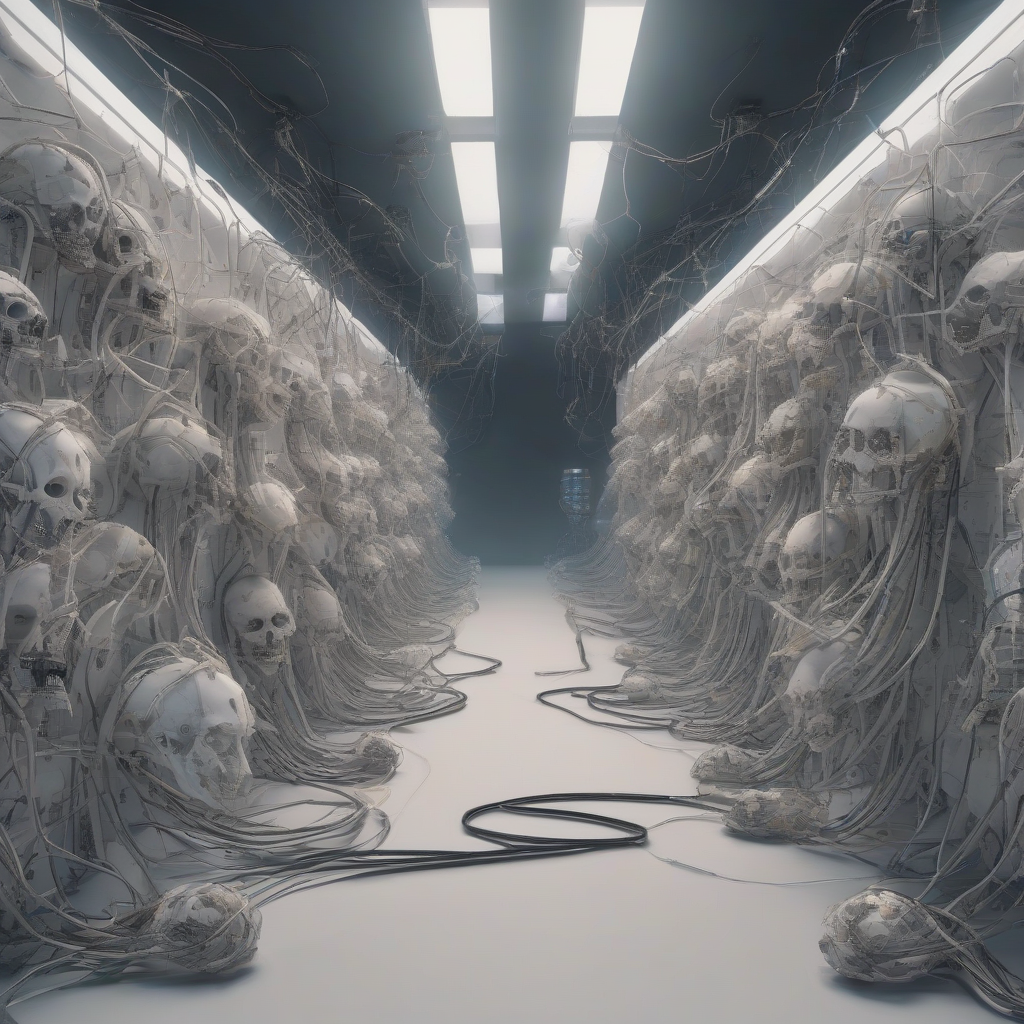
What you’re scrolling through right now isn’t a town square. It’s a hall of mirrors. You aren't consuming content; you are consuming the digital equivalent of recycled plastic.
I’ve spent the last decade tracking digital trends. I watched the rise of the creator economy. I watched the pivot to video. I watched the explosion of Generative AI.
Here is the truth no one wants to admit: The web is currently eating itself alive.
The internet used to be a messy, vibrant collection of human weirdness. Now, it’s being flattened.
Every blog post looks like a template. Every LinkedIn "thought leader" sounds like a GPT-4 prompt. Every "how-to" guide is a 1,500-word fluff piece designed for a Google bot that doesn't actually exist.
When the training data becomes 90% synthetic, the intelligence dies. We are left with a "Gray Goo" of information—smooth, frictionless, and utterly useless. We are building a library of Alexandria where every book is a slightly different summary of the same Wikipedia page.
The Death of Search and the Rise of "Slop"
Google is broken. You’ve felt it.
You search for a product review and get ten pages of AI-generated affiliate sites. You search for a recipe and have to scroll through 3,000 words of "The history of flour" written by a bot to satisfy an SEO algorithm.
This is the "SEO Industrial Complex."
Creators used to write for people. Then they started writing for algorithms. Now, bots are writing for algorithms, and humans are being squeezed out of the equation entirely.
The term for this is "Slop."
Slop is to text what Spam was to email. It’s low-effort, high-volume, AI-generated filler designed to capture clicks and ad revenue. It doesn't matter if the information is correct. It only matters if it ranks.
The internet is becoming a landfill.
The Algorithmic Cage: Why You Feel Bored
The algorithms that run your feed have one goal: Retention.
But they’ve become too good at their jobs. They’ve figured out that the easiest way to keep you scrolling is to show you exactly what you’ve already seen. They are optimized for the familiar.
When the algorithm feeds this average content to an average user, it creates a cycle of stagnation.
You feel bored because you are stuck in a digital cul-de-sac. You aren't being challenged. You aren't being surprised. You are being fed a pre-chewed slurry of trends that died three weeks ago but are still being echoed by bot accounts.
The Human Premium: The New Luxury Good
We are heading toward a Great Bifurcation.
The public web—the one you access for free—will become a toxic wasteland of synthetic garbage. It will be 99% AI-generated, bot-distributed, and ad-saturated. It will be unusable for anyone seeking truth, depth, or genuine connection.
The "Real Internet" is going underground.
We are seeing the rise of the "Digital Walled Garden." People are fleeing the open platforms for small, private communities. Discord servers. Private Slack channels. Paid newsletters. Gated forums.
In these spaces, the "Human Premium" is the only currency.
Proof of Humanity is about to become the most valuable asset online. We will pay a premium to know that the person on the other side of the screen is actually a person. We will value the "burrs" and "splinters" of human writing—the typos, the rants, the unpopular opinions—because they are markers of authenticity.
The future isn't about more content. It’s about less content, from better sources.
We are moving from the era of "Abundance" to the era of "Curation." If you can’t prove you’re human, you don’t exist.
The Insight
By 2026, "Human-Made" will be a digital certification more important than a blue checkmark.
We will see the emergence of a "Human-Only" protocol—a decentralized verification layer that blocks synthetic agents from interacting with human spaces. The public web will be left to the bots to talk to each other in a dead loop of ghost-traffic and fake metrics, while real discourse moves to encrypted, invite-only networks.
The "Dead Internet Theory" isn't a conspiracy anymore. It’s the business model.
Are you consuming the loop, or are you part of the resistance?