5 Terrifying Ways AI-Generated Content is Taking Over Hollywood and the Music Charts
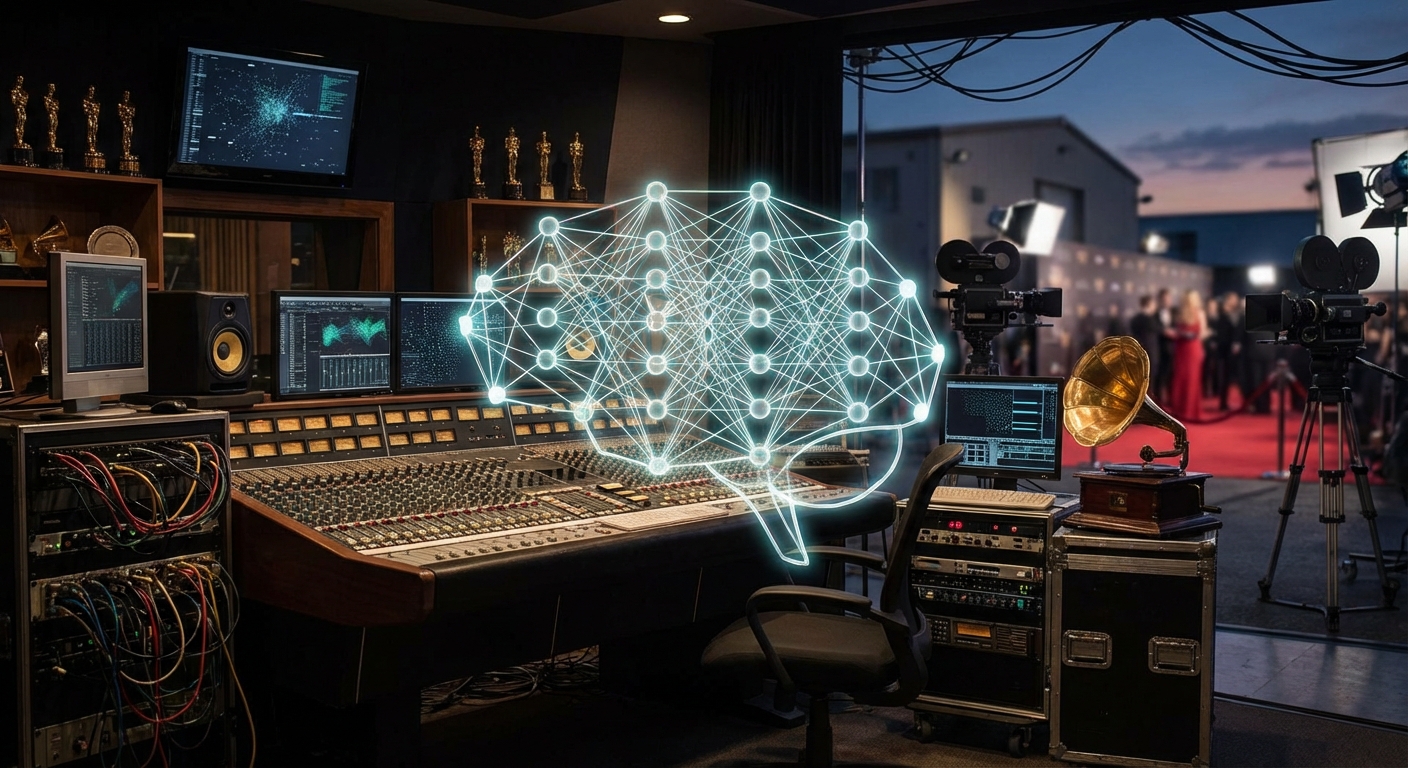
Stop looking for the next Leonardo DiCaprio. He’s already been replaced by a GPU.
Hollywood as you know it is dead. The music industry is a ghost ship. You’re still paying for tickets and subscriptions, but you’re no longer watching humans. You’re watching math.
The era of the "Star" is over. The era of the "Prompt" has begun.
I’ve spent the last six months analyzing the backend of the entertainment industry’s transition into synthetic media. What I found isn't just "innovation." It’s a total takeover.
Here are the 5 terrifying ways AI-generated content is seizing the throne.
1. The Rise of the Zombie A-Lister
Harrison Ford is 81. In Indiana Jones and the Dial of Destiny, he was 35.
Hollywood has solved the one problem that has plagued every studio since 1920: Death.
Actors used to have leverage because they were unique, aging, mortal humans. That leverage is gone. Studios are now moving toward "Digital Twin" clauses. They aren't just buying your performance for one movie; they are buying the rights to your likeness, your voice, and your "essence" for eternity.
James Dean is "starring" in a new movie called Back to Eden. He died in 1955.
We are entering a "Zombie Economy." Why would a studio take a $100 million risk on a new, unproven Gen Z actor when they can just license the digital corpse of Marilyn Monroe? She doesn't have a PR scandal. She doesn't demand a trailer. She doesn't get tired.
The "New Star" pipeline is being choked out by digital ghosts.
2. The 24/7 Ghostwriter in the Charts
Last year, a song called "Heart on My Sleeve" featuring Drake and The Weeknd went viral.
Neither Drake nor The Weeknd were in the room. They didn't even know it existed. It was a "Ghostwriter" using AI-trained vocal models. It racked up millions of plays before the labels scrambled to kill it.
But you can’t kill a hydra.
The terrifying part? The math is better than the art.
3. The Death of the $200 Million Budget
OpenAI’s Sora changed everything in 24 hours.
Traditionally, a 10-second shot of a futuristic city required a crew of 200, a $5 million VFX budget, and six months of rendering. Now? It’s a text prompt.
The barrier to entry for "Blockbuster" visuals has dropped to zero. This sounds like a win for creators, but it’s a death sentence for the industry's middle class.
Cinematographers, lighting technicians, set designers, and catering crews are being phased out. If you can generate a photorealistic scene in a cloud server, you don't need a soundstage in Atlanta.
The "Big Studio" moat was always their ability to spend more than you. That moat has dried up. But when everyone can make a movie that looks like Avatar, then nothing looks like Avatar.
We are headed for "Visual Hyper-Inflation." When spectacular imagery is free, it becomes worthless.
4. Predictive "Success" Engines
Studios used to rely on "gut feeling." Now they rely on Large Language Models (LLMs) trained on 100 years of box office data.
- "Make the protagonist more relatable in the second act."
- "Insert a joke here to appeal to the 18-24 demographic."
- "Change the ending to allow for a sequel."
This is why every movie feels the same lately. It’s "Safe Content."
We are trading "Art" for "Audience Retention Metrics."
5. Hyper-Personalized "Main Character" Media
This is the final, most terrifying stage.
Currently, we all watch the same movie. In five years, we won't.
Imagine a streaming service where you don't just pick a movie—you pick a "Vibe." You want a romantic comedy starring you and your crush, set in 1920s Paris, written in the style of Aaron Sorkin?
Click. Generate.
This is the ultimate end-state of the Attention Economy. If the content is perfectly tailored to your specific triggers, your specific humor, and your specific fantasies, you will never turn it off.
It’s the "TikTok-ification" of cinema. Short-form, addictive, and entirely focused on you.
The "Shared Cultural Moment" is dying. We won't have Barbenheimer anymore. We will have 8 billion different movies playing on 8 billion different screens simultaneously.
The Insight:
We are approaching the "Human Premium."
In an ocean of perfect, AI-generated content, "Imperfection" will become the ultimate luxury.
Just as we pay $10 for an "Artisan" loaf of bread when a factory loaf is $1, we will soon pay a premium for "Human-Made" entertainment.
"Filmed on real locations." "Sung by a real throat." "Written by a person with a broken heart."
The labels and studios that survive won't be the ones with the best AI. They will be the ones that can prove their content was made by humans. "Human-Certified" will be the most valuable brand in the world by 2030.
But until then? Prepare for the noise.
The machines aren't just coming for the jobs. They’re coming for the dreams.
The CTA:
If you could watch a 10/10 movie that was 100% AI-generated, would you even care?