The Transient Majesty of the Shared Act
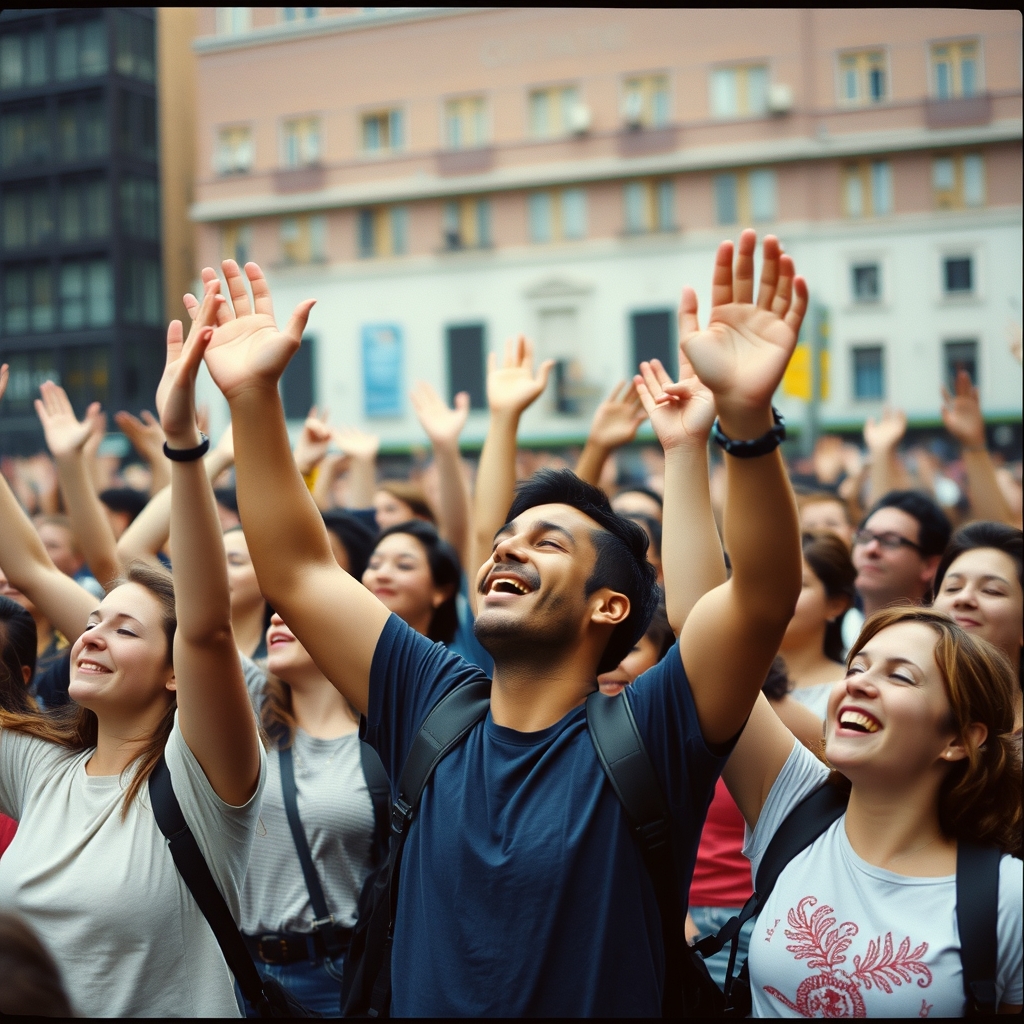
We are, for all our individualism, creatures of the crowd. We lean into the roar of a stadium, sway in unison at a concert, or find ourselves tapping a foot to the shared rhythm of a street performer’s drum. There’s a particular pull, an almost magnetic force, in the knowledge that others are moving, feeling, or anticipating in precisely the same way, at precisely the same moment. It’s not about grand conspiracies or orchestrated movements. It’s about something far more ephemeral, more spontaneous, and perhaps, more deeply human: the fleeting architecture of a shared experience.
The Unscripted Chorus
Consider the flash mob. A phenomenon that, while perhaps past its peak cultural ubiquity, remains a potent symbol of this impulse. Strangers, bound by a pre-arranged signal and a common, often joyful, purpose, suddenly coalesce. A train station becomes a dance floor, a shopping mall a stage for an impromptu opera. Then, as quickly as it began, it dissolves. The participants disperse, returning to their individual trajectories, leaving behind only the lingering smiles of onlookers and the faint echo of collective memory.
This isn't new, of course. For centuries, humans have found solace and exhilaration in communal ritual, dance, and song. Folk dances, harvest festivals, protest marches – all are variations on this theme. The difference now lies in the scale and the speed at which these collective moments can ignite and spread. The joy of a shared rhythm, once confined to a village square, can now ripple across continents.
Echoes Across the Digital Divide
The digital age, for all its isolating tendencies, has paradoxically become the great amplifier of these collective acts. A dance challenge, born on a smartphone screen in one corner of the globe, can travel at the speed of light, inviting millions to replicate, personalize, and share. Suddenly, a single, simple set of movements becomes a universal dialect of motion. There's no grand impresario, no central casting director. Just an idea, a beat, and the inherent human desire to belong, to participate, to be seen moving in sync with an invisible, global ensemble.
It’s a democratic theatre, where the audience is also the cast. The appeal isn’t necessarily artistic merit or technical prowess; it’s the sheer delight in the synchronized absurdity or elegant simplicity of it all. It’s the tacit understanding that somewhere else, right now, someone else is doing exactly what you’re doing, sharing the same momentary, fleeting joy. We’re not just spectators; we’re contributors to an unscripted, global ballet.
The Brief, Bright Afterglow
These shared acts, by their very nature, are transient. They are here and then they are gone. A flash mob dissipates; a viral dance craze eventually fades. Yet, their impact persists. There's a subtle but powerful memory left behind: the spark of recognition in a stranger's eye, the sudden lightness in the chest, the story recounted with a grin. For a brief window, the rigid lines of daily life blurred, and a shared humanity took precedence.
In an increasingly fragmented world, where our feeds curate highly individualized realities, these moments offer a quiet rebellion. They remind us that there's a primal satisfaction in shedding our curated identities and simply becoming a part of something larger, something collective, even if only for a fleeting measure. It’s a low-stakes commitment to a high-yield emotional return: a burst of connection, a glimmer of belonging, a temporary suspension of the self for the sake of the many.
So, the next time you see a group of strangers spontaneously break into a coordinated movement, or find yourself tapping along to a beat that’s captivating millions online, take a moment. Witness the delicate, temporary architecture of that shared act. It’s a reminder that for all our differences, we still crave the magic of moving as one, if only for a glorious, transient instant.